dailynewsnblog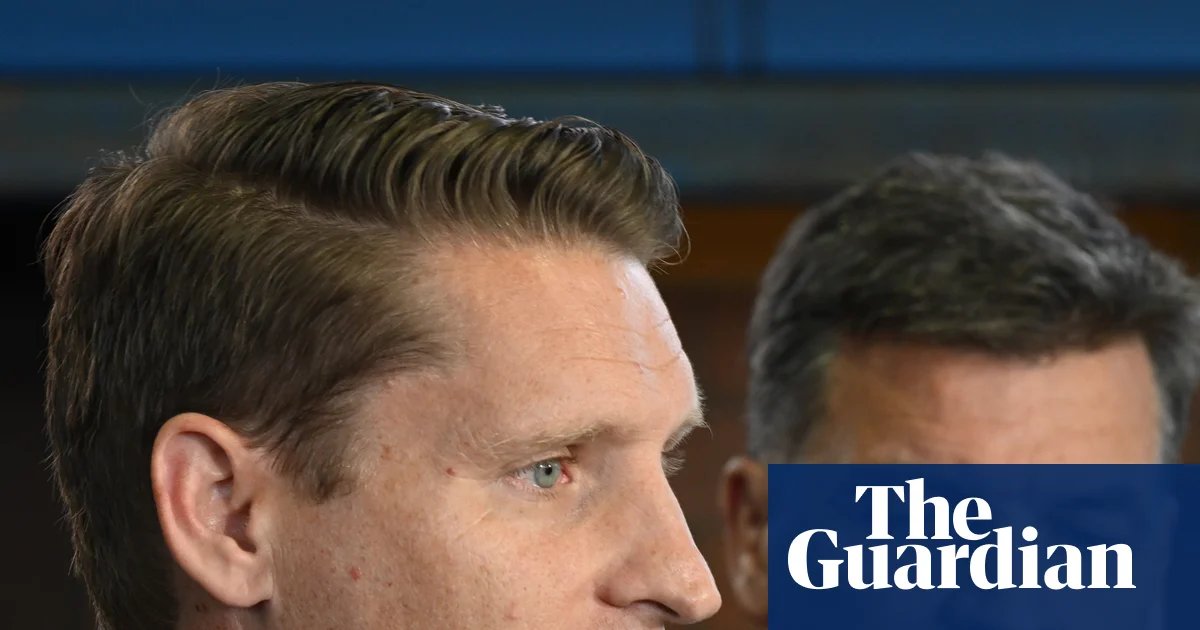
Liberal frontbencher Andrew Hastie says he is open to a new 25% tax on soaring gas profits as part of a Scandinavian-style sovereign wealth fund to strengthen the federal budget amid the global energy crisis.
Budget leaks suggest the Albanese government is modelling the effects of placing a flat 25% tax on gas profits, as well as possible further changes to the petroleum resource rent tax (PRRT) and corporate income tax.
The moves by the Department of the Prime Minister and Cabinet and Treasury come at the same time as dire warnings about the economic fallout from the US and Israeli-led bombings of Iran. The Iranian regime’s efforts to choke global oil supply by blocking the strait of Hormuz has sparked the world’s worst energy crisis.
Hastie, the shadow minister for industry and sovereign capability and a Western Australian MP, said there was growing community concern about the large profits of resources giants.
He told Guardian Australia’s Australian Politics podcast that revenue from natural resources needed to be carefully managed. The proposed new gas tax is being championed by the Greens, crossbencher David Pocock and campaign groups.
“I think a lot of people, Australians, feel like the multinationals don’t have a social licence, that they’ve had a really good run of our wealth here, and so I’m sympathetic to that point of view,” Hastie said.
“I just know how important those industries are to Australia, so I’d want to get it right. So, I guess I’m open-minded about those questions.”
He said social media was full of “strong and pronounced” anger about corporate profits, from all sides of politics.
Pointing to Norway’s sovereign wealth fund – the largest in the world, with assets worth more than $US2.2tn ($A3.2tn) – Hastie said Australia needed to better plan for its own economic future.
“I’d love to see an Australian sovereign wealth fund that sets us up for generations to come.
“Across the political spectrum, I think we need to have conversation about balancing budgets. If we’re expecting Australian families to make their budgets work, why shouldn’t the government?
“I think that’s something that isn’t popular, but I think it’s a conversation we need to have.”
Gas giants have signalled they will fight any new tax. Lobby group Australian Energy Producers said a new export levy would come at the “worst possible time for Australia’s economy and energy security”.
Hastie’s position could also put him at odds with senior Liberals, including the opposition leader, Angus Taylor.
The shadow treasurer, Tim Wilson, last week said it would be “next-level denial to think the answer to a fuel and energy crisis is added new taxes because it will just freeze investment and private jobs growth”.
The head of the International Energy Agency, Fatih Birol, warned the Albanese government this week that sudden changes to corporate taxes would spook investors.
Hastie said he believed the US president, Donald Trump, was “overconfident” in launching the 28 February attacks, after being buoyed by the success of bombings of Iran’s nuclear sites last year, and the US operation to capture Venezuela’s president, Nicolás Maduro, in January.
“I think the expectation was this would be a short war but the enemy always has a vote and Iran is using the geography at the strait of Hormuz to their advantage,” he said.
“They’re using it to apply immense pressure to American allies who depend upon the importation of hydrocarbons out of the Middle East.”
Hastie said the post-cold war rules-based order is dead “and in the cemetery, alongside it, is buried the peace dividend, which was the basis of our trade and our prosperity”.