dailynewsnblog
Nintendo Life: What’s your earliest memory of Pokémon?
Masaaki Hoshino: My first encounter with Pokémon dates back to when I was developing fighting games at Bandai Namco. At the time, there was so much buzz about how incredibly popular Pokémon had become among children. I decided to give it a shot and purchased the newest title available back then, which was Pokémon Yellow, and I was instantly hooked. The battle system completely captivated me, and I remember thinking that whoever designed it must be a genius.
Have the battles always played an important role in your love for the series?
Absolutely. Coming from a fighting game development background, battling has always been something I’ve been deeply passionate about. When I first played Pokémon, the battle system immediately stood out to me. It was simple on the surface, but incredibly deep and strategic once you really understood it. That balance is something that really impressed me as a developer.
What’s amazing is how well the original core battle system has stood the test of time. The fundamental mechanics, logic, and structure that were established early on continue to form the foundation of the series today. Much of that work was shaped by [Game Freak designer and director Shigeki] Morimoto, whose design philosophy helped create a system that is both accessible and endlessly engaging.
Having the chance to work on a project alongside Morimoto now is honestly a dream come true for me.
Did your time working on Pokkén Tournament inform your approach to Champions?
My experience working on Pokkén Tournament definitely influenced how I approached Pokémon Champions. With Pokkén, we wanted to lower that barrier and create something that still had depth and competitive potential but was also approachable and fun for newcomers. Accessibility was a key part of that design philosophy.
That same thinking carried over into Pokémon Champions. We want the game to be something that anyone can enjoy, whether they’re a long-time competitive player or someone just discovering Pokémon battles for the first time. That’s also one of the reasons we’re developing a mobile version, so players can engage with the battle system in a way that’s convenient and accessible to as many people as possible.
Champions is closer in gameplay to Stadium or the battles of Colosseum. Did you consciously look at those spin-offs during development?
we want Champions to feel like the easiest and most welcoming entry point into Pokémon battling
I’ve played all of the mainline Pokémon titles, as well as spin-offs like Pokémon Stadium and Pokémon Colosseum. Each of those games brought its own interpretation and presentation of Pokémon’s battle system, and they all contributed something unique to how players experience battling.
When we were developing Pokémon Champions, we definitely looked back at all of those games for inspiration.
Our goal with Champions is to build on that legacy. In many ways, I see it as a culmination of everything the series has explored with battling over the year[s], taking ideas and lessons from [the] past.
When did you find out you’d be developing for Switch 2, too? What difference did the improved specs make?
Partway through the development of Pokémon Champions, it became clear that we needed to support the Nintendo Switch 2, and with passion, we made this one of our top priorities. The Switch 2 version you experienced today runs at a higher resolution than the original Switch version.
Champions is to be the main competitive battle game going forward. How have you ensured that beginners feel welcome, too?
With Pokémon Champions becoming a central platform for competitive battling, it was very important for us to make sure that new players feel welcome as well. While we want the game to offer a high level of fairness and depth for competitive fans, we also worked hard to lower the barriers that have traditionally made it difficult for beginners to get started.
One of the key areas we focused on was the training and preparation process. In past games, building a competitively viable Pokémon could be quite complex, especially when it came to things like Individual Values and Effort Values. In Champions, we’ve simplified and streamlined these systems so that players can adjust and train their Pokémon much more easily.
Whether someone is a long-time competitive player or completely new to the scene, we want Champions to feel like the easiest and most welcoming entry point into Pokémon battling.
We know that the game includes paid elements, but how have you ensured that it’s not ‘pay-to-win’?
There are no big details we can share at the moment as it’s something we are actively working on.
Champions includes several special evolutions from past generations, like Terrastalisation and Mega Evolution. What was the biggest challenge in balancing these forms so that battles still feel fair?
we plan to gradually expand the roster over time
For the first competitive season, we’re planning to focus primarily on Mega Evolution as the featured mechanic. At the same time, we designed Champions’ systems from the beginning to support multiple battle mechanics, including ones that may be introduced in the future. Our goal is to create a flexible battle platform that can evolve over time.
Because of that, we spend a lot of time looking at how these different mechanics interact with each other and how they can coexist while still keeping battles fair and strategically interesting. The core battle system itself is being worked on together with Morimoto, and maintaining strong game balance is something we’re continuously evaluating as development progresses.
The game will only feature a limited roster at launch. How do you plan to expand this in the future?
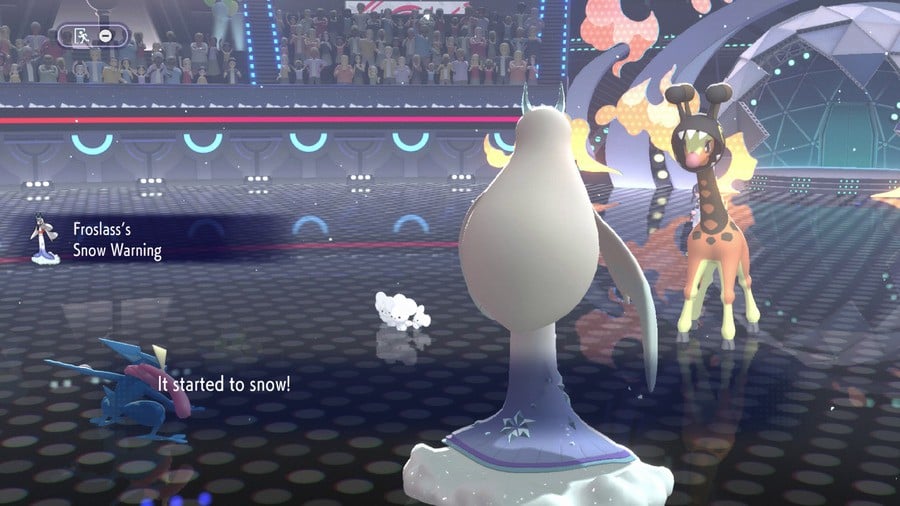
At launch, Pokémon Champions will feature a curated selection of Pokémon that are available for the current competitive season. This roster will align with the regulation rules for that season and help create a balanced environment for players as they begin exploring the game.
As the game continues to evolve, we plan to gradually expand the roster over time. With more than a thousand Pokémon across the series, including all of them at launch could feel overwhelming, especially for newer players. By introducing Pokémon in stages, we can keep the competitive environment fresh while also making it easier for players to learn and adapt.
Finally, the series celebrates its 30th anniversary this year. What stands out as your favourite moment from the past three decades of Pokémon?
The origin of my journey lies in a simple lunch at an Italian restaurant. While playing Pokémon with friends, a vision came to me: Pokémon running across the battlefield in real-time.
That single idea became the foundation for everything. It birthed Pokkén Tournament, paved the way for the strategic team battles of Pokémon UNITE, and ultimately led to the creation of Pokémon Champions. Seeing that initial spark evolve into these global titles is truly my most cherished memory.
Our thanks to Masaaki Hoshino for taking the time to speak to us, and to everyone at Nintendo UK and The Pokémon Company International for helping set up the interview.
Pokémon Champions launches on Nintendo Switch in April 2026.

![Where Does Lufthansa Fly The Airbus A380? The Complete 8-Route List [Map]](https://dailynewsnblog.com/wp-content/uploads/2026/06/simpleflying-airbus-a380-lufthansa-sss.jpg)