dailynewsnblog
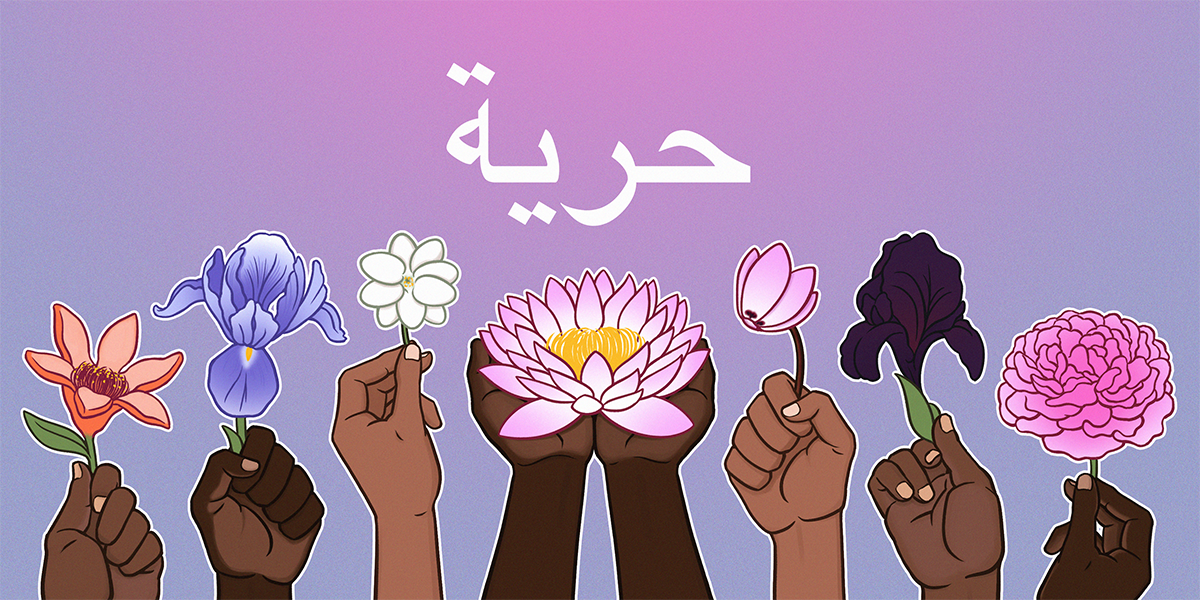
This is the first installment of a blog series reflecting on the global digital legacy of the 2011 Arab uprisings.
A new generation of protesters, raised on social media and often fluent in the tools of digital dissent, has taken to the streets in recent months and years. In Bangladesh, Iran, Togo, France, Uganda, Nepal, and more than a dozen other countries, young people have harnessed digital tools to mobilize at scale, shape political narratives, and sustain movements that might once have been easier to ignore or suppress.
The tools at their disposal are vast, allowing them to coordinate quickly and turn local grievances into visible, transnational moments of dissent. But each new tactic is met in turn: governments now implement draconian regulations and deploy sophisticated surveillance systems, content manipulation, and automated censorship to pre-empt, predict, and punish collective action.
This cycle of digital empowerment and repression is not new. In many ways, its roots can be traced to the 2011 uprisings that rippled across the Middle East and North Africa. Often referred to as the “Arab Spring,” these movements didn’t just reshape politics…they transformed how we talk about the internet, and how governments respond in times of protest, crisis, and conflict. Fifteen years later, the legacy of that moment still defines the terms of resistance and control in the digital age.
At the time, we were sold the comforting narrative that the internet would help bring about democracy, that connectivity itself was revolutionary, and that Silicon Valley’s products—particularly social media platforms—were aligned with the people. It was a narrative that tech executives were sometimes happy to amplify and certain Western governments were happy to believe.
But the same networks that helped protesters to organize and broadcast their demands beyond their own borders laid the groundwork for new forms of repression. Over the years, the same tools that were once celebrated as tools of dissent have become instruments for tracking, harassing, and prosecuting dissenters.
This series examines the digital legacy of the 2011 uprisings that shook the region: how governments refined censorship and surveillance after 2011, how platforms alternately resisted and enabled those efforts, and how a new generation of civil society has pushed back.
“Over the years, the same tools that were once celebrated as tools of dissent have become instruments for tracking, harassing, and prosecuting dissenters.”
When Tunisian fruit vendor Mohamed Bouazizi set himself on fire on December 17, 2010, after repeated harassment by local officials, he could not have known the chain reaction his act would spark. After nearly twenty-three years in power, President Zine El Abidine Ben Ali faced a public fed up with repression. Protests spread across Tunisia, ultimately forcing him to flee.
In his final speech, Ben Ali promised reforms: a freer press and fewer internet restrictions. He left before either materialized. For Tunisians, who had lived for years under normalized censorship both online and off, the promises rang hollow.
At the time, Tunisia’s internet controls were among the most restrictive in the world. Reporting by the exiled outlet Nawaat documented a sophisticated filtering regime: DNS tampering, URL blocking, IP filtering, keyword censorship. Yet despite that machinery, Tunisians built a resilient blogging culture, often relying on circumvention tools to push information beyond their borders. When protests began—and before international media caught up—they were ready.
Eleven days after Ben Ali fled, Egyptians took to the streets. International headlines rushed to label it a “Twitter revolution,” mistaking a tool for a movement. Egypt’s government drew a similar conclusion. On January 26, authorities blocked Twitter and Facebook. The next day, they shut down the internet almost entirely, a foreshadowing of what we’d see fifteen years later in Iran.
As Egyptians fought to free their country from President Hosni Mubarak’s autocratic rule, protests swept across the region to Bahrain, where demonstrators gathered at the Pearl Roundabout before facing a brutal crackdown; to Syria, where early calls for reform spiraled into one of the most devastating conflicts of the century; to Morocco, where the February 20 Movement pushed for constitutional change. Outside of the region, movements took shape in Spain, Greece, Portugal, Iceland, the United States, and beyond.
In each context, digital platforms helped circulate images, testimonies, and tactics across borders. They created visibility—and, in turn, inspired a playbook. Governments watched not only their own populations but one another, quickly learning how to disrupt networks, identify organizers, and seize back control of the narrative.
Cause and Effect
To be clear, the internet didn’t create these movements. Decades of repression, corruption, labor organizing, and grassroots activism did. Later research confirmed what many in the region already understood: digital tools helped people share information and coordinate action, but they were neither the spark nor the engine of revolt.
But regardless, the myth of the “Twitter revolution” had consequences. The breathless coverage, and rapid policy reactions that followed shaped state strategy around the world. Governments across the region and well beyond invested heavily in surveillance technologies, developed new legal mechanisms, increased their own social media presence, and found ways to influence platforms. Internet blackouts, once rare, became a normalized tool of crisis response. And companies were forced into increasingly public decisions about whether to resist state pressure or comply.
When it comes to the internet, the legacy of the 2011 uprisings that swept the region and beyond is a story about power: how states moved to consolidate control online, how platforms—often under pressure—have narrowed the space for dissent, and how civil society has been forced to evolve to defend it.
This five-part series will take a deeper look at how the internet as a space for dissent and for hope has changed over the past fifteen years throughout the region and well beyond.