dailynewsnblog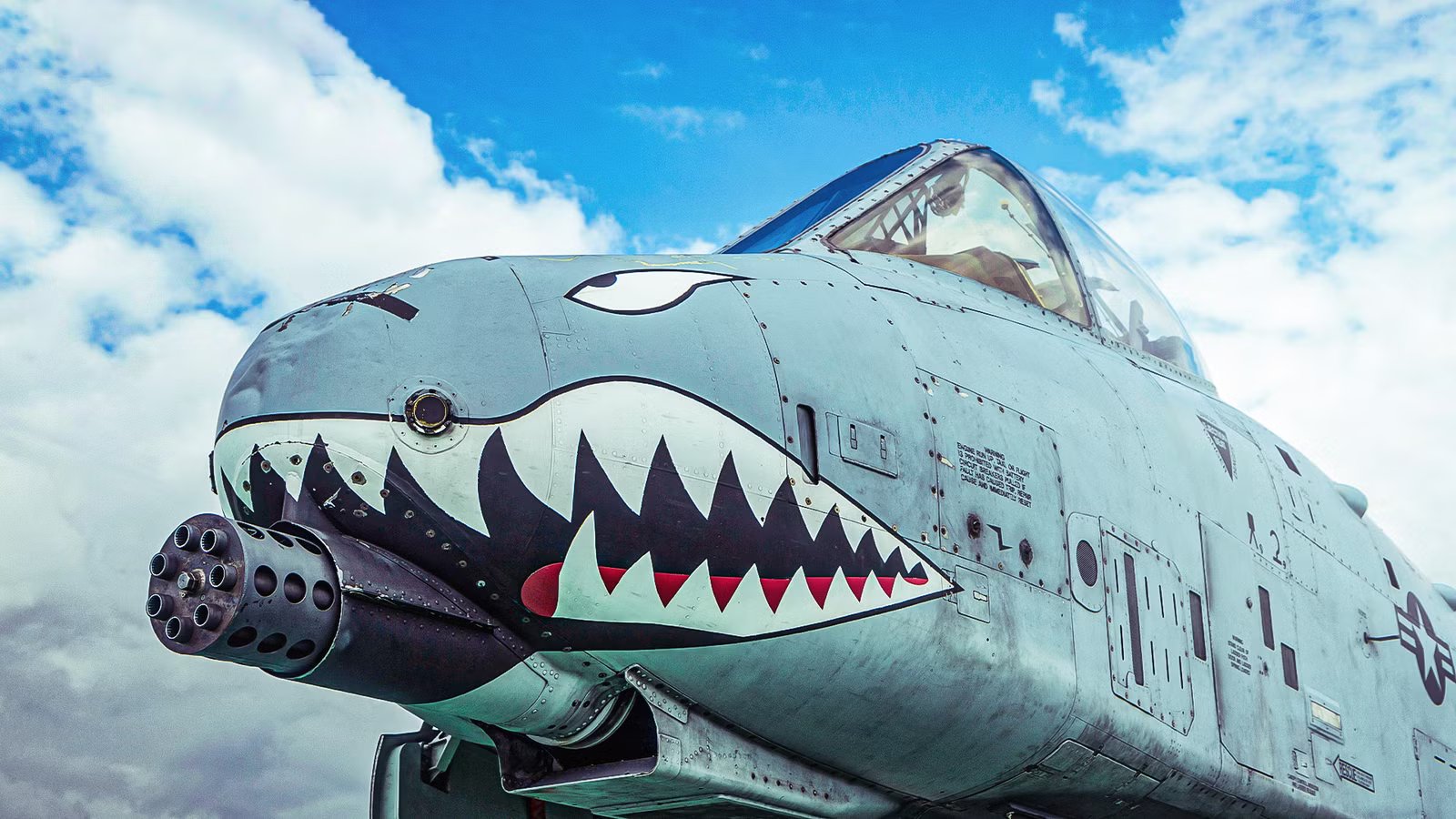
The metal fortress that encloses the pilot is where we begin the tale of the A-10’s famous ruggedness and stunning battle-damage resilience. This US Air Force attack jet contains the ultimate bulletproof bubble: a massive, 1,200-pound titanium cradle that is bolted together and nearly an inch and a half thick in some places. The Fairchild Republic A-10 Thunderbolt II’s titanium bathtub is more than just a skin covering; it’s an engineered fortress made of premium titanium alloy.
The purpose of this fighter jet’s vault is to transform the cockpit into a safe haven. Because of its exceptional strength-to-weight ratio, which provides the ballistic protection of steel at about 60% of the weight, its special alloy was selected. This titanium shell serves as the main line of defense against the kinetic energy of heavy ground fire when the aircraft dives into the dead man’s zone of low-altitude combat, absorbing the enormous impact shock that would otherwise tear apart a conventional cockpit.
The Ultra Tough Cockpit: Flying In A Bulletproof Bathtub

The A-10’s titanium bathtub is engineered to withstand high-velocity, medium-caliber anti-aircraft ballistic threats commonly found around the world in air-defense gun, rocket, and even man-portable missile systems. It is essentially impervious to all common small arms. That includes 12.7 mm, or .50 caliber, armor-piercing rounds, which it can absorb with virtually zero structural compromise.
The titanium is specifically hardened to deform armor-piercing shells on contact, bleeding away its lethal velocity before it can reach the pilot’s seat. The bathtub is officially ‘proof’ against direct hits from a maximum of 23mm armor-piercing and high-explosive fire. These rounds were chosen because they are found in Soviet-designed anti-aircraft guns.
As the Warthog rolls in on a target, it often flies directly into a storm of high-caliber anti-aircraft rounds. While these shells are designed to punch through the thin aluminum of most fighter jets like a needle through paper, the bathtub’s wall of metal makes them shatter or simply ricochet off. This is a trait that the Warthog’s stealthy successor, the Lockheed Martin F-35 Lightning II, cannot replicate.
The A-10’s Thick Skin Means Near Misses Are No Problem

The true genius of the bathtub becomes even more apparent when the hit isn’t direct, but rather a deadly spray of airburst fragments. If a surface-to-air missile or a large-caliber shell from anti-aircraft artillery explodes near the Warthog, it releases a storm of jagged, high-velocity shrapnel meant to pepper the pilot. The titanium enclosure acts as a 360-degree shield against this metal rain, catching the fragments in its thick walls.
While not rated to survive a direct kinetic hit from a large-caliber anti-aircraft gun, it is tested to withstand indirect fragmentation and airburst effects from airburst artillery shells. This allows the A-10 to shrug off hits that would mean a mission kill for almost any other aircraft in the sky. Because the bathtub wraps around the lower half of the cockpit, it ensures that even if the canopy is cracked or the outer fuselage is riddled with holes, the pilot remains encased in an impenetrable metal nest.
The interior of the cockpit is lined with multi-layer ballistic nylon to prevent hazardous metal pieces from getting to the pilot. This is vital because the inside surface of the titanium armor may flake off into deadly, razor-sharp shards due to strong collisions, a process known as spalling. The liner keeps these internal bullets out of the cockpit by acting like a heavy-duty net.
The bathtub is also secured with over 1,100 high-strength titanium bolts. This mechanical fastening ensures that if one section of the armor is severely damaged or deformed, the entire unit remains structurally sound and continues to protect the flight control linkages housed within its lower profile.

Will Any Aircraft Truly Match The Legacy Of The A-10 Warthog?
Explaining why the A-10’s legacy will be unique for specializing in Close Air Support.
Redundancy For Survival: Warthog Resilience

Beyond its main purpose of protecting the pilot, the bathtub serves as the armored sanctuary for the aircraft’s electronic and mechanical brain. The A-10’s critical flight-control linkages, including the backup cables that allow the pilot to fly without hydraulics, are routed through the bottom of this titanium vault. By shielding these nerves, the bathtub ensures that the plane doesn’t just survive the hit, but remains flyable.
Even if the wings are mangled and the engines are smoking, as long as the pilot can move the stick and the cables inside the bathtub remain intact, the Warthog has a chance to make it back to friendly territory. The most famous survival feature is the Manual Reversion mode. Most fighter jets are fly-by-wire or purely hydraulic; if they lose fluid, they fall. The A-10 has Dual Hydraulics but also mechanical cables, so that if both of those systems are severed, the pilot can flip a switch and muscle the flight surfaces into position.
It is exhausting to fly this way, but it allows the pilot to limp back to base and land. Most aircraft have one or two main spars (beams) holding the wing up. The A-10 wing has three massive spars. This allows the wing to maintain its structural integrity even if one of the spars is completely shot through by a 23mm or 30mm shell. The engines are also physically separated by a large distance so that if a catastrophic fire or explosion happens to one, at least one is likely to be usable and get the jet back to base.
Made To Dominate The Fray Of Battle

The bathtub is the core of the nose section for more reasons than one. When the GAU-8 Avenger cannon fires, it produces five tons of recoil force which is enough to actually slow the aircraft down in mid-air. This massive vibration would normally blur a pilot’s vision or shake flight instruments into a frenzy. The 1,200-pound mass of the titanium tub acts as a ballast, absorbing the high-frequency harmonics of the gun and providing a rock-steady platform so the pilot can keep their eyes on the HUD (Head-Up Display).
In Close Air Support, the A-10 often flies through the blast overpressure of its own bombs or nearby friendly artillery. The bathtub’s thick-walled geometry prevents the cockpit from flexing when hit by these atmospheric shockwaves. This prevents concussive ringing within the cockpit, ensuring the pilot isn’t disoriented by the physical slap of exploding 500-lb bombs detonating just a few hundred feet below.
Flying at 100 feet above the ground at 300 knots puts the aircraft at high risk for bird strikes or flying debris from ground explosions. While the ballistic glass canopy handles the frontal impact, the titanium bathtub provides a reinforced shoulder for the aircraft. If a large bird or a piece of debris hits the nose, the bathtub ensures the airframe doesn’t crumple into the pilot’s legs or flight controls, maintaining the cockpit’s structural volume.

Where Are The US Air Force’s A-10 Warthogs Based?
A-10s are currently permanently stationed in around 11 airbases in the US and abroad, although this number is dropping.
Battle Tested: The Warthog Goes To Combat

While several A-10s have survived extreme wing damage, the most famous incident from the 2003 Operation Iraqi Freedom actually involved a missile strike that shredded the aircraft’s tail and rear fuselage, rather than half a wing, though other pilots in earlier conflicts have survived major wing losses. Flying over Baghdad, Captain Campbell’s A-10 took a direct hit from a Surface-to-Air Missile in the tail, as Military.com covered.
Shrapnel riddled the fuselage with hundreds of holes. A subsequent battle damage check by her wingman revealed a football-sized hole in the right horizontal stabilizer and that large sections of the tail were missing. Despite losing all flight-control fluid and having massive holes in her stabilizers, she engaged Manual Reversion.
With no hydraulic pressure, the jet became unresponsive to the control stick and began to dive. Campbell flipped the switch to manual reversion mode, a last-resort mechanical backup that uses physical cables and pulleys to move flight surfaces. She wrestled the 50,000-pound jet for over an hour, flying nearly 100 miles back to base. Despite having no brakes, steering, or flaps, she performed a rare and successful manual landing.
On April 8, 2003, just one day after Campbell’s incident, Major Wolf’s A-10 was hit by a SAM over Baghdad. He successfully flew his heavily damaged aircraft 120 miles to an emergency landing at Tallil Air Base. During the 1991 Gulf War, an A-10 piloted by Captain Robert Swain also famously returned to base after a SAM hit blew a large portion of its right wing clean off.

How Many A-10 Warthogs Are Left?
These aircraft still play a key role in the United States Air Force.
The Warthog Rides Into The Sunset

While the A-10 Thunderbolt II and the Sukhoi Su-25 Frogfoot share the same mission, the A-10 is a heavy, specialized tank-hunter designed for long-duration loitering over a battlefield to wait for targets. In contrast, the Su-25 is a smaller, lighter front-line striker designed to take off from rough, unpaved airstrips or even highways close to the action, deliver a rapid strike, and return.
Despite its fearsome reputation and longstanding legacy, the US Air Force is finally phasing out the A-10 in favor of the new F-35 Lightning II stealth fighter. The transition from the A-10 to the F-35 represents a fundamental shift in military philosophy. While the A-10 was built to survive being hit, the F-35 is built to ensure the enemy never even knows it is there to be shot at.
The most significant downside to the transition is the loss of the GAU-8 Avenger. The F-35’s 25mm cannon carries significantly less ammunition. In a prolonged fight where troops on the ground need continuous suppressing fire, the F-35 cannot match the A-10’s psychological impact or its ability to stay over the battlefield for hours.
The F-35 is a glass cannon compared to the Warthog. While it is much harder to hit, a single lucky piece of shrapnel or a small-arms round could potentially compromise its stealth coating or sensitive electronics. Ultimately, the Air Force argues that the survivability of the A-10 is localized to the pilot’s seat, whereas the survivability of the F-35 applies to the entire mission. In modern warfare, avoiding the hit entirely is statistically safer than trying to tank the damage with a bathtub.