dailynewsnblog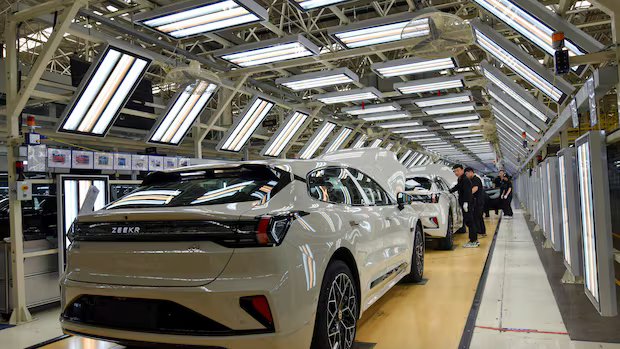

Listen to this article
Estimated 5 minutes
The audio version of this article is generated by AI-based technology. Mispronunciations can occur. We are working with our partners to continually review and improve the results.
Sooren Moosavy wants to buy an affordable electric car in the U.S., motivated by environmental concerns and a preference for the EV’s smoother ride. But the 28-year-old Baltimore resident’s search has brought him to a trio of vehicles that are essentially unavailable — because they’re from Chinese automakers.
“I would love the opportunity to be able to get one in or even test-drive one,” said Moosavy, who has narrowed his wish list to three models from BYD, Geely and Zeekr, attracted to their compactness, plush interiors, and above all, the price.
Moosavy isn’t alone. As the average price of a new car in the U.S. approaches $50,000 US, more of the car-buying public is open to buying cheaper Chinese cars, despite resistance from the industry and both major U.S. political parties.
While Chinese autos hit the highways of Europe, Latin America and even Canada, the U.S. government has effectively banned the cars with tariffs exceeding 100 per cent, out of concerns over data security and protecting American jobs.
In places like Europe, a number of Chinese EVs sell at prices under $30,000 US. Some of those cars include amenities like advanced driving assistance software, a built-in mini fridge, and the option to sing karaoke with your fellow passengers.
“The technology they offer for those lower price tags was astounding,” said Clint Simone, senior features editor for car-shopping website Edmunds, who drove several Chinese vehicles while at the CES trade show earlier this year.
China’s export surge
China has surged past Japan in recent years to become the world’s top vehicle exporter.
Canada became the latest country to open its doors to the cars, agreeing to cut tariffs to 6.1 per cent on an initial allowance of 49,000 Chinese EVs annually.

The cars are already being exported en masse to Mexico, where Chinese automakers are eyeing factory space.
U.S. President Donald Trump reiterated during an appearance in Detroit in January that he’s receptive to Chinese automakers opening stateside, as long as they employ U.S. workers. But earlier this month, major auto trade groups submitted a letter urging the U.S. government to keep Chinese carmakers out of the country, citing competitiveness concerns.

Republican Senator Bernie Moreno of Ohio said in January at an event at a Ford Motor plant that “as long as I have air in my body, there will not be Chinese vehicles sold in the United States of America.”
China’s embassy in Washington has rejected the automakers’ criticism, saying Chinese-made cars are popular because of their quality and technological innovation.
The curious U.S. consumer
Consumers have some concerns over allowing Chinese car imports, though, including over data security and protecting U.S. businesses, survey results from The Harris Poll as well as Cox show.
Rhett Ricart, an Ohio car dealer who sells several brands, including Ford, Chevrolet and Hyundai, said he has no doubt customers would snap up Chinese models if they became available.
He and other dealers don’t want that to happen yet, according to a recent Cox Automotive survey, which found that just 15 per cent of dealers supported the entry of Chinese auto brands into the U.S., and just 26 per cent trust that they would comply with U.S. safety standards.
Not meeting U.S. safety standards is one reason Chinese EVs cannot yet be owned permanently in the U.S.

But those obstacles haven’t quieted the buzz. The Cox survey polled 802 U.S. consumers who expect to buy a car in the next two years. Nearly half — 49 per cent — rated Chinese cars as having very good or excellent value, and 40 per cent say they support the idea of Chinese auto brands in the U.S. market.
Rich Benoit, a car enthusiast whose YouTube videos reviewing Chinese models garner millions of views, said the most compelling feature is the price. “That’s what a lot of people are looking for: efficient, quiet and low cost,” he said. “They want to get to work – not everyone is a car enthusiast.”
He’s considering buying a BYD model in Mexico and driving it across the border.
“That’s the only way to get one,” Benoit said. “They’ve been selling in Mexico for years… I want to own a Chinese EV in America.”