dailynewsnblog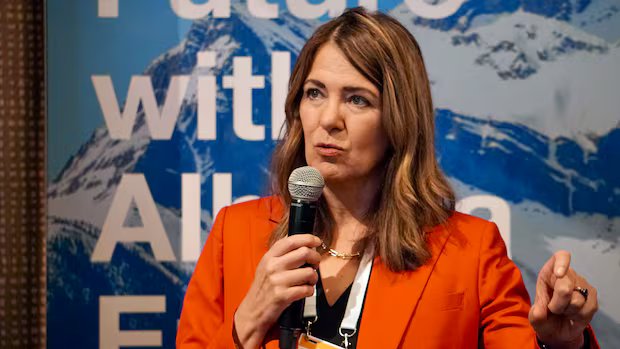

Listen to this article
Estimated 4 minutes
The audio version of this article is generated by AI-based technology. Mispronunciations can occur. We are working with our partners to continually review and improve the results.
The first set of deadlines included in the energy and climate deal struck between Prime Minister Mark Carney and Alberta Premier Danielle Smith are not expected to be met, showing early challenges with the agreement that includes pursuing a new export pipeline from Alberta to the West Coast.
The memorandum of understanding includes specific deadlines to be reached by April 1. But Smith described delays in negotiations when CBC News asked her about the issue on Monday in Houston, Texas, where the premier is attending CERAWeek by S&P Global, an international energy conference.
“We don’t want to delay very long. We know that we need to have market certainty, but that’s the time frame that we’re working towards,” she said.
The details of the deal
Last November, Carney and Smith signed a memorandum of understanding that would give Alberta special exemptions from federal environmental laws and offer political support to a new oil pipeline to the B.C. coast.
The first set of deadlines in the deal include:
- A co-operation agreement on impact assessments.
- A methane equivalency agreement.
- A carbon pricing equivalency agreement.
- A trilateral MOU with the Pathways companies.
Working together on the first agreement is complete while an announcement on the second is coming, Smith said. Deals on the industrial carbon tax and working with oilsands companies to develop the Pathways carbon capture project, however, are proving more difficult.
The Oilsands Alliance is a consortium of companies that have pledged to reach net-zero emissions. The centrepiece of their plan is the Pathways project, which would capture emissions from 20 oilsands facilities in northern Alberta and move them 400 kilometres by pipeline to a terminal near Cold Lake, Alta., where they would be stored underground. The facility would be built in phases between 2027 and 2040.
The companies behind the project have not made a final investment decision.
“We have to sit down in a three-part agreement with the Pathways group,” she said. “I would hope that we’d be able to get that that one wrapped up in the next few weeks.”

Industry concerns
The delays follow concerns raised by industry about industrial carbon pricing policy. (In one of his first moves as prime minister, Carney cut the consumer carbon tax, but left the industrial one intact.)
In January, the Canadian Association of Petroleum Producers released an open letter arguing that higher costs for carbon emissions would hurt the country’s competitiveness, when the U.S. is demonstrating a “willingness to leverage all tools at their disposal to achieve geopolitical and energy goals.”
Smith and Carney struck the deal last year, which includes rolling back some federal environmental policies.
In a speech on Monday, Natural Resources Minister Tim Hodgson said the federal government is committed to the deal with Alberta to grow the energy sector.
“Both Canada and Alberta agree that we must unlock and grow natural resource production and transportation in Western Canada, so we can get our energy and natural resources to our allies, in collaboration with Indigenous peoples and industry,” Hodgson said, while opening the Canadian pavilion at the CERAWeek by S&P Global energy conference.
Smith confident in foreign company interest
The Alberta government continues to develop the new oil pipeline project proposal, including the consideration of five potential ports in British Columbia.
No private company has yet to shown interest in purchasing the project or building the pipeline.
Still, Alberta’s premier is confident there will be interest from foreign companies and sovereign wealth funds to invest in the potential pipeline.
“Yes, I would fully expect that,” she said. “Probably not a majority stake, but at least a substantial stake, maybe 15 or 30 per cent.”
Foreign companies are already invested in the country’s energy sector. Smith specifically pointed to LNG Canada, a consortium of five international companies from Europe, Malaysia, China, South Korea and Japan, which own the natural gas export facility in Kitimat, B.C., that began operating last year.
“Whether it’s Asian company partners or Middle Eastern partners or Canadian companies or American companies, I would expect that there would be a large amount of interest from foreign stakeholders.”