dailynewsnblog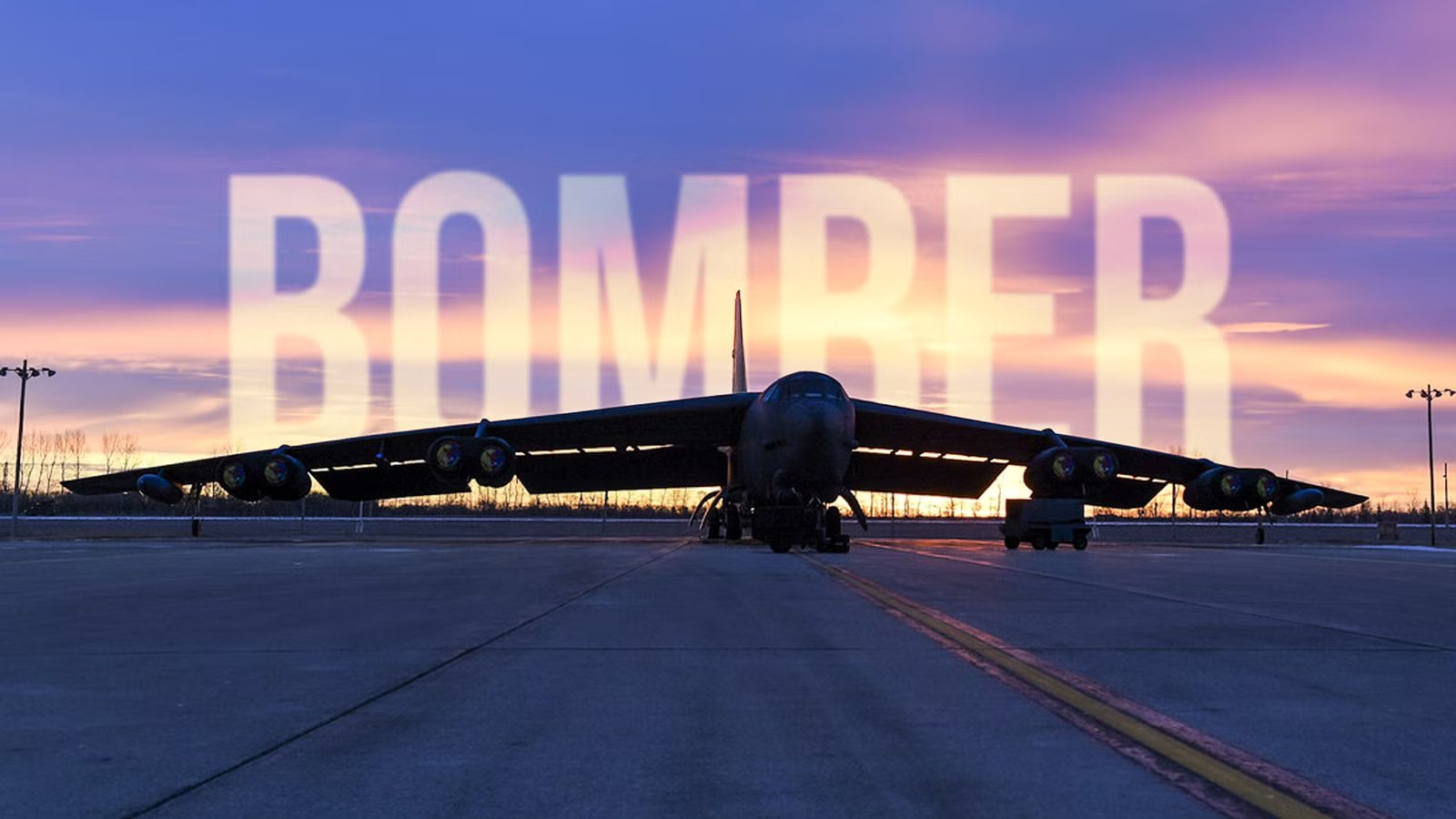
The United States Air Force currently maintains three strategic bomber airframes, with a fourth, the B-21 Raider, currently in the testing phase. There are only two Raiders currently airworthy, and they will be the smallest bomber in the USAF when they enter service. The B-2 Spirit is a heavy stealth bomber known for its iconic ‘flying wing’ silhouette, which lacks a traditional tail or fuselage, and there are just 19 of these exceptionally precious planes in the fleet.
The second largest fleet consists of the B-1B Lancer, a unique variable-sweep wing bomber. There are 44 B-1 Lancers in service, and it is the only supersonic bomber in the fleet. The backbone of the fleet is the Boeing B-52 Stratofortress, which not only is the most numerous with 76 in service, but also has the most rugged and flexible airframe.
USAF Bombers In A Nutshell

Surprisingly, the United States Air Force is actually not the largest operator of strategic bombers. Indeed, the People’s Liberation Army Air Force of China has a higher total with around 200 airframes believed to be operational. However, these aircraft are all antiquated designs from the early years of the Cold War that were adopted from Soviet airframe engineering.
|
Specification |
B-52H Stratofortress |
B-1B Lancer |
B-2 Spirit |
B-21 Raider |
|---|---|---|---|---|
|
Quantity |
76 |
45 |
19 |
Two |
|
Length |
159 feet (48.5 meters) |
146 feet (44.5 meters) |
69 feet (21 meters) |
55 feet (16.8 meters) |
|
Wingspan |
185 feet (56.4 meters) |
137 feet (41.8 meters) |
172 feet (52.4 meters) |
140 feet (42.7 meters) |
|
Max Payload |
70,000 pounds (31,750 kilograms) |
75,000 pounds (34,019 kilograms) |
40,000 pounds (18,144 kilograms) |
30,000 pounds (13,608 kilograms) |
|
Max Speed |
650 miles per hour (1,046 kilometers per hour) |
900 miles per hour (1,448 kilometers per hour) |
630 miles per hour (1,014 kilometers per hour) |
600 miles per hour (966 kilometers per hour) |
|
Service Ceiling |
50,000 feet (15,240 meters) |
30,000 feet (9,144 meters) |
50,000 feet (15,240 meters) |
50,000 feet (15,240 meters) |
|
Range |
8,800 miles (14,162 kilometers) |
7,455 miles (11,998 kilometers) |
6,000 miles (9,656 kilometers) |
6,000 miles (9,656 kilometers) |
The Air Force Global Strike Command is currently undergoing an era of significant transformation to balance sustaining today’s force with modernizing for tomorrow’s fight. The multi-type bomber fleet will be consolidated into a two-type structure. Currently, there are just over 140 bombers in service.
4
The First Sixth-Generation Warplane: Next Generation Air Power
Two Airworthy B-21s In Service

Built by Northrop Grumman, the B-21 Raider will significantly alter the Air Force’s strategic strike bomber fleet by combining the stealthy, penetrating B-21s with the ‘missile truck,’ non-stealthy B-52s to create a modernized, two-asset structure. The Air Force intends to acquire at least 100 B-21s, which will form the backbone of the future bomber force, though there is conjecture that the final total may reach 200 airframes.
Only two examples are currently known to be in testing at Edwards AFB. The B-21 Raider will be the first sixth-generation aircraft in the world when it enters service. The aircraft appears to simply be a scaled-down B-2 Spirit at first glance, and it is approximately 55 feet long with an estimated wingspan of 140 feet. However, its smaller size compared to the B-2 is intended to reduce radar cross-section and allow it to use standard fighter-sized hangars.
The new bomber has a smaller payload, but it will be more readily deployable to disperse bases while maintaining the same or greater range with a far more effective multi-spectral stealth profile. The B-21 Raider will be smaller and have only two engines, as opposed to four in the B-2, in an effort to avoid the Spirit’s extremely expensive and labor-intensive maintenance. It has an open-systems architecture for quick software upgrades and is optionally manned, which means it can fly unmanned missions as needed.

How Crew Rest & Sleep On B-2 Spirit Bomber Flights
Staying sharp on the stick.
3
The World’s First Stealth Bomber
19 Airworthy B-2s In Service

The USAF is the sole operator of the first fifth-generation heavy bomber ever made, the Northrop Grumman B-2 Spirit. The flying wing remains shrouded in secrecy because of the long list of revolutionary technologies that were invented during its development. The USAF lists just 21 Spirits delivered before the factory line shut down in 1997. The B-2 Spirit is 69 feet long with a wingspan of 172 feet.
Its unique design is reminiscent of a peregrine falcon in a dive and optimizes the shape of the plane for long-range, low-observable strategic strike, capable of carrying both conventional and nuclear payloads. The B-2 uses a quadruple-redundant fly-by-wire system to maintain stability. Its skin is composed of carbon-graphite composites and radar-absorbent materials to minimize its radar signature, and the aircraft can carry up to 40,000 pounds of ordnance in two internal weapons bays.
The AFGSC oversees a number of bases across the continental United States that are responsible for the nation’s strategic bomber and ICBM forces. Its B-2 fleet is exclusively housed at Whiteman Air Force Base due to its special maintenance needs and intensely classified operations. The table below details the AFGCS’s bases and the aircraft they support.
|
Air Force Global Strike Command Bases |
Bomber Platform |
|---|---|
|
Whiteman AFB |
Northrop Grumman B-2 Spirit |
|
Barksdale AFB & Minot AFB |
Boeing B-52 Stratofortress |
|
Dyess AFB & Ellsworth AFB |
Boeing B-1B Lancer |
The successor to the Spirit, the B-21 Raider, will be progressively introduced at three bases when it joins the fleet. The first will be Ellsworth Air Force Base in South Dakota. Secondly, it will become the next tenant of Whiteman Air Force Base, and finally, it will replace the B-1 at Dyess Air Force Base in Texas.
The B-2 Spirit fleet is planned for retirement by the early-to-mid 2030s, when it will be fully replaced by the new B-21 Raider stealth bomber. The Air Force will operate the B-2s for at least another decade to bridge the gap until enough B-21s are operational. There are currently 19 airworthy, following one crash in Guam and another that was written off due to a catastrophic mishap.

This Is Why The Most Feared Supersonic Bomber Made A Comeback In The US
The story of the Bone.
2
The Last Supersonic American Bomber
45 Airworthy B-1s In Service

The Rockwell B-1 Lancer, also known as the ‘Bone,’ is set to be retired by the mid-2030s as the United States Air Force transitions to the new B-21 Raider. The Air Force has already retired 17 of the least serviceable airframes and intends to complete the phase-out once the B-21 Raider enters service in sufficient numbers, most likely in the early to mid 2030s.
However, the remaining fleet is currently undergoing significant upgrades in order to continue serving as an important part of the US strategic bomber force until its replacement is operational. To bridge the ‘bomber deficit’ until the B-21 is fully operational, the remaining B-1B fleet will receive upgrades as part of the B-1 Embracing Agile Scheduling Team program and other modernization efforts.
It is 146 feet long with a wingspan that varies from 79 feet (swept back for speed) to 137 feet (extended for takeoff or landing). It is the only supersonic bomber in the fleet, capable of reaching speeds over Mach 1.2. It carries the largest conventional payload in the Air Force, up to 75,000 pounds, across three internal bays and external hardpoints.
Originally a nuclear-capable penetrator, the B-1 was later converted to a strictly conventional role, serving as a high-speed, heavy-payload platform. The external nuclear missile hardpoints were disabled under nuclear non-proliferation treaties, the START agreement, in the post-Cold War era. The jet bomber still uses one pylon for sensors on many missions, but not the others, until a new program began.
Boeing’s Load Adaptable Modular pylon will be used for new, advanced standoff munitions currently in development. These include the hypersonic AGM-183A Air-Launched Rapid Response Weapon, the air-breathing Hypersonic Attack Cruise Missile, and the C-3 variant of the AGM-158C Long-Range Anti-Ship Missile. Such upgrades are intended to keep the aircraft combat capable until they are finally sunset.

The 4 Largest Air Force Bases By Bomber Fleet Presence
A closer look at the homes of the USAF’s heaviest-hitters.
1
Recapitalizing The Bomber Fleet: A Century Of The BUFF
76 Airworthy B-52s In Service

The largest bomber in the USAF is the B-52H Stratofortress. Known as the BUFF, or ‘Big Ugly Fat Fella,’ it has been the backbone of the US strategic bomber force for over 60 years. The B-52 remains the most numerous airframe in the USAF as well. Eventually, the B-21 will be the flagship of the fleet, but the BUFF will continue to serve on as the other two airframes are retired.
The BUFF is a long-range, heavy-payload global strike and standoff missile carrier and casts a long shadow at 159 feet, 4 inches long with a wingspan of 185 feet. It is powered by eight engines and has a maximum takeoff weight of 488,000 pounds. Today, the Air Force and Rolls-Royce are starting a re-engining program. It is predicted that new engines will increase fuel efficiency by 30 to 40% and significantly lower the need for aerial tanking support and ground maintenance.
The upgraded version of the BUFF, known as the B-52J, is anticipated to surpass the 100-year milestone prior to retirement. The B-52J will receive RR F130 engines in place of Pratt & Whitney TF33 turbofan engines under the Commercial Engine Replacement Program.
Unlike the stealth bombers, the B-52 relies on its massive range (over 8,800 miles unrefueled) and its ability to launch a wide array of standoff weapons, including up to 20 air-launched cruise missiles. The ‘J’ will also receive updated radar, avionics, communications, weapon systems, and more to go along with the new power plants.