dailynewsnblog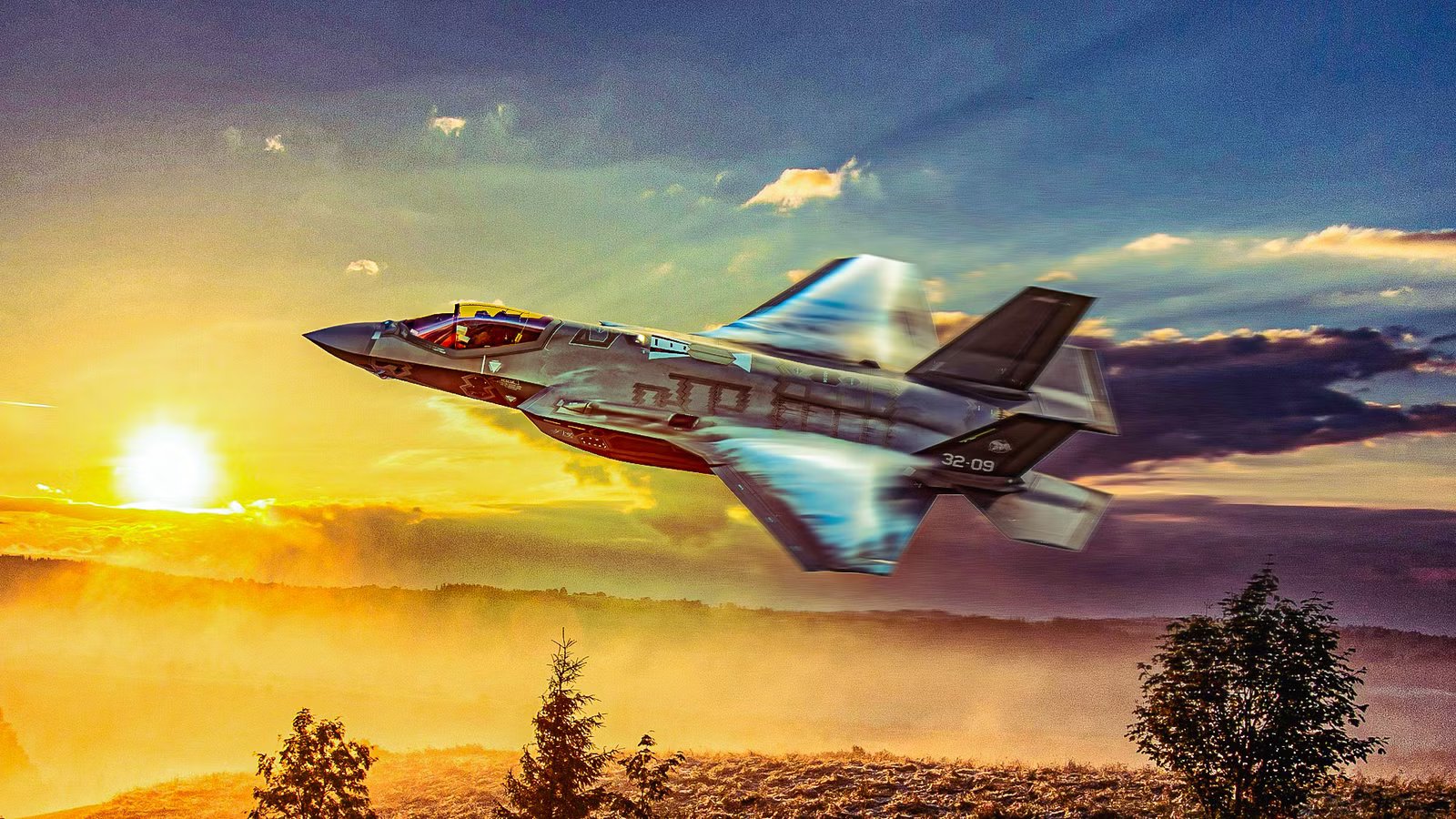
Every time an F-35A Lightning II takes off from a runway, whether at Luke Air Force Base in Arizona or a Royal Netherlands Air Force base in Leeuwarden, a financial meter starts running. The question of how much that meter ticks up per flight hour sits at the center of some of the most heated debates in modern defense procurement. Nations investing tens of billions of dollars in fifth-generation air power need to know: does the F-35A’s extraordinary capability justify an equally extraordinary operating bill?
Based on recent data from the Congressional Budget Office (CBO) and Government Accountability Office (GAO), the Lockheed Martin F-35A Lightning II costs between $34,000 and $42,000 per flight hour in 2026, a figure that remains well above the Pentagon’s $25,000 target. For the United States Air Force, which operates the largest F-35 fleet in the world, that gap has major implications for training budgets, readiness, and long-term sustainment costs. Powered by a Pratt & Whitney F135 engine and equipped with systems like the AN/APG-81 AESA radar, the F-35A is one of the most advanced fighters ever built, but also one of the most complex to maintain. Drawing on FY2024–2026 cost data and defense reports, this article breaks down the five main drivers of its cost per flight hour, compares it to rival aircraft, and explains why official figures vary so widely.
The F-35A’s Cost Per Flight Hour In 2026

In 2026, the best-supported estimate for the F-35A’s full operating and support (O&S) cost per flight hour sits in the range of $34,000 to $42,000. The lower end of that range reflects figures from the most recent Congressional Budget Office (CBO) analysis covering fiscal year 2024 data, which placed F-35A costs at approximately $34,000–$36,000 per flight hour, a meaningful improvement from around $44,000 in FY 2018. The upper bound of $42,000 comes from the Government Accountability Office (GAO), which reported that figure for all F-35 variants combined in its 2022 report to Congress.
To put those numbers in everyday terms: a single 90-minute training sortie in an F-35A burns through roughly $51,000–$63,000 in total operating cost — roughly the median annual household income in the United States, spent in the time it takes to watch a movie. The Pentagon’s own Cost Assessment and Program Evaluation (CAPE) office had set an ambitious target of $25,000 per flight hour by FY 2025, but according to reporting from Responsible Statecraft, that goal has not been achieved and the path to getting there remains unclear.
Historically, the F-35A’s cost per flight hour has trended downward as the program matured and production volumes increased, but it remains far above 4th-generation fighters. In FY 2012, Lockheed Martin cited an operating cost of approximately $33,000 per flight hour in 2012 dollars, a figure that, adjusted for inflation, equates to roughly $42,000 in 2022 dollars. The improvement from that inflation-adjusted baseline to today’s $34,000–$36,000 range represents real but modest progress.
What Factors Drive The F-35A’s Flight Hour Cost?

The cost per flight hour (CPFH) of a military aircraft is never a single, clean number, it is the result of many variables that can be accounted for differently depending on who is doing the counting. For the F-35A, the main cost drivers fall into five categories: fuel, maintenance labor, spare parts and consumables, contractor logistics support, and personnel.
-
Fuel: The F-35A’s Pratt & Whitney F135 engine is the most powerful fighter engine ever produced, generating 43,000 lbf (191 kN) of thrust in afterburner. That power comes at a cost. The aircraft burns approximately 1,479 US gallons (5,600 liters) of JP-8 fuel per flight hour in standard cruise conditions. At recent bulk military fuel prices of around $4.00-$5.00 per US gallon ($1.05-$1.32 per liter), that translates to roughly $4,800-$7,500 in fuel costs per hour , before a single wrench is turned. However, that figure is highly sensitive to global energy markets. Currently, as a consequence of
2026 Iran Crisis
, volatility linked to tensions around the Strait of Hormuz, through which roughly 20% of the world’s oil supply transits, has pushed military fuel procurement costs significantly higher in some regions. A sustained increase to $4.16–$4.92 per US gallon ($1.10–$1.30 per liter) would raise F-35A fuel costs to approximately $6,100–$7,300 per flight hour, adding $1,600–$2,800 per hour to total CPFH without any change in aircraft performance or maintenance demand. In afterburner, fuel consumption can exceed 3,962 US gallons (15,000 liters) per hour, though sustained afterburner is rarely used in training profiles. Fuel alone accounts for approximately 11–13% of the total CPFH. - Maintenance Labor: This is where the F-35A’s complexity truly shows up in the ledger. The aircraft requires approximately 13 maintenance work hours for every flight hour, a figure that compares unfavorably to the F-16’s roughly 5 hours and even the legacy F-15’s 6–8 hours. Technicians must be certified on advanced systems, including the AN/APG-81 AESA radar, the Distributed Aperture System (DAS), the Electro-Optical Targeting System (EOTS), and the ODIN logistics software platform. Each of these systems requires specialized tooling, proprietary diagnostics, and highly paid specialists. Maintenance accounts for an estimated 40–45% of total CPFH.
- Spare Parts & Contractor Support: The F-35A uses numerous proprietary components that are only sourced through Lockheed Martin and its supply chain. This single-source dependency eliminates price competition and has been flagged repeatedly by the GAO as a driver of sustainment cost growth. The DoD’s CBO revised total F-35 program sustainment costs upward from $1.1 trillion to $1.58 trillion over the program’s projected lifespan, a revision partly driven by lower-than-expected flying hours and higher parts costs. Spare parts and consumables typically add $3,000–$5,000 per flight hour, while contractor logistics support (CLS), where Lockheed Martin provides direct maintenance services at many bases, adds another $5,000–$7,000.
- Personnel costs are a significant but often underappreciated component of the F-35A’s cost per flight hour. These include not only pilot salaries, but also the large system of maintainers, mission planners, intelligence analysts, and base support staff required to sustain operations. Unlike contractor logistics support, these costs are borne directly by the operating nation and are typically embedded within broader defense personnel budgets, making them less visible in headline CPFH figures.
|
Cost Component |
Approx. Cost/hr |
% of Total |
|
Fuel (JP-8, ~1,479 US gal / 5,600 L) |
~$4,480 |
~11–13% |
|
Scheduled & Unscheduled Maintenance |
~$15,000–$18,000 |
~40–45% |
|
Spare Parts & Consumables |
~$3,000–$5,000 |
~8–12% |
|
Contractor Logistics Support (CLS) |
~$5,000–$7,000 |
~13–17% |
|
Personnel (pilots, technicians, support) |
~$4,000–$6,000 |
~10–14% |
|
Depreciation & Program Overhead |
~$2,000–$3,000 |
~5–7% |
|
TOTAL (estimated) |
~$34,000–$42,000 |
100% |
One additional factor worth noting for international operators: exchange rate fluctuations can alter the real CPFH significantly. For instance, Italy’s Aeronautica Militare, operating a growing fleet of F-35As, pays for parts and contractor support largely in US dollars. As the Euro-Dollar exchange rate shifts, so does the effective cost per flight hour in the national budget. Lockheed Martin highlights the broader economic footprint of the program, including jobs and industrial contributions across partner nations, as part of its value proposition.

Why Might The World’s Most Advanced Swing-Role Combat Aircraft Have Lockheed Martin Worried?
A European jet is posing a surprising challenge to American defense dominance.
What Do Official Sources And Defense Experts Say?

Official government sources paint a picture of a program that has made real cost reductions but still falls well short of its own targets. The most authoritative figures come from three independent bodies: the Government Accountability Office (GAO), the Congressional Budget Office (CBO), and the DoD’s Cost Assessment and Program Evaluation (CAPE) office.
The GAO’s 2022 report to Congress placed the total cost per flight hour for the F-35 (all variants) at $41,986, including all operating and support costs: fuel, maintenance, parts, contractor support, personnel, and program overhead. The same report placed the F-22 Raptor at $85,325 per flight hour, making the F-35A look relatively economical by comparison, though only by the standards of stealth aircraft. The CBO’s 2024–2025 analysis of F-35 availability and costs found that F-35A operating and support costs had stabilized, with costs in recent years “similar to those of F-15Es, below those of F-22s, and above those of F-16C/Ds”. In FY 2024, the F-35A flew an average of 195 hours per aircraft, slightly below the F-15E’s 197 hours, but above the F-22’s 143 hours and the F-16C/D’s 122 hours.
|
Fiscal Year |
F-35A CPFH (Full O&S) |
Status / Note |
|
FY 2018 |
~$44,000 |
Historical peak |
|
FY 2022 |
~$41,986 (all variants) |
GAO-reported |
|
FY 2024 |
~$34,000–$36,000 |
CBO / DoD estimates |
|
FY 2025 DoD Target |
$25,000 |
Not achieved per CAPE |
|
FY 2026 (current est.) |
~$33,000–$42,000 |
Range depending on accounting |
From the DoD contractor side, Lockheed Martin has consistently argued that costs are falling. The company’s F-35 website states that Lockheed Martin has significantly lowered its share of cost per flight hour over recent years, citing the Operational Data Integrated Network (ODIN) as a key tool for reducing unscheduled maintenance.
How Does The F-35A Compare To Other Fighter Jets?

Place the F-35A next to its peers and the picture sharpens quickly. Against 4th-generation fighters, it is the most expensive option; against other 5th-generation platforms it looks almost economical. The most telling contrast is with the F-16C/D, the aircraft it is replacing across many USAF squadrons. The Falcon costs approximately $25,000–$27,000 per flight hour in full O&S terms, up to $17,000 less per hour than the F-35A. Part of that gap comes down to sheer mechanical complexity: the F-16 demands around five maintenance work hours per flight hour, less than half the F-35’s 13. Multiply that across a squadron flying 3,000 hours a year, and you are looking at roughly $30–$51 million in additional annual operating costs for the newer jet.
At the other end of the spectrum sits the F-22 Raptor, the only true peer to the F-35A in terms of stealth and generation. Its GAO-confirmed CPFH of $85,325, combined with a maintenance burden of anywhere between 10 and 30 work hours per flight hour, makes the F-35A look like a relative bargain among 5th-generation fighters. The F-15E Strike Eagle and the F/A-18E/F Super Hornet, at ~$33,000–$35,000 and ~$30,400 per hour respectively, tell a different story: they sit close enough to the F-35A’s range that the CBO itself noted its operating costs are now broadly “similar to those of F-15Es,” which raises legitimate questions about the premium being paid for fifth-generation capability.
The Dassault Rafale offers perhaps the sharpest strategic contrast. At an estimated €16,500–€20,000 (~$15,000–$22,000) per flight hour, roughly half the F-35A’s operating cost, it is a genuinely cheaper platform to run day-to-day. But it is a 4.5-generation aircraft without the F-35A’s stealth, sensor fusion, or ability to operate inside heavily contested, modern integrated air defense systems. The nations choosing the Rafale are making a different calculation, weighing lower sustainment costs against a narrower operational envelope. Not necessarily a wrong call, but a fundamentally different one.

Why The F-35 Is The US Air Force’s Most Important Fighter Jet
Discover why the F-35 is the US Air Force’s most critical fighter — from stealth and sensors to strategy, readiness, and future upgrades
Are There Exceptions, Risks, or Hidden Costs to Watch Out For?

The most important caveat is that no single F-35A cost-per-flight-hour (CPFH) figure captures the full picture. Depending on what costs are included and how flying hours are counted, estimates can vary by more than $10,000 per hour. For example, the DoD’s FY2024 reimbursable rate was about $17,500 per hour, far below full operating and support (O&S) cost because it excludes fixed expenses like contractor support, infrastructure, depreciation, and overhead. As a result, it reflects the marginal cost of a sortie, not the true cost of operating the aircraft.
A second major risk is declining availability as the fleet ages. The CBO found that a 7-year-old F-35A has availability comparable to much older F-16s and even 17-year-old F-22s—an unfavorable trend. Lower availability means fewer flight hours over which to spread fixed costs, driving CPFH higher. The same report also revised projected lifetime sustainment costs upward after cutting expected fleet flying hours by 21%, largely due to reliability challenges.
Additional risks include spare parts shortages, contractor dependency, and the growing complexity of Block 4/TR-3 upgrades, all of which can increase maintenance costs and downtime. Inflation in fuel and labor adds further pressure. For readers, the key is to scrutinize any CPFH figure: what costs are included, what year it reflects, and whether it assumes real or theoretical flight hours. The same aircraft can appear significantly cheaper or more expensive depending on those assumptions.
Where Are F-35A Operating Costs Headed Next?

So, how much does an F-35A cost per flight hour in 2026? The most honest answer is: between $34,000 and $42,000, depending on what costs are included and how they are measured. The lower end, supported by CBO data, reflects real progress from the ~$44,000 peak in FY2018, while the higher end, based on GAO reporting, includes full overhead and long-term sustainment. The DoD’s $25,000 target has not been met and is widely seen as unrealistic without major improvements in availability and spare parts supply.
For air forces, the implication is simple: the F-35A delivers fifth-generation capability at a significantly higher operating cost. A squadron of 24 aircraft flying 3,000 hours annually will spend roughly $102–$126 million per year on operations alone. That cost must be weighed against key advantages such as stealth, sensor fusion, advanced radar capability, secure data links, and effectiveness in contested airspace.
Overall, costs will depend on three factors: the rollout of TR-3/Block 4 upgrades, the shift from contractor to government logistics support, and the growth of the global fleet, now over 1,000 aircraft. If these trends develop positively, CPFH could fall to $28,000–$30,000 by the late 2020s; if not, it may remain above $35,000 as availability and sustainment challenges persist.