dailynewsnblog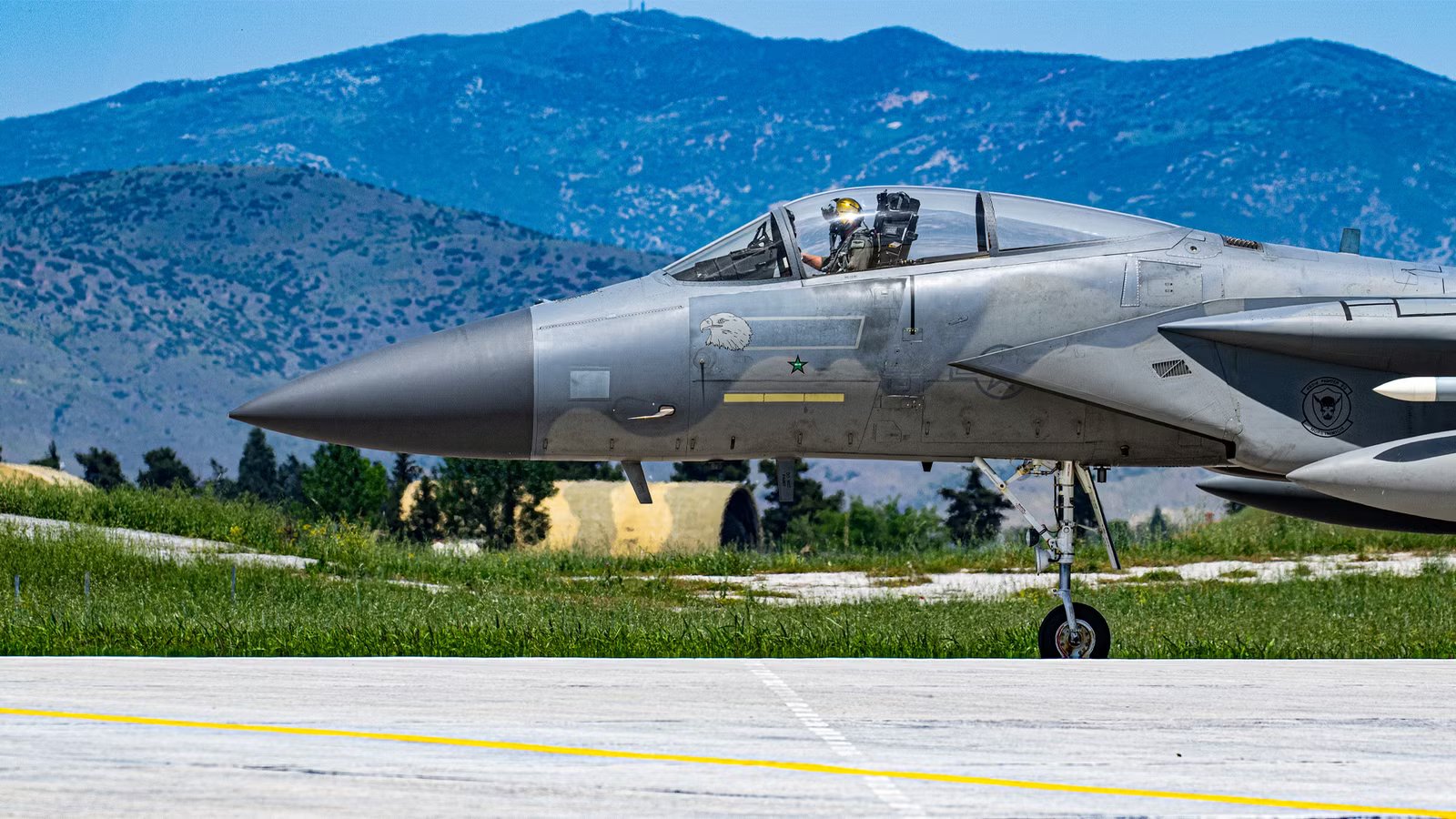
The United States Air Force operates around 55 active fighter squadrons as of 2026, flying aircraft such as the Lockheed Martin F-35A Lightning II, F-16 Fighting Falcon, and Boeing F-15E Strike Eagle. However, those squadrons are not spread evenly across the country. A handful of installations host multiple fighter units at the same location, turning them into some of the most important airpower hubs in the US military.
Bases such as Luke Air Force Base in Arizona and Seymour Johnson Air Force Base in North Carolina concentrate several squadrons each, sometimes more combat aircraft than smaller air forces operate in total. That concentration has real operational significance. Bases with multiple fighter squadrons can train pilots at scale, support large maintenance and logistics operations, and deploy entire wings overseas when required. These installations typically include extensive maintenance facilities, weapons storage infrastructure, and access to large training ranges, allowing pilots to simulate real-world combat conditions.
Drawing on USAF base data, wing structures, and squadron assignments, this analysis ranks four of the largest air bases by fighter squadron presence, rather than total aircraft numbers. While aircraft numbers fluctuate depending on deployments and training rotations, squadron assignments remain one of the clearest indicators of a base’s operational importance. Below are four key installations that anchor the United States’ fighter force structure, starting with the smallest concentration and ending with the largest.
Mountain Home Air Force Base
A multinational F-15E hub in Idaho

Mountain Home Air Force Base in Idaho hosts the 366th Fighter Wing, one of the US Air Force’s primary operational units for the  Boeing F-15E Strike Eagle. The base currently hosts three fighter squadrons, including two US Air Force units and one allied training squadron from Singapore. While that number may seem modest compared with larger training bases, the concentration of advanced strike aircraft makes Mountain Home an important operational node in the USAF fighter network.
The installation sits near the Mountain Home Range Complex, one of the largest air-to-ground training areas in the continental United States. This allows F-15E crews to practice long-range strike missions, close air support, and coordinated multi-ship operations in realistic conditions. The ability to train over such a large area is one reason why the base continues to host frontline combat squadrons rather than purely training units.
One of Mountain Home’s most distinctive features is its multinational training environment. The Singapore Air Force’s 428th Fighter Squadron “Buccaneers” operates F-15SG aircraft from the base, giving its pilots access to significantly larger training airspace than they would have at home. The partnership has been in place for more than a decade and reflects the growing emphasis on joint training among allied air forces.
In addition to routine training missions, the base frequently hosts large-scale exercises that integrate multiple aircraft types and support units. These exercises often involve aerial refueling, precision strike training, and simulated air defense missions. While Mountain Home hosts fewer squadrons than the bases ranked above it, its combination of operational combat units and international cooperation gives it a unique role within the US fighter basing system.
Shaw Air Force Base
One of the largest operational F-16 hubs in the US

Shaw Air Force Base in South Carolina hosts the 20th Fighter Wing, widely regarded as the largest operational wing of F-16 aircraft in the United States Air Force. The base supports three fighter squadrons flying the versatile single-engine multirole fighter, which remains one of the most widely used combat aircraft in the world. Even as fifth-generation aircraft expand across the fleet, the F-16 is capable of performing air defense, suppression of enemy air defenses, and precision strike missions.
Shaw’s location on the US East Coast also gives it strategic importance for global deployments. Fighter squadrons based here regularly rotate to the Middle East and Europe in support of NATOexercises and US-led operations abroad. Aircraft from the base have participated in missions ranging from Operation Inherent Resolve to NATO air policing deployments in Eastern Europe.
Another factor that makes Shaw significant is that it hosts the headquarters of the Ninth Air Force (Air Forces Central). This command oversees US Air Force operations within the US Central Command region, which includes the Middle East and parts of Central Asia. As a result, Shaw combines operational fighter units with high-level command functions, making it a strategic planning hub as well as an operational base.
The three fighter squadrons stationed at Shaw, the 55th Fighter Squadron, 77th Fighter Squadron, and 79th Fighter Squadron, maintain a constant cycle of training and deployments. Together, they represent one of the largest concentrations of operational F-16 units in the United States and globally. The base also supports extensive maintenance and logistics facilities that allow aircraft to be prepared quickly for overseas rotations.
Beyond its combat role, Shaw regularly participates in multinational exercises with NATO allies, helping maintain interoperability between US and allied air forces. While Shaw hosts fewer squadrons than Seymour Johnson or Luke Air Force Base, its combination of combat units and command infrastructure makes it one of the most important F-16 bases in the US Air Force.

United States’ WWII-Era Airports Still In Operation
Explore the lasting legacy of WWII airfields and their unexpected role in the future of American aviation.
Seymour Johnson Air Force Base
The largest concentration of F-15E Strike Eagles

Seymour Johnson Air Force Base in North Carolina hosts the 4th Fighter Wing, which operates the largest concentration of Boeing F-15E Strike Eagle aircraft anywhere in the world. The wing includes four fighter squadrons flying the twin-engine strike fighter, making it one of the most concentrated fighter bases in the United States. Each squadron operates the same aircraft type, allowing the base to specialize entirely in supporting and maintaining the Strike Eagle fleet.
This concentration also creates a highly streamlined operational structure in which pilots, maintenance crews, and support personnel all focus on the same aircraft platform. As a result, Seymour Johnson has become the central hub for many of the Air Force’s F-15E training, maintenance, and combat readiness activities. The F-15E itself is widely regarded as one of the most capable aircraft in the US fighter inventory. Originally developed as a long-range strike variant of the F-15 air superiority fighter, the aircraft combines heavy payload capacity with advanced avionics and strong air-to-air performance.
The Strike Eagle can carry a wide range of precision-guided weapons while also maintaining the speed and maneuverability required for fighter combat. In recent years, the aircraft has received major upgrades such as the Eagle Passive/Active Warning and Survivability System (EPAWSS), which significantly improves electronic warfare capability and survivability against modern integrated air defense systems. These upgrades are expected to keep the F-15E operational well into the 2030s, ensuring that Seymour Johnson’s squadrons remain a cornerstone of the Air Force’s deep-strike capability.
Having four operational squadrons based at the same location also creates significant logistical and operational advantages. Maintenance crews, spare parts inventories, and training resources can all be centralized, allowing aircraft to be serviced and returned to flight status more efficiently. The base’s infrastructure is designed to support a high operational tempo, with multiple hangars, weapons storage facilities, and maintenance units dedicated to the Strike Eagle fleet.
Aircraft from Seymour Johnson regularly deploy to forward bases across Europe and the Middle East, where their long range, advanced targeting systems, and heavy payload capabilities make them particularly valuable for precision strike missions. Because of this concentration of combat units and the continued importance of the F-15E platform, Seymour Johnson ranks second among the largest fighter bases by squadron presence.

The F-15’s Staying Power: How A 1970s Fighter Remains Relevant In The Modern Era
More than 50 years after its first flight in 1972, the F-15 is still flying and being built.
Luke Air Force Base
The largest fighter pilot training base in the world

Luke Air Force Base in Arizona is home to the 56th Fighter Wing, the largest fighter training wing in the United States Air Force. Unlike many operational bases, Luke’s primary mission is to train new fighter pilots before they move to combat squadrons across the fleet. The base currently supports six to seven fighter training squadrons, primarily operating F-35A Lightning II, along with a smaller number of F-16s.
The scale of the training operation at Luke is enormous. Each year, the base graduates dozens of new fighter pilots for the US Air Force as well as several allied nations. Pilots from countries such as Australia, the Netherlands, Norway, Denmark, and Italy train at the base as part of the multinational F-35 program. This makes Luke one of the most internationally diverse fighter training locations in the world.
Luke’s location in the Arizona desert provides access to enormous training areas such as the Barry M. Goldwater Range, which covers roughly 1.7 million acres of airspace and ground ranges. These facilities allow pilots to practice complex scenarios involving multiple aircraft types, electronic warfare systems, and precision-guided weapons. The base also plays a central role in introducing new pilots to fifth-generation aircraft operations. Training programs at Luke include advanced tactics for stealth aircraft, sensor fusion, and networked warfare, skills that are essential for modern air combat.
Because of this training mission, the base serves as a gateway for many pilots entering operational F-35 units across the US Air Force and allied air forces. The unique concentration of training squadrons and its central role in preparing pilots for both fourth- and fifth-generation fighters make Luke Air Force Base the largest air base by fighter squadron presence on this list. In many ways, it acts as the entry point for the next generation of US and allied fighter pilots.