dailynewsnblog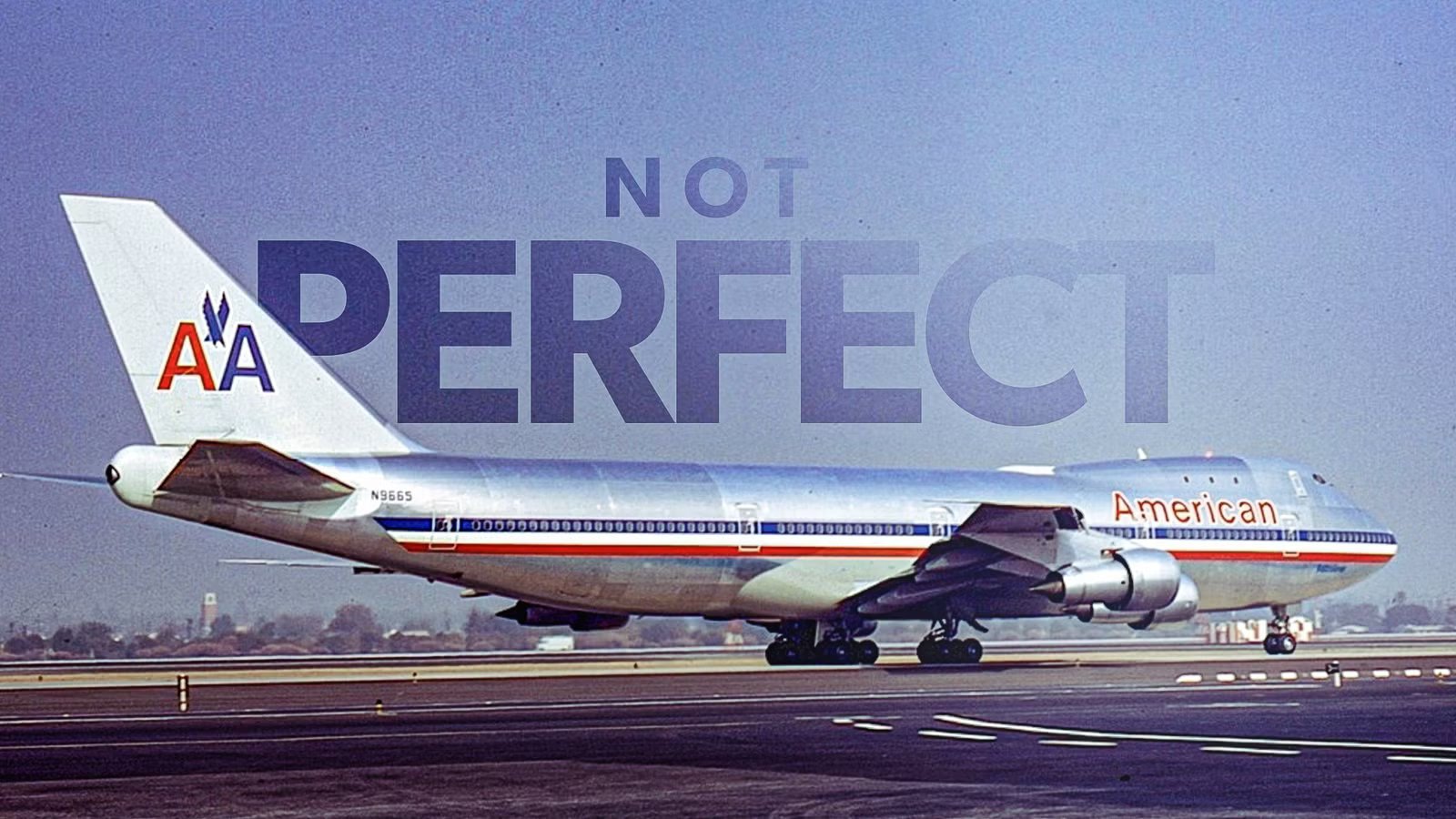
The Boeing 747 was history’s best-selling widebody aircraft for decades, only losing this title to the Boeing 777 in 2018, and Boeing built 1,574 examples across 55 years of production. While the 747 has long been popular worldwide, excitement among US airlines was fairly short-lived. This included American Airlines, now the nation’s second-largest carrier, which hasn’t flown the Boeing 747 in almost 35 years. United Airlines and Delta Air Lines retired their final Boeing 747s in the 2010s.
Since the 1990s, American Airlines has relied on the Boeing 777 as its flagship aircraft, a common choice today, but far less so in the 90s and 2000s. Until recently, the Boeing 747 has not just been the largest airliner on sale, but also the longest ranged too. The 747 was commonly used to open up new flagship routes for airlines with high demand, connecting cities like New York to Tokyo or Tokyo to London. But for American Airlines, it’s long been the Boeing 777 that served this role, first the 777-200ER, and now the 777-300ER.
American Airlines’ Boeing 747 Fleet

 American Airlines took delivery of its first Boeing 747, a 747-100 model, in 1970. American was one of the first operators of the 747-100, but it never embraced the 747 like other operators. In total, American would only operate nine passenger 747-100s, in addition to seven 747-100SFs. American Airlines sold one 747-100 in 1974 and one 747-100SF in 1975, with the remaining 747-100s remaining until the 1980s. American began removing its 747-100s in 1983, and the type was fully removed from American’s fleet by 1985.
While American lacked double-deckers for a brief period after the 747-100s left the fleet, the Fort Worth-based carrier acquired two Boeing 747SPs the following year. These aircraft were formerly flown by TWA and were acquired exclusively to operate a new route from Dallas/Fort Worth International Airport to Tokyo Narita International Airport, which was American Airlines’ only ultra-long-haul route at the time. The 747SPs were replaced by the McDonnell Douglas MD-11, and the two planes were removed in 1994, temporarily serving other destinations such as London.
In the US, the 747-100 was also ordered by United Airlines, TWA, Northwest Airlines, Delta Air Lines, Eastern Air Lines, National Airlines, Braniff, and the variant’s largest operator, Pan Am. Northwest Airlines was the only US airline to order the long-range 747-200 in large numbers, although United Airlines and Braniff operated the type in smaller numbers. Meanwhile, the 747-400’s only US customers were United Airlines and Northwest Airlines, whose units were later operated by Delta Air Lines after the two airlines merged.
Why American Airlines Got Rid Of Its 747-100s

American Airlines primarily operated the original 747-100 variant. This model is lighter, more fuel-efficient, and has a shorter range than the 747-200, intended to be used for short to medium-haul routes. As such, American Airlines mainly used the 747-100 to operate premium transcontinental routes, connecting New York and Boston to Los Angeles and San Francisco, as well as on hub-to-hub routes. In addition, the 747-100 was flown to Hawaii and to San Juan.
Airlines tend to prefer operating higher frequencies with smaller aircraft on shorter routes to appeal to business travelers. Within the US, very few routes have enough demand to support a large widebody, let alone a Boeing 747, and American Airlines struggled to fill its 747-100s. The carrier was the launch customer of the McDonnell Douglas DC-10 and was the main airline asking manufacturers for a widebody smaller than the 747, although it was far from the only carrier that found the 747 to be too much plane.
American Airlines traded its 747-100 fleet to Pan Am in exchange for more DC-10s, including both the medium-range DC-10-10 and the long-range DC-10-30. While American had operated the DC-10-10 since the type entered service, the DC-10-30 only began serving American in the 1980s, with American acquiring used examples from Pan Am, Air New Zealand, and KLM. These planes took over long-haul routes that were originally opened up by the 747-100 in the 1980s, and the DC-10-30 was retired in 2000.

The Boeing 747‑400F’s Incredible Cargo Hold
Exploring the design of the Boeing 747-400F.
American Airlines’ Boeing 747SP Operations

Before deregulation, American Airlines was not permitted to operate routes to Europe or Asia, and its first nonstop European service wouldn’t come until 1982, from Dallas/Fort Worth (DFW) to London Gatwick (LGW). American would grow its European network from Dallas, as well as from New York and Chicago, primarily using the Boeing 767. However, the 767 lacked the range to open up new flights to Asia, as did every other aircraft in American Airlines’ fleet in the early to mid 1980s.
American Airlines took delivery of two former TWA Boeing 747SPs in 1986, and these planes were used to begin nonstop flights from Dallas/Fort Worth to Tokyo-Narita the following year. This was American’s first nonstop route to Asia and its longest flight. In their initial few years, the 747SPs were flown exclusively on this route. At the time, the 747SP was the world’s longest-ranged airliner, and the only aircraft that could come close to matching it was a late-model Boeing 747-200B, although the 747-200B would require seat blocking.
For many airlines, blocking seats on a 747-200B turned out to be the more economical choice since this still gave more revenue opportunity than with the 747SP, but American Airlines had no place in its network for such a huge aircraft. Instead, it went with the 747SPs, which were cheap to buy and had a lower capacity, preserving pricing power. The Dallas-to-Tokyo route would later be taken over by the McDonnell Douglas MD-11, which itself was succeeded by the Boeing 777.
Why American Airlines Never Went For The 747-200/400

American Airlines leased a single 747-200 in 1984 from World Airways to temporarily boost capacity during the busy season, but it has never directly ordered the 747-200 or the larger 747-400, the two most popular 747 variants. Along with the 747SP, these were the longest-ranged variants of the 747 family, opening up new ultra-long-haul routes for flag carriers around the world. However, these variants weren’t nearly as popular in the United States, where airlines tend to operate shorter routes with their widebodies.
The Boeing 747-200 didn’t fit into American Airlines’ network in the 1970s and 1980s, which was mainly focused on domestic flying. The later 747-400 was the successor to the 747-200 in that it was a long-range variant of the iconic 747, but modernized and upgraded to be more fuel efficient as well as more capable. However, only two airlines in the United States bought the 747-400: Northwest Airlines and United Airlines. Both of these carriers operated large long-haul networks into Asia by the 1990s, which necessitated an aircraft with an extremely long-range and high payload capacity.
|
Customer |
Number Of 747-400s Operated |
Replacement Aircraft |
|---|---|---|
|
Northwest Airlines |
16 |
Airbus A350-900 |
|
United Airlines |
44 |
Boeing 777-300ER |
American Airlines has never built an Asia network comparable to that of rivals, and continues to be third across the Pacific among the big three legacy carriers. It has never required the range of the 747-400, nor the jet’s capacity, and while it was the first US airline to order the Boeing 777-300ER (similar in size to the 747-400), it only did so in the 2010s. Delta Air Lines, which operated Northwest’s 747-400s, replaced them with the significantly smaller Airbus A350-900, while United replaced the 747-400 with the 777-300ER. United and Northwest primarily needed the 747-400’s range rather than its capacity.

The Top 10 Boeing 747 Airline Customers In History
Only a few of the greatest purchasers of the Boeing 747 were US airlines, and some still have them in service.
American Airlines’ Flagship Aircraft

American Airlines has traditionally relied on smaller aircraft for long-haul service. The Boeing 767-300ER was its transatlantic workhorse for decades, and in the early 1990s, American initially placed its bets with the McDonnell Douglas MD-11 to serve as its long-range flagship. This aircraft replaced the 747SP on the Dallas to Tokyo route, and it opened up several new Asia services, such as from San Jose to Tokyo, while also rotating on other routes within American’s Europe and South America network.
The MD-11 failed to meet its range promises, and American Airlines explicitly voiced its disappointment in the MD-11, as it often had trouble making it from Dallas to Tokyo. The carrier would go on to order the Boeing 777-200ER, and the MD-11s were gone by 2001. Similarly sized, the 777-200ER proved to be simultaneously more efficient and more capable than the MD-11, becoming a workhorse for American’s long-haul network. In total, American would acquire 47 777-200ERs.
|
Aircraft |
Number Operated |
|---|---|
|
Boeing 747SP |
Two |
|
McDonnell Douglas MD-11 |
15 |
|
Boeing 777-200ER |
47 |
|
Boeing 777-300ER |
20 |
American Airlines began taking delivery of the Boeing 777-300ER in 2012, making it one of the carrier’s youngest fleets. The 777-300ER is more capable and more economical than the 777-200ER, and although it is a large aircraft, this becomes less of a concern considering its low operating costs and the fact that premium seats take up more space today. As such, the 777-300ER is well-suited for this role and routinely operates American Airlines’ busiest routes.