dailynewsnblog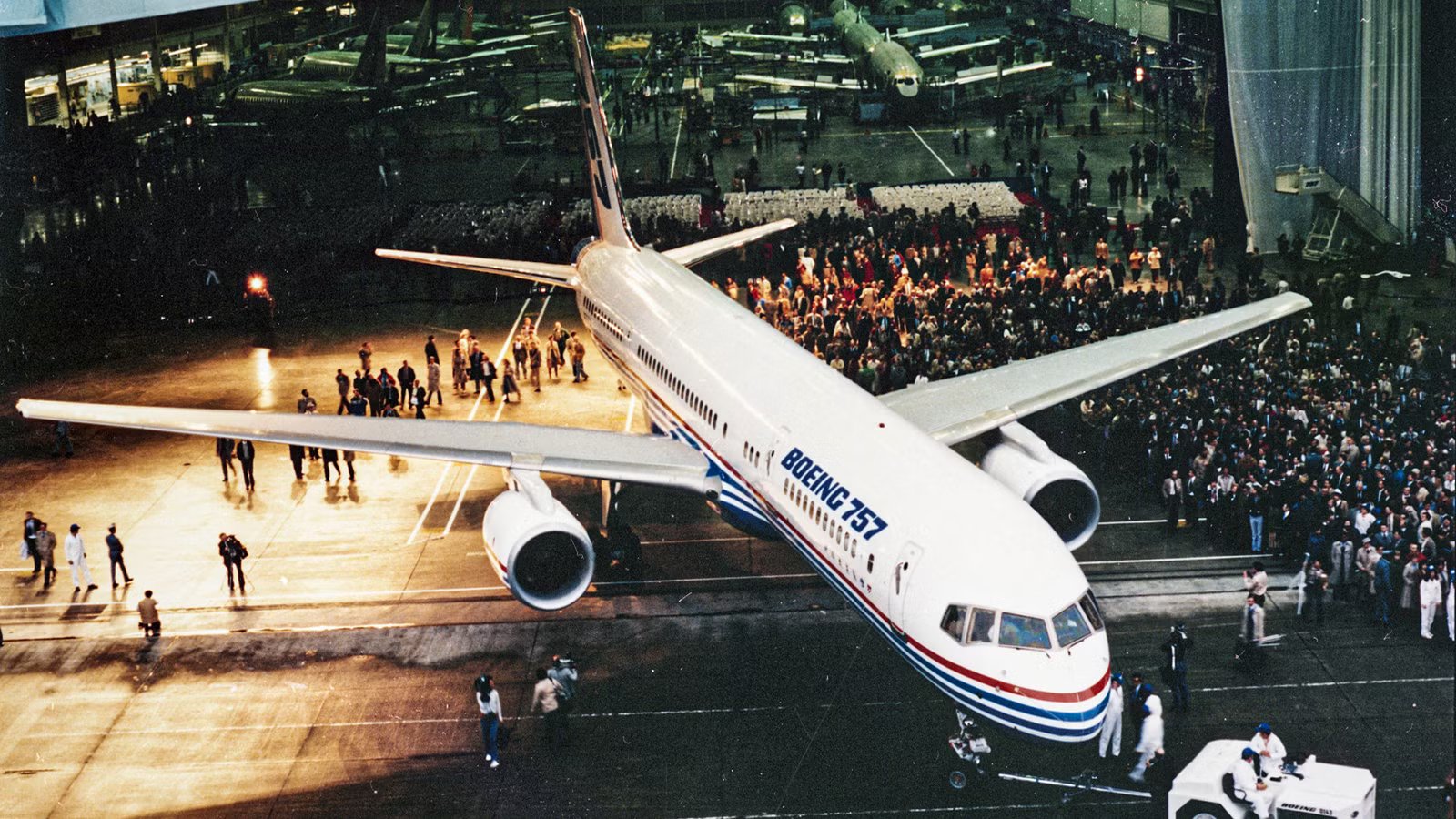
The Boeing 757 is often recognized as one of the most capable and versatile narrowbody aircraft ever built. Introduced in the early 1980s, it combined strong performance with relatively efficient operations, allowing airlines to fly everything from short domestic hops to transatlantic long and thin routes, and for many carriers, it became a true workhorse, one that was powerful, flexible, and ahead of its time.
Yet despite its strengths and loyal following,  Boeing ended production of the 757 in 2004, in a decision that surprised many aviation enthusiasts, especially as the aircraft continued to perform well in service. However, the 757’s fate was ultimately shaped by shifting airline economics, changing market demand, and Boeing’s own strategic priorities.
Changing Market Demands

When the Boeing 757 first entered service, it filled an important niche between smaller narrowbody and larger widebody aircraft – with seating for roughly 200-290 passengers, it offered more capacity than earlier aircraft like the Boeing 737, while avoiding the cost of widebody operations. However, by the late 1990s and early 2000s, that niche began to shrink, and airlines increasingly favored either smaller aircraft for frequent short-haul flights or larger widebodies for high-demand long-haul routes. The middle of the market, where the 757 sat, became less attractive.
At the same time, improved versions of the Boeing 737 and Airbus A320 families started to encroach on the 757’s territory. These newer narrowbodies could handle many of the same routes as the 757, but with lower operating costs and better fuel efficiency, and as a result, airlines simply stopped ordering the 757 in large numbers. The aircraft had not become obsolete; it had just become less necessary.

The Aircraft Set To Replace The Iconic Boeing 757
There isn’t a single airliner that can replicate all of the Boeing 757’s capabilities, but perhaps the market doesn’t require one.
The Rise Of More Efficient Narrowbodies

Fuel efficiency has always been one of the most important factors in commercial aviation, and as fuel prices fluctuated and environmental pressures increased, airlines sought aircraft that could do more with less. The Boeing 757, while efficient for its time, was designed with powerful engines and strong performance capabilities, including the ability to operate from shorter runways.
But these features came at a cost, and the Boeing 757 was often too powerful for many of the routes that it operated. Newer aircraft like the 737 Next Generation and later variants offered lower fuel burn on typical short- and medium-haul routes, and airlines realized they could achieve similar results with smaller jets that were cheaper to operate and easier to fill with passengers.
This shift was particularly important as low-cost carriers began to dominate parts of the market. These airlines prioritized simplicity, high utilization, and minimal costs, areas where smaller narrowbodies had a clear advantage over the Boeing 757.
The Impact Of 9/11 On Airline Economics

One of the most significant turning points for the Boeing 757 came after the September 11th attacks in 2001. The global aviation industry entered a sharp downturn, with passenger demand dropping and airlines becoming far more cautious about expansion. In this environment, the 757 became a riskier proposition, as its larger size meant that airlines needed consistently high passenger loads to make flights profitable. If those seats were not filled, operating costs could quickly outweigh revenue.
Many airlines responded by downsizing their fleets or delaying aircraft orders altogether. Smaller aircraft like the Boeing 737 and Airbus A320 became more attractive because they reduced financial risk on uncertain routes, and even though Boeing attempted to revive interest in the 757 with marketing efforts in the early 2000s, the timing worked against it. Orders for the 757 continued to decline, ultimately sealing the aircraft’s fate.

How Many Boeing 757s Are Still Flying In 2026?
Despite a declining operator base, the 757 remains an important part of many airlines’ fleets in 2026.
A Niche Aircraft In A Changing Industry

The Boeing 757 was exceptionally capable, but its very strengths contributed to its downfall. It excelled in specialized roles, such as operating from short runways or flying long, thin routes that did not justify a widebody aircraft. However, these roles represented a relatively small portion of the overall market, and most airlines preferred aircraft that could be deployed across a wide range of routes without being overpowered or oversized.
The Boeing 757 was optimized for a specific type of operation, feeding passengers into hubs or flying longer routes from smaller airports, but as airline networks evolved, that model became less dominant. In other words, the 757 did not fail because it was ineffective – it simply became too specialized for an industry that was moving toward flexibility and cost efficiency.
Boeing’s Strategic Shift To Other Programs

Another key reason for the Boeing 757’s discontinuation was Boeing’s broader strategy. By the early 2000s, the US manufacturer was already committing significant resources to aircraft that it believed would define the future of commercial aviation.
At the narrowbody end of the market, Boeing doubled down on the 737 family, eventually leading to the development of the Boeing 737 MAX. This aircraft offered improved fuel efficiency, updated avionics, and lower operating costs, making it far more attractive to airlines operating high-frequency short- and medium-haul routes. Rather than investing in a niche product like the 757, Boeing focused on refining a platform that could be sold in far greater numbers.
At the same time, Boeing was also investing heavily in the Boeing 787, a next-generation widebody designed to revolutionize long-haul travel. With its advanced materials, improved fuel burn, and ability to economically serve long, thin routes, the 787 effectively absorbed one of the 757’s most unique roles. Airlines that might once have relied on 757s for transatlantic services could now operate more efficient widebodies with greater passenger comfort and cargo capability.
Looking further ahead, Boeing also began work on its largest widebody program yet, known as the Boeing 777X, which is aimed at high-capacity, long-haul markets. While the 777X occupies a very different segment, its development reflected Boeing’s strategy of focusing on clear, high-demand categories rather than maintaining aircraft in shrinking niches.
Crucially, all of these programs required massive financial and engineering investment. Continuing with the Boeing 757, or developing a direct successor, would have meant diverting resources from aircraft that promised higher sales volumes and stronger long-term returns. So with orders for the 757 already declining, Boeing made the pragmatic decision to concentrate on products with broader appeal.
In that context, ending Boeing 757 production was not just about the aircraft itself, but about where Boeing saw the future of aviation heading. The manufacturer chose to prioritize efficiency, scalability, and global demand over maintaining a specialized, mid-sized jet.

Wait, It Flies WHERE? Delta Air Lines’ 10 Longest Nonstop Boeing 757 Flights
The airline currently operates more than 100 Boeing 757s.
Why Boeing Never Replaced The 757

Perhaps the most surprising aspect of the Boeing 757’s story is that Boeing never introduced a direct replacement. While there has long been discussion of a middle-of-the-market aircraft, no such program has reached production, and one reason is likely to be the sheer cost and complexity involved. Restarting or redesigning the 757 would require rebuilding supply chains, re-certifying the aircraft under modern regulations, and investing billions of dollars in development. Additionally, the market remains uncertain. While some airlines value the capabilities the 757 offered, others have found alternatives in newer aircraft, like extended-range narrowbodies, such as the Airbus A321XLR.
As a result, Boeing has repeatedly delayed or reconsidered plans for a replacement, and even years after production ended, the company has yet to fully commit to a new aircraft in this segment. Interestingly, the continued use of the 757 today highlights the gap it left behind. Airlines still rely on it for routes that are difficult to serve with other aircraft, particularly long, thin transatlantic flights.
At the same time, competitors have begun to move into this space, and new aircraft designs are gradually taking over the roles once dominated by the 757, showing that while the original may be gone, the demand for its capabilities never fully disappeared. Today, the Boeing 757 remains in service with a relatively small but significant group of airlines, primarily in the US and a few niche international operators. Its unique combination of range and performance means it still fills roles that newer aircraft are only just beginning to replace.
The largest operator is  Delta Air Lines, which still has more than 100 757s in its fleet. The
  SkyTeam carrier regularly deploys its 757s on a wide mix of routes, including short domestic sectors and high-frequency services between major hubs like
  Hartsfield-Jackson Atlanta International Airport (ATL), New York John F. Kennedy International Airport (JFK), and
  Los Angeles International Airport (LAX).
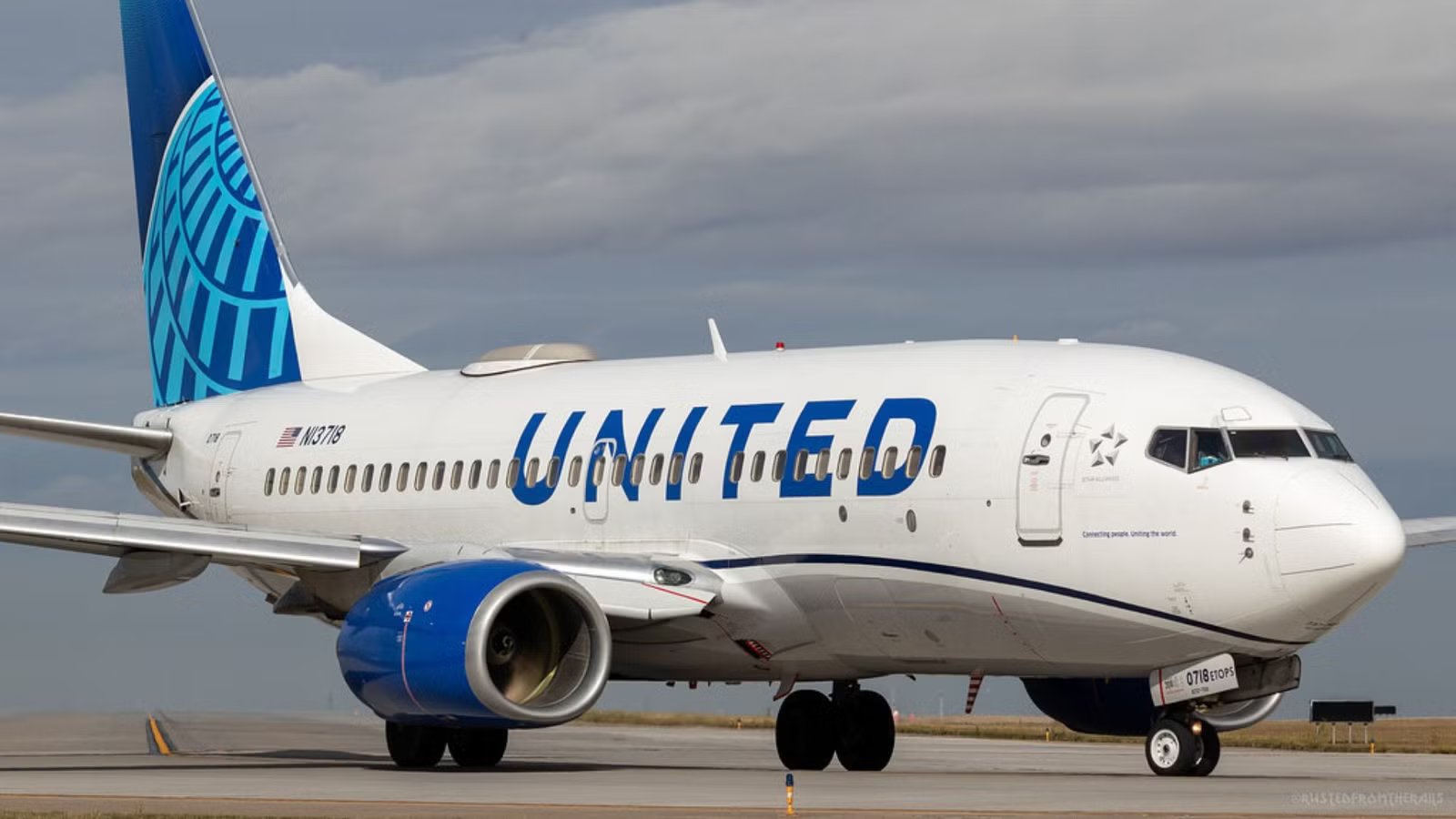
At the same time, Delta Air Lines also deploys the aircraft on premium transcontinental routes and select international flights to the Caribbean and Latin America, where its performance and capacity remain well suited. Meanwhile,  United Airlines is another key operator, deploying its Boeing 757 fleet extensively on transatlantic long and thin routes from hubs, like
  Newark Liberty International Airport (EWR) and Washington Dulles International Airport (IAD).
Outside the US, Icelandair remains one of the last major Boeing 757 operators, using the aircraft as the backbone of its network. From Reykjavik, it operates both transatlantic flights to North America and shorter European routes, taking advantage of the 757’s range and flexibility. Cargo operators, including airlines like DHL and FedEx Express, also continue to rely on the 757 freighter for regional and medium-haul logistics, highlighting how the aircraft’s capabilities remain valuable even as passenger use gradually declines.