Traders Brace for Turbulent Open as War Rages On


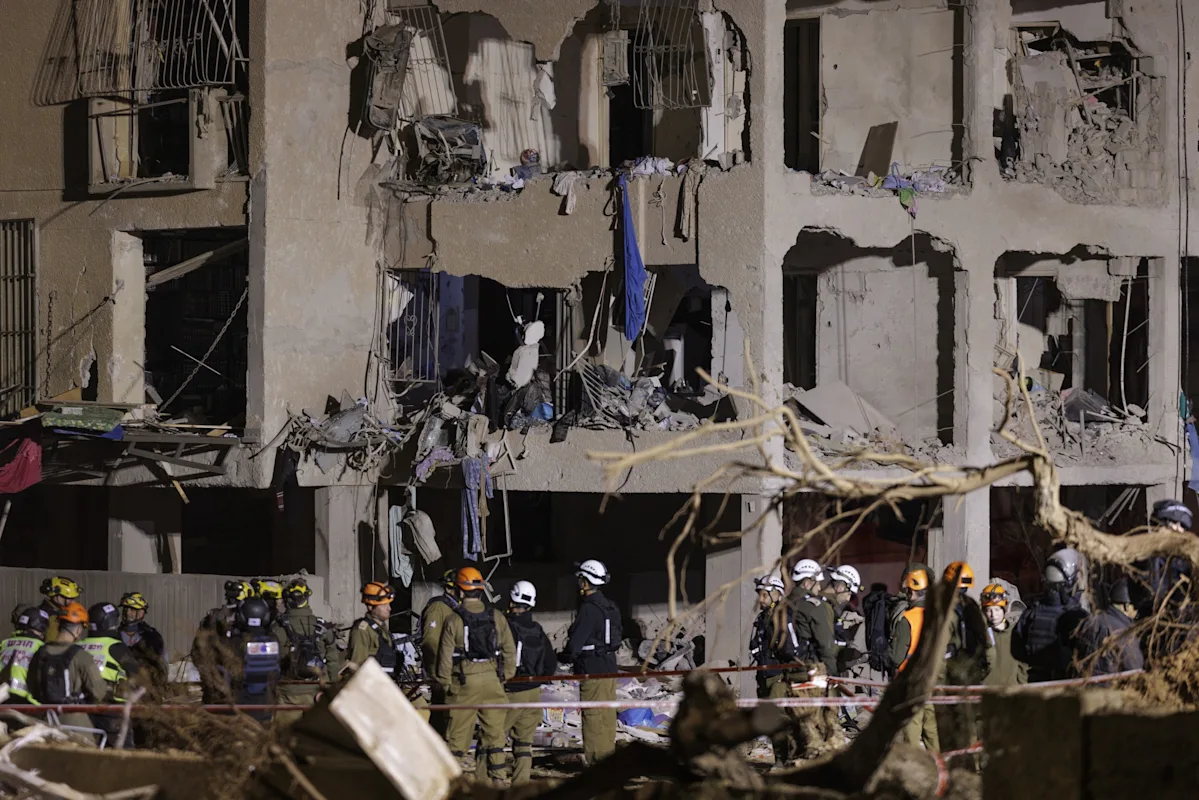
Photographer: Kobi Wolf/Bloomberg

Investors are bracing for another turbulent session as the US war in Iran enters a fourth week with no signs of easing.

President Donald Trump issued a 48-hour ultimatum to Tehran late Saturday to reopen the Strait of Hormuz or face strikes on its power plants, a deadline that expires Monday evening in New York.

Most Read from Bloomberg

But Iran responded that any such attack would prompt it to shut the waterway indefinitely and target US and Israeli energy infrastructure across the region, signaling that both sides are at risk of escalating the conflict.

Trading in US equity futures, Treasuries and crude resumes Sunday evening after a week that saw stocks and bonds sell off in tandem, gold notch precipitous declines and Brent crude end at over $112 a barrel, its highest in almost four years. Bitcoin also fell as investors pulled back from risk assets, with the cryptocurrency dropping below $69,000 on Sunday.

“Pulling back on this war is not Trump’s sole decision,” Matt Maley, the chief market strategist at Miller Tabak, said in an interview. “Uncertainty has been increasing for three weeks and the uncertainty took a big jump now. Even if people don’t sell, they are not going to be buying — and if there’s no bids, it creates a vacuum.”

The selloff in the US accelerated on Friday as traders started anticipating that the Federal Reserve may shift to hiking interest rates this year as oil prices threaten to deliver a fresh inflation shock. Markets are bracing for similar moves from central banks in Japan, Europe and the UK even as the war also dampens the outlook for economic growth globally.

The twin risks of rising inflation and potentially weaker growth drove the S&P 500 down by 1.5% on Friday, capping its fourth-straight weekly loss, the longest losing streak in a year. The benchmark 10-year Treasury yield surged by 13 basis points to 4.38%, the highest since late July, following selloffs in European bond markets as investors positioned for higher rates. The dollar, which has risen along with oil, was indicated stronger against most of its Group-of-10 peers as the Asian trading day began.

“The dramatic escalation in rhetoric appears likely to see a further risk-off move when markets open, as the prospect of long-term disruption to global energy supplies becomes harder to downplay,” ANZ Group Holdings strategists including David Croy wrote in a note to clients.


After markets closed on Friday, Trump indicated he was looking for a way to pull back from the war by saying on social media that he was considering winding down military efforts in Iran, claiming the US was “very close” to meeting its objectives. But his later threats to bomb power plants — and Iran’s vow to retaliate — showed little progress toward a ceasefire.

In an interview on NBC’s Sunday, Treasury Secretary Scott Bessent said the US attacks on Iran are aimed at destroying its fortifications along the Strait of Hormuz and that Trump will “take whatever steps it takes” to achieve the US’s stated goals. He said “sometimes you have to escalate to de-escalate.”

The standoff over Hormuz — through which roughly a fifth of the world’s oil and liquefied natural gas normally flows — has deepened a supply crisis already rippling into gasoline prices, fertilizer costs and food production. Traffic through the strait has effectively ground to a halt since the conflict began at the end of February.

Major Wall Street firms including Goldman Sachs Group Inc. and Societe Generale SA shifted to more defensive positioning last week as the prospect of a prolonged conflict hardened.

On the ground, Iran intensified missile strikes on Israeli cities over the weekend. Israel and the US continued striking targets in and around Tehran, and the Israeli military launched a new wave of strikes against Hezbollah infrastructure in southern Lebanon.

The ripple effects of the conflict are expected to start showing up in economic data. Every purchasing manager index for which Bloomberg collects estimates is anticipated to show a decline when initial numbers for March are released on Tuesday, according to the median forecast of economists, in a sign that the war is likely to start slowing the pace of economic growth.

Most Read from Bloomberg Businessweek

©2026 Bloomberg L.P.


Source link

  • Related Posts

    Gold Whipsaws After Worst Week in 40 Years as War Risks Mount

    Bullion fluctuated either side of $4,500 an ounce, swinging as much as 1% in either direction, after tumbling nearly 11% in its worst week since 1983. Since the conflict began,…

    NHL reporter Jessi Pierce and her 3 children dead after fatal fire

    IE 11 is not supported. For an optimal experience visit our site on another browser. Now Playing NHL reporter Jessi Pierce and her 3 children dead after fatal fire 01:01…

    Leave a Reply

    Your email address will not be published. Required fields are marked *

    You Missed

    Mike Waltz says “I would never take anything off the table for the president” on bombing Iran nuclear plants

    Mike Waltz says “I would never take anything off the table for the president” on bombing Iran nuclear plants

    Valspar Championship: Matt Fitzpatrick wins title by a shot

    Valspar Championship: Matt Fitzpatrick wins title by a shot

    There’s weight to World Water Day in Indigenous community still waiting for clean drinking water

    There’s weight to World Water Day in Indigenous community still waiting for clean drinking water

    Meeting Every Robot at Nvidia GTC: What the Future May Bring

    Meeting Every Robot at Nvidia GTC: What the Future May Bring

    The Jeans Color Trend Everyone Is Wearing With Heels

    The Jeans Color Trend Everyone Is Wearing With Heels

    French Far Right Falls Short of Statement Win in Yardstick Local Races