dailynewsnblog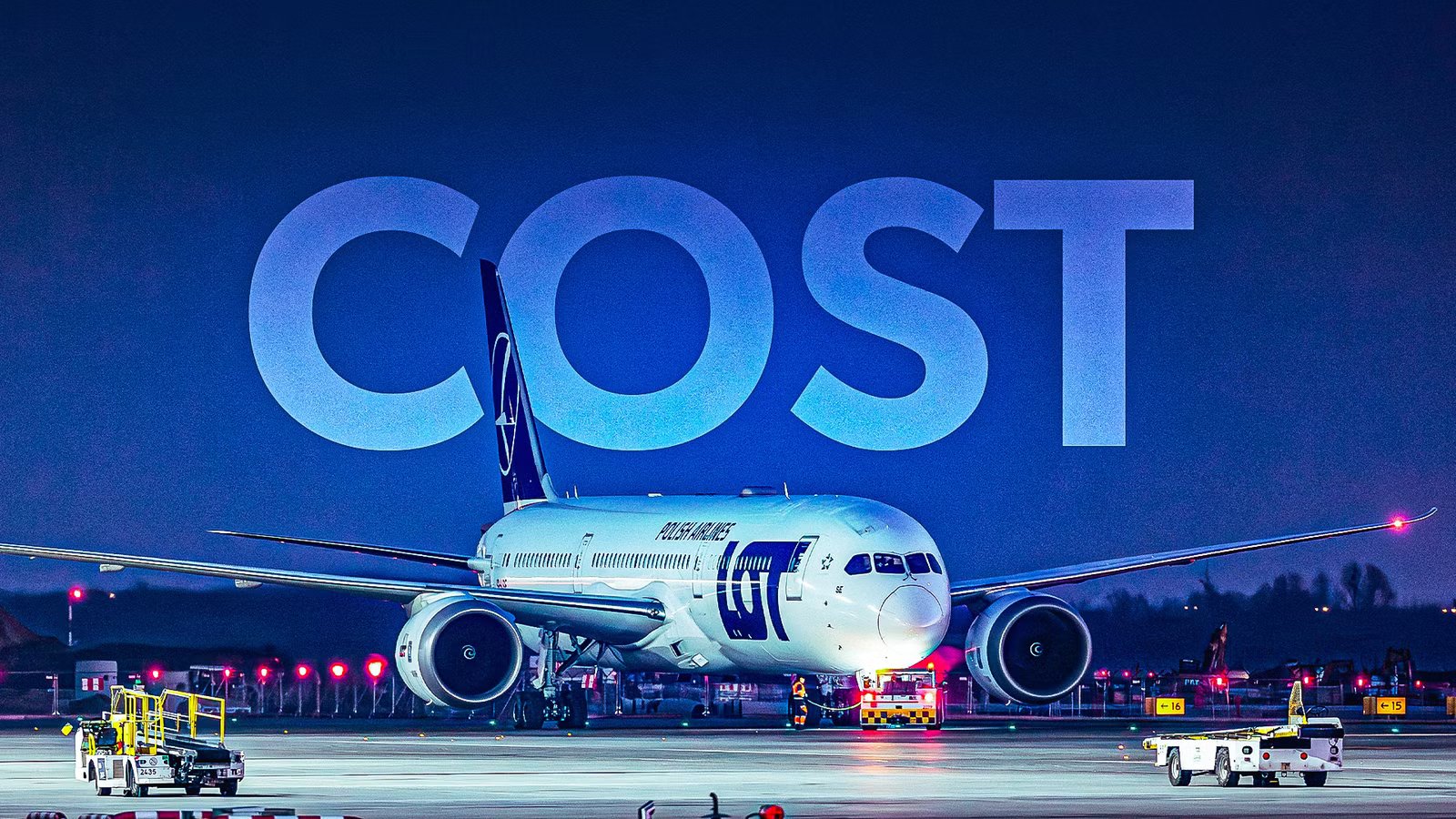
In an increasingly competitive world of commercial aviation, where fleet modernization and operational efficiency remain key factors, the US-based manufacturer  Boeing produces one of the most modern and efficient widebody aircraft, the Boeing 787 Dreamliner. With an approximate list price of $295 million, as per ePlane AI, it was also more cost-effective compared to other aircraft types in the market when the program first launched.
Thus, it comes as no surprise that the aircraft is one of the most common widebody aircraft these days, operating all around the world for long-haul operations, but its efficiency also allows airlines to operate it on short-haul missions in certain markets.
The Dreamliner Family With Three Variants

Quite often, manufacturers create different variants of their successful aircraft in order to cater to more customers and their operations, and the same can be said for Boeing and their Dreamliner family. With the program being launched in 2004, the first of its type, the Boeing 787-8 began commercially operating in 2011, with Japanese carrier, All Nippon Airways. Shortly thereafter, a stretched variant, the 787-9 variant, began operating commercially in 2014, with Air New Zealand. This was then followed by  Singapore Airlines being the launch customer of the largest variant in the family, the 787-10, in 2018.
The aircraft type has been designed to be an ideal replacement for the likes of the older Boeing 767 aircraft family and to compete with products from its European counterparts, the Airbus A330 CEO and NEO family, along with the Airbus A350 family. Its ideal capacity, along with long-range capabilities and modern technology, provides operational efficiency, along with great fuel economics, making the aircraft perfect for deployment in routes where aircraft like the Boeing 777 or the A350-1000 might be too big, but the narrowbody aircraft, such as the Boeing 737 or Airbus A320, might be too small.
Considering the number of operators around the world, the number of orders Boeing has received for the type, and the existing backlog, the aircraft is clearly successful. So, how much does each variant cost, and what are its technical capabilities?
Costs And Technical Capabilities

Aircraft are usually long-term investments; therefore, airlines consider several factors before committing to an aircraft type. This includes factors such as aircraft costs, capacity, range, economics, and delivery timelines, along with the airline’s own requirements such as operating model and growth plan.
As per Boeing’s technical specifications and the costs of each variant, here is how the three variants of the Dreamliner family compare with each other:
|
Specifications And Costs |
Boeing 787 Family Variants |
||
|---|---|---|---|
|
Boeing 787-8 |
Boeing 787-9 |
Boeing 787-10 |
|
|
Capacity |
248 |
296 |
336 |
|
Range |
7,305 NM (13,530 km) |
7,565 NM (14,010 km) |
6,330 NM (11,730 km) |
|
Approximate List Price* |
$248 million |
$292 million |
$338 million |
*It is worth noting that airlines rarely pay the actual list prices because manufacturers often provide carriers with discounts depending on the order and commitment size. Furthermore, the actual cost can also vary depending on the configurations and other features an airline might opt to equip its aircraft with.
As seen in the table above, because of the varying characteristics of each variant, Boeing is able to serve a wide number of airline customers, who would want a different range or capacity characteristics for their fleet. As per Boeing’s order history, the middle variant, the 787-9, is the most popular variant of the three.

Which Boeing 787 Variant Is The Most Popular?
Boeing has produced three different versions of the Dreamliner.
Orders And Backlog Of The Dreamliners

As per Boeing’s data on aircraft orders and deliveries, since 2004, Boeing has received orders for over 2,200 Dreamliner aircraft (excluding cancellations). Since the first Dreamliner aircraft flew commercially in 2011, today, the 787s are operated by a total of 86 airlines around the world, with the largest operator being ANA with 86 examples, followed by United Airlines and American Airlines with 78 and 63 examples respectively.
However, when it comes to aircraft backlog, as of February 28, 2026, Boeing has a backlog of 1,058 Dreamliner aircraft, which accounts for 17.2% of the manufacturer’s overall backlog. One of the key indicators that proves that the 787 is popular, not just with established carriers, but also with airline start-ups, includes the fact that new carriers such as Riyadh Air and SunPhuQuoc Airways are opting to have the Dreamliners as one of their first aircraft types.
When considering a breakdown per variant, of the 1,058 aircraft, Boeing’s data shows that around 700 of these orders are for the aforementioned popular variant, the 787-9. Of these, the largest portion of orders belongs to  United Airlines, which has over 80 examples of the -9 variant on order. Furthermore, when looking at the airline’s total Dreamliner backlog, the aircraft has an additional 56 787-10s on order, which, upon taking delivery, will make United the largest operator of the type.
United Betting Big On The 787s

Apart from new carriers, quite a few existing airlines have decided to keep the Dreamliners as the backbone of their future long-haul fleet, and are even opting for them to replace their existing fleets of long-haul aircraft. This includes carriers such as Qantas, United Airlines, Saudia, and more, who will be replacing their aging aircraft types, such as the A330s and Boeing 767s.
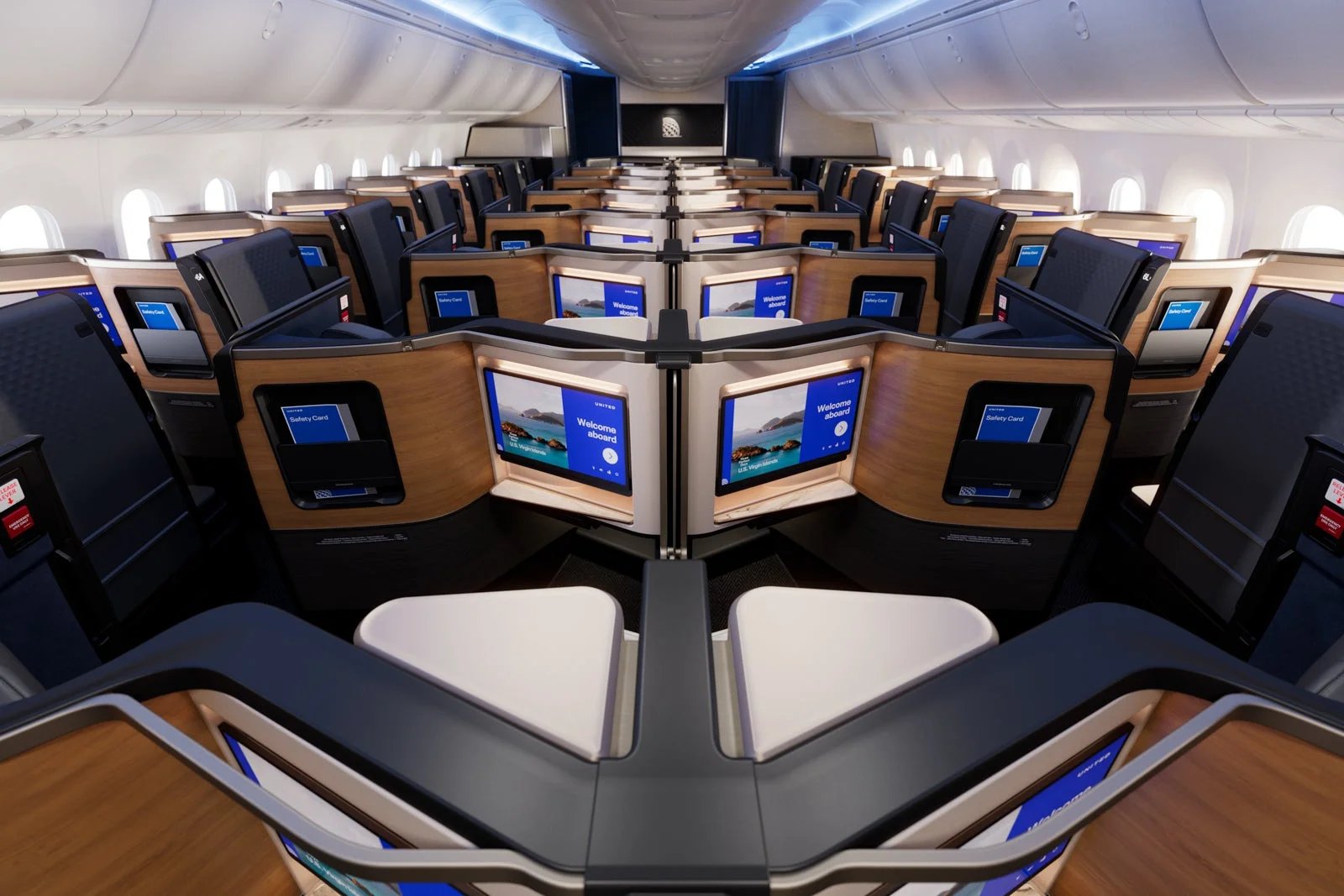
Of all the Dreamliner operators, the US-based carrier, United Airlines, is betting the most on the aircraft type. While the airline operates a number of long-haul aircraft families, ranging from the Boeing 767s to the 777s and its current fleet of 787s, the Dreamliners are the only next-generation aircraft the airline has invested in for its future fleet renewal and expansion. While the carrier’s 777s still have quite a bit of life left, the airline is already gradually retiring its fleet of 767s.
In fact, the airline, as recently as September 2025, stated that it plans on retiring its entire fleet of 767s by 2030. Furthermore, findings from earlier this month indicate that, as per United’s SEC 10-K filings, the airline has removed the 45 Airbus A350s it had on delivery for the foreseeable future. The removal of the A350s and the lack of any other long-haul aircraft type on order (such as the Boeing 777X) means that United’s long-haul future will be entirely based around the Dreamliner aircraft.

Why United Airlines Doesn’t Want The Airbus A350 Anymore
The recent escalation between United Airlines and Rolls-Royce has morphed into a full-blown legal collision involving a massive financial commitment.
How Does The 787 Compare With Other Long-Haul Aircraft?

At the time of writing, apart from the 787 family, the only other next-generation long-haul aircraft types commercially available are the A350 family and the A330neo family. Of course, there is the 777X, but it is still pending certification. So how do the Dreamliners compare with these other aircraft families?
Based on approximate list prices and aircraft technical specifications from Airbus and Boeing, this is how each of these aircraft holds up:
|
Specifications And Costs |
Boeing 787 Family Variants |
|||||
|---|---|---|---|---|---|---|
|
Boeing 787-8 |
Boeing 787-9 |
Boeing 787-10 |
||||
|
Capacity |
248 |
296 |
336 |
|||
|
Range |
7,305 NM (13,530 km) |
7,565 NM (14,010 km) |
6,330 NM (11,730 km) |
|||
|
Approximate List Price* |
$248 million |
$292 million |
$338 million |
|||
|
Specifications And Costs |
Other Next-Generation Aircraft |
|||||
|
Airbus A330neo |
Airbus A350 |
Boeing 777X |
||||
|
Variants |
800 |
900 |
900 |
1000 |
-8 |
-9 |
|
Capacity |
257-271 |
287-303 |
300-350 |
350-410 |
395 |
426 |
|
Range |
8,100 NM (15,000 km) |
7,350 NM (13,600 km) |
8,500 NM (15,742 km) |
9,000 NM (16,668 km) |
8,745 NM (16,190 km) |
7,285 NM (13,500 km) |
|
Approximate List Price* |
$259.9 million |
$296.4 million |
$317.4 million |
$366.5 million |
$410.2 million |
$442.2 million |
Based on the above aircraft comparison data, it becomes clear how each of the three Dreamliner variants compares against the different variants of other next-generation long-haul jets in the market, and how the aircraft is a better fit for certain markets compared to the other jets. That being said, it is worth noting that a number of airlines operate a mixed combination of these aircraft types. For instance,  Lufthansa, Singapore Airlines, and
  Qatar Airways operate both the 787s and the A350s. Furthermore, upon certification, all three carriers will also operate the 777X. Meanwhile,
  Delta Air Lines currently operates the A330neo and the A350 aircraft, but recently also ordered 787s.
Increasing Dreamliner Production

While Boeing peaked its 787 production rate in 2019, with 14 Dreamliners per month, it was significantly impacted by COVID-19, along with the 737 MAX and other issues Boeing had during that period. However, since then, Boeing has been increasing its 787 production rate, and the manufacturer has also invested a billion dollars in expanding its production line in North Charleston.
With this expansion, Boeing is hoping to increase its seven Dreamliners per month rate to ten by the end of 2026, and hit rates of 16 787 aircraft per month by the end of the decade. In terms of annual numbers, Boeing’s data indicates that the manufacturer delivered 88 Dreamliners in 2025, and if Boeing can ramp up production at their expected rates, this could see it deliver around 120 Dreamliners this year, and close to 200 per year by 2030.
However, this is all subject to Boeing’s ability to expand its facilities in a timely manner. Additionally, the industry supply chain is still facing impacts stemming from the pandemic, but things have been “mostly” getting better in recent years. In the meantime, Boeing continues to gain more orders for the type, while also attracting new customers, and the Dreamliner aircraft will remain one of the most popular options for airlines when it comes to long-haul flights.