dailynewsnblog
In 2004, the airline sector was revolutionized by the Boeing 777-300ER (extended range) variant of the 777 family. It was first flown commercially by Air France, and at the time, Boeing claimed it was “the most technologically advanced airplane in the industry”, surpassing previous 777-200 and 777-200ER variants, and raising the bar in terms of comfort and range. The 777-300ER featured updated systems, and at the time, it was equipped with the most powerful commercial jet engine available, the General Electric GE90-115B turbofan.
Thanks to its long range and excellent fuel efficiency, the 777-300ER became extremely popular for long-haul routes, maximizing profits through operational efficiency and high capacity. It remains a popular aircraft among airline fleets worldwide, including at China Eastern Airlines, which used it to launch the world’s longest direct one-stop flight, according to Islands. As Boeing begins moving into the era of the 777X, this article takes a look at the 777-300ER, following the last example rolling off the production line.
The 777-300ER’s Production & Popularity

According to Aerospace Global News, only a single Boeing 777-300ER was produced in 2024. This final example of the variant was delivered in December to Altavair LP. Altavair is an aircraft finance company, an aircraft lessor and management company, which specializes in acquiring, leasing, re-purposing, and selling commercial jet aircraft and engines. Since its creation in 2003, Altavair has completed over $12 billion in commercial aircraft lease transactions and represents over 300 Boeing and Airbus jets.
The production of the final 777-300ER ends a nearly two-decade production run of the world’s best-selling widebody aircraft. It also marked the end of a significant era of commercial aviation history. According to Boeing, 833 examples of the 777-300ER were delivered, making up a huge portion of the 1,781 examples of the 777 family delivered and 2,457 ordered. These figures make the 777-300ER the most popular variant of the 777, which is the best-selling widebody airliner family in history.
|
Recent Boeing 777-300ER Deliveries |
|
|---|---|
|
Year |
Number of Deliveries |
|
2019 |
19 |
|
2020 |
4 |
|
2021 |
7 |
|
2022 |
3 |
|
2023 |
|
|
2024 |
1 |
|
2025 |
|
Boeing had gradually slowed the production of the 777-300ER in favor of testing and refining the 777X. Before the last aircraft was delivered to Altavair, the last time a 777-300ER was delivered was in 2022, when only three were delivered to Thai Airways, according to Air Data News. Altavair’s 2024 777-300ER had previously been on order by China Southern Airlines, but with COVID slowdowns, the order fell through, and the aircraft was stored for nearly five years.
As such, when Altavair leased the aircraft to Ethiopian Airlines in 2024, it still bore China Southern livery. Previously, there were five additional 777-300ERs on order with Pakistan International Airlines, and these brought the total number of orders up to 838. However, as of May 2025, the order had been outstanding for 13 years, and according to multiple publications in September, the delivery of the Altavair 777-300ER officially became the last to be delivered, ending production of the type for good.
A Tale Of Two Engines

The 777-300ER was introduced in 2004, and compared to other 777 variants that existed at the time, it was revolutionary. The variant was suited for long-haul air travel, with an impressive 7,370 nautical miles of range. This was achieved thanks to the twin-engined 777-300ER’s efficient design, but also because the General Electric GE90 high-bypass turbofan engines it was equipped with were the most powerful commercial jet engines in the world.
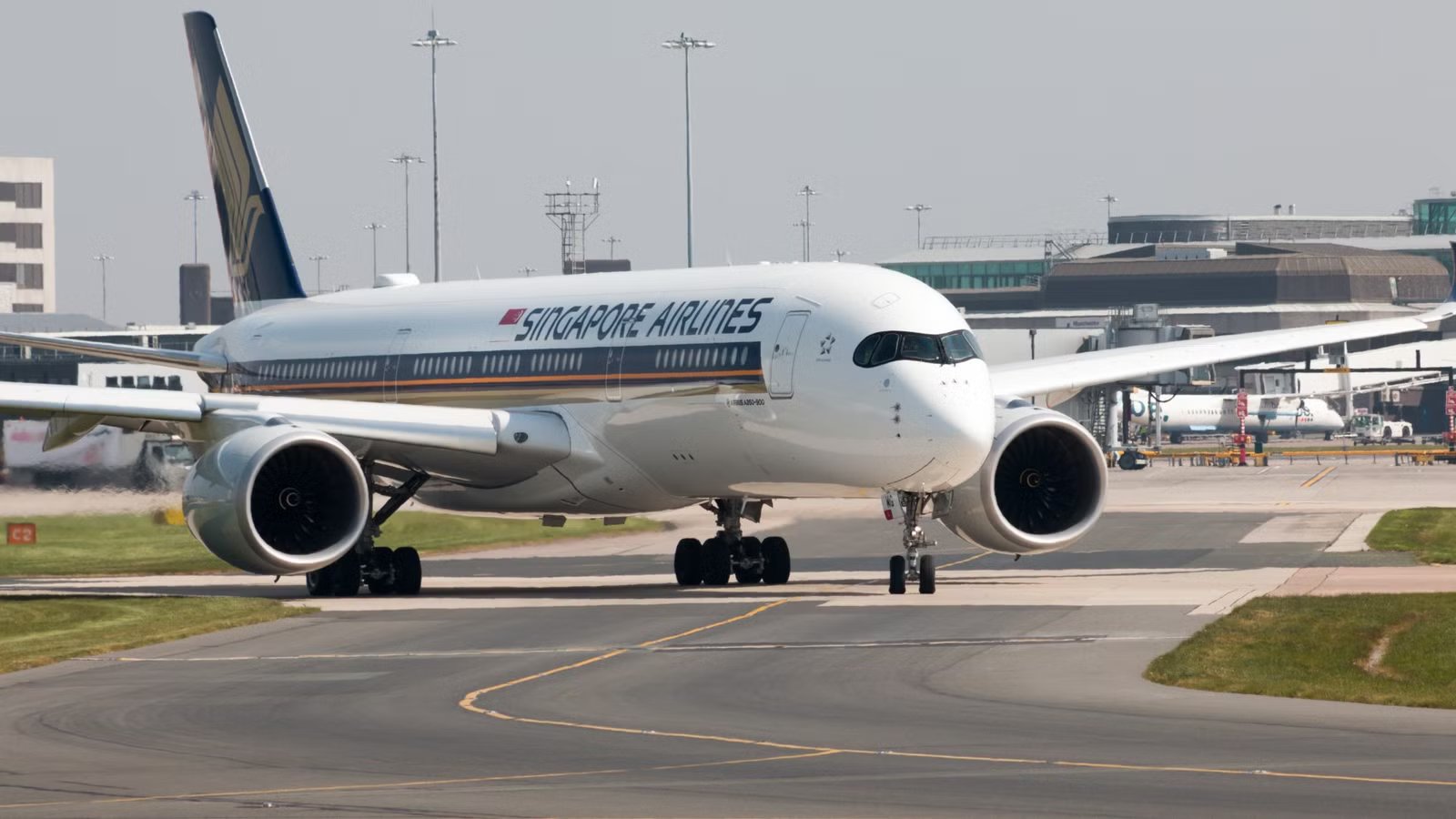
In terms of power, the GE90 produced 115,300 pounds of thrust. The engine was first used with the 777-300ER, and later with the 777-200LR Worldliner (first delivered in 2006), and then the 777F freighter variant, which was based on the 777-200LR and first delivered in 2009. The 777-200LR would be the world’s longest-range in-service commercial aircraft in the world, until it was surpassed by the Airbus A350-900ULR, which still holds the title today after entering service with Singapore Airlines in September 2018.
|
Aircraft |
Range |
|---|---|
|
Airbus A350-900ULR |
9,700 NM |
|
Boeing 777-200LR |
8,555 NM |
|
Airbus A380 |
8,350 NM |
|
Boeing 747-8 |
7,730 NM |
|
Boeing 787-9 |
7,635 NM |
The power of the GE90 was finally surpassed by the General Electric GE9X in July 2019, according to Guinness World Records. The GE9X is due to enter service with the delivery of the first 777X. The engine produces 134,300 pounds of thrust, making it the most powerful commercial aircraft engine ever built, but also the largest, due to its fan diameter of 11.2 feet. Its construction also incorporates composite carbon-fiber materials, allowing it to achieve up to 10% greater fuel efficiency compared to the GE90-115B, according to General Electric.
What Made The 777-300ER So Popular?

While the power of the GE90 engine has its own charm for horsepower enthusiasts, there were other factors that made the 777-300ER popular with airlines. The aspects detailed in the table below, which every airline desires in a commercial jetliner, were key catalysts behind its success.
|
Attractive Attributes of the 777-300ER |
|
|
Capacity |
The fuselage of the 777-300 variant, and the long-range 777-300ER, is stretched, being a little over 33 feet longer than the 777-200. Thanks to its stretched fuselage, the 777-300ER can carry a large number of passengers, typically 365 in a three-class configuration, and 396 in a two-class configuration. This made it ideal for dense long-haul trunk routes and high-demand international sectors. |
|
Range |
The ‘ER’ designation stood for Extended Range, and the 777-300ER offered a significant range improvement over the baseline 777-300. For airlines, this increased range meant that non-stop long-haul flights that previously required larger or less efficient aircraft became much more commercially viable. |
|
Economics |
The 777-300ER’s high-bypass turbofans and modern systems, combined with its light twin-engined design, produced lower fuel burn per seat than many older widebodies, particularly quadjets, that might otherwise be used to operate dense routes. Thus, airlines could offer more direct long routes at attractive costs to customers, increasing earnings potential and passenger convenience. |
It is due to these attractive attributes that the 777-300ER became the workhorse for major global carriers such as Emirates, Qatar Airways, and other Gulf and Asian carriers.  Emirates was the type’s single biggest customer, with 119 in service today. These carriers tend to operate using a global hub-and-spoke route model, upon which aircraft with high passenger-carrying capacity are particularly valuable.
The 777X has long been awaited and is expected to replace the 777-300ER with airlines worldwide. Emirates and Qatar Airways are among the carriers that have already placed large orders for 777X aircraft, but the Boeing program has significantly slowed due to repeated delays, regulatory scrutiny, and technical challenges. According to Airline Ratings, the decision to halt production of the 777-300ER was inevitable, but may have been accelerated by the need to make significant headway in bringing the 777X to market at last.
Boeing’s Challenges

Another confounding factor to Boeing’s widebody production line may have been the 2024 machinist’s strike, which began in September and ended in November that year, potentially costing the company billions of dollars and affecting its ability to meet its defence contract obligations. According to Reuters, around 33,000 of Boeing’s unionized West Coast workers, mostly located in the US state of Washington, demanded a 40% wage increase spread over four years, along with a restoration of workers’ defined benefit pension.
|
Boeing 777-300ER Specifications |
|
|---|---|
|
Length |
73.9 meters (242 feet 5 inches) |
|
Wingspan |
64.8 meters (212 feet 7 inches) |
|
Height |
18.5 meters (60 feet 9 inches) |
|
Typical Seating (2-class) |
365–396 passengers |
|
Engines |
2 × General Electric GE90-115B |
|
Maximum Takeoff Weight (MTOW) |
351,534 kg (775,000 pounds) |
|
Range |
7,370 nautical miles (13,650 kilometers) |
According to ePlane AI, Boeing Commercial Airplanes CEO Stephanie Pope announced that production had resumed across multiple lines in December 2024, the same month that the final 777-300ER was delivered. It was also announced that the company would be shifting to focus on the 777X program. The manufacturer may have closed the book on the 777-300ER, but it has now positioned itself better to tackle the task of restoring worker, investor, and customer confidence.

Which Airlines Have Ordered The Boeing 777X? A Complete List
Around a dozen airlines have placed orders for around 500 Boeing 777X, with the first set for delivery in 2026.
The 777-300ER Will Be Around For Many Years

Although production has now ended for the 777-300ER, the variant will be around for many years to come, particularly as it is so useful on long-haul flights. The aircraft pioneered the long-range twinjet widebody sector, and business is still thriving in this area. Passenger demand continues to increase, year upon year, and airlines are struggling to meet demand, even dusting off some older twinjets to do so. As such, the 777-300ER will remain valuable to airlines around the world.
The baseline 777 entered service all the way back in 1995, but, with the 777-300ER being so useful, passengers will have many opportunities to fly on one in the decades to come. Emirates is the best bet (although perhaps not right now due to the ongoing conflict in the Middle East), with well over 100 examples in its fleet.