dailynewsnblog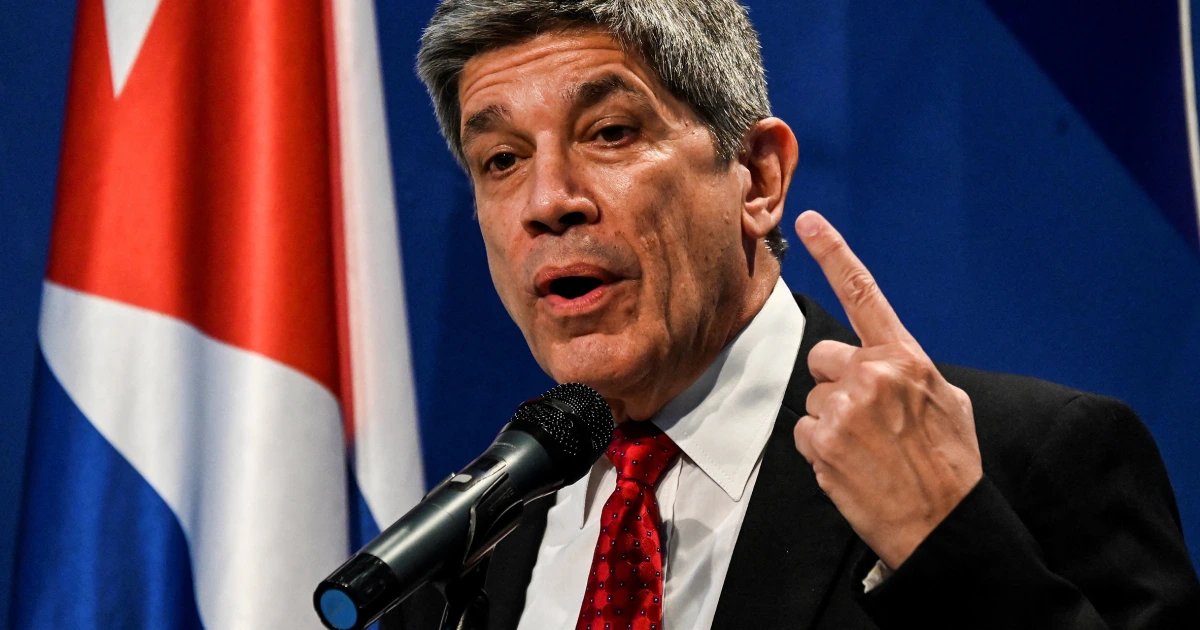
Cuba’s deputy foreign minister on Saturday said that the nation’s military is involved in ongoing preparations for “the possibility of military aggression” from the U.S., adding that it would be “naive” for Cuba’s leaders to ignore the possibility of conflict with the U.S.
“Our military is always prepared, and in fact, it is preparing these days for the possibility of military aggression,” Carlos Fernández de Cossío told NBC News’ “Meet the Press” in an interview that aired Sunday.
He added, “we would be naive,” not to consider the possibility of conflict “looking at what’s happening around the world.”
Fernández de Cossío said the country’s leaders “truly hope that it doesn’t occur. We don’t see why it would have to occur, and we find no justification whatsoever.”
His comments come amid an escalation in tensions between the U.S. and Cuba following the U.S. military operation in Venezuela that led to the capture of that nation’s president, Nicolas Maduro, who had a close relationship with Cuba’s leadership.
During a press conference following the operation, U.S. President Donald Trump and Secretary of State Marco Rubio warned that military intervention in Cuba could be next, with Rubio saying at the time, “If I lived in Havana and I was in the government, I’d be concerned.”

FORSUBSCRIBERS
02:03
Cuban hospitals struggle to treat patients
00:0000:00
In January, the president signed an executive order threatening to impose tariffs on goods from countries that sold or provided oil to the country. Residents of the island have suffered daily power outages amid the U.S. blockade. Power grids in the country collapsed Saturday, leaving the country without electricity for a third time in March.
On Saturday, Fernández de Cossío said the oil blockade is the result of the U.S.’ aggression against Cuba and it “cannot be sustained forever.”
“What’s happening today is that the US is threatening with coercive measures countries that might export fuel to Cuba, and that’s the reason why Cuba has not received fuel for a long time,” the deputy foreign minister said. “It is very severe, and we are acting as proactively as we can to cope with the situation. We do hope that fuel will reach Cuba one way or the other, and that this boycott that the United States has been imposing does not last and cannot be sustained forever.”
Earlier this month, Trump said that Cuba “is going to fall pretty soon” and its leaders “want to make a deal so badly.” Later in the month, Trump told reporters, he would have the “honor” of taking Cuba, saying “I think I could do anything I want with it.” Those comments came just a few days after Cuban president Miguel Diaz-Canal acknowledged that Cuban leaders were in talks with U.S. leaders to make a deal and avoid military conflict.
On Saturday, responding to Trump’s comments about having the “honor” to take over Cuba, de Cossio said, “we don’t know what they’re talking about. But I can tell you this, Cuba is a sovereign country and has the right to be a sovereign country.”
Fernández de Cossío also responded to comments Rubio made at the White House this week, telling reporters, “they’re in a lot of trouble, and the people in charge are, they don’t know how to fix it, so they have to get new people in charge.”
The Cuban deputy foreign minister insisted that regime change was not on the table in talks between the two nations.
“The nature of the Cuban government, the structure of the Cuban government, and the members of the Cuban government are not part of the negotiation. That is something that no sovereign country negotiates,” Fernández de Cossío told “Meet the Press.”
Asked about whether Cuban leaders would be prepared to allow more than one political party to operate in the country, Fernández de Cossío slammed the U.S. political system, saying, “It’s a domestic issue of Cuba. The United States has only two political parties that can go to government. Are they ready to negotiate, to have 10 with equal possibilities of getting to the presidency, of getting in Congress? I’m sure the United States would not negotiate that with any country.”