dailynewsnblog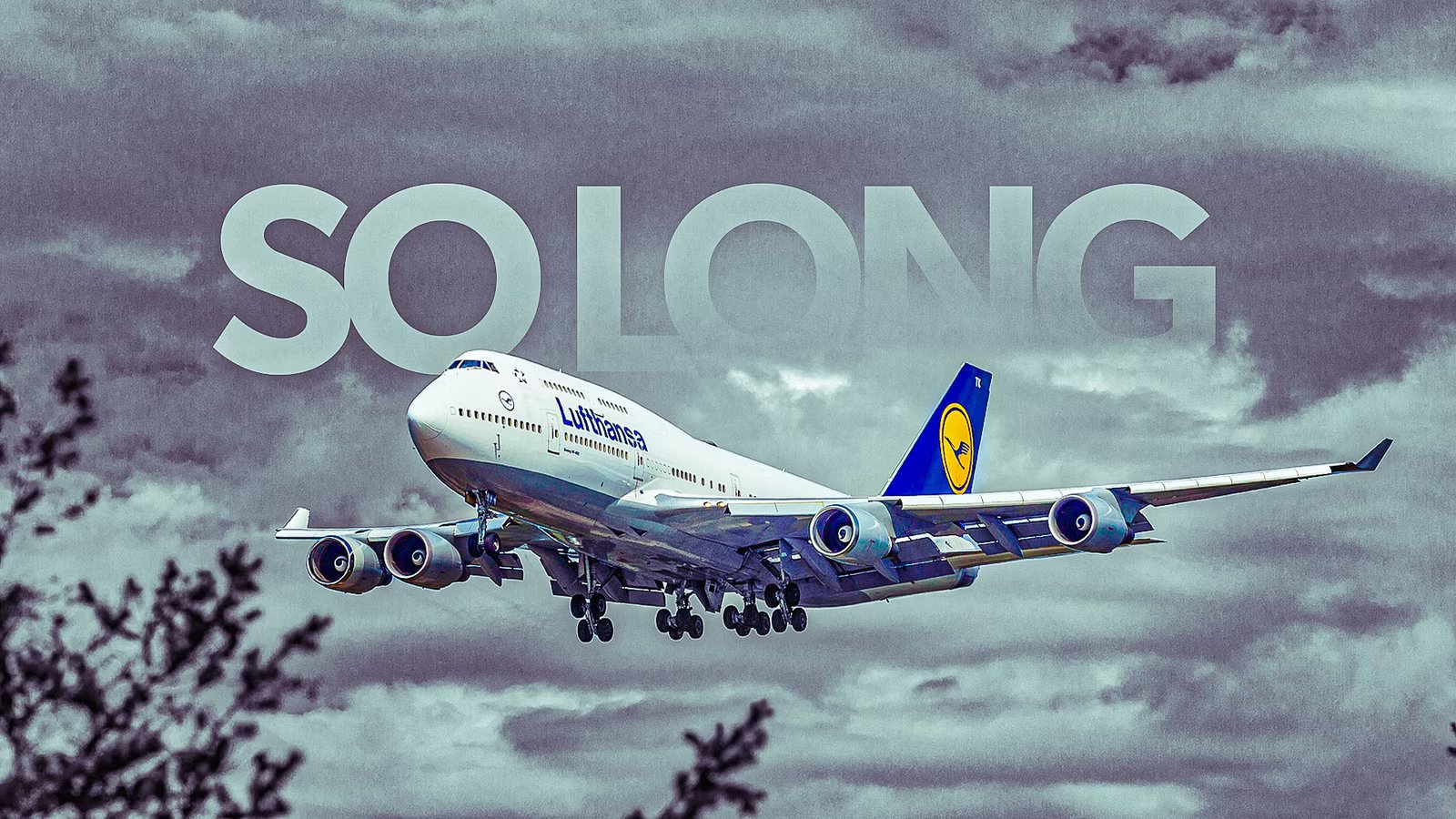
 Lufthansa is on an ambitious path to ramp up profitability over the coming years and, as such, is in the process of phasing out its Airbus A340s and Boeing 747-400s to do just that. Famously, the last major operator of the Queens of the Skies, as well as boasting to this day three separate and increasingly outdated quadjet variants, Lufthansa’s days as an avgeek’s dream for spotting aircraft of a previous generation are numbered.
Come 2028, the German flag carrier aims to have retired the remaining 17 A340s and eight 747-400s still operational in its fleet, according to figures from Planespotters.net. These are slated to be replaced by fresher twin-jets that trump their predecessors on efficiency and economic viability. So, why now for Lufthansa, and how is the modernization effort coming along?
Earnings, Earnings, And More Earnings

At the core of it, retiring older jets and replacing them with newer and more efficient successors is all part of Lufthansa’s plan for growth. As the airline itself put it in an update last September, “existing transformation programs, such as ‘turnaround’ at the core brand Lufthansa Airlines, are being consistently implemented with the aim of significantly strengthening earnings performance.”
Retiring dated A340s and 747s is central to this for Lufthansa, making up part of what it has dubbed the “largest fleet modernization in the company’s history.” This will include the addition of over 230 new aircraft by 2030, of which around 100 will be long-haul models.
All told, Lufthansa is aiming for “significantly increased profitability” by 2030. Under this, it targets an adjusted operating margin of 8 to 10 percent and adjusted free cash flow of more than €2.5 billion at some point between 2028 and 2030. That would compare to 4.9 percent and €1.2 billion respectively over the last full year. Plainly put, that means doubling profit at the top end of the target, as well as the amount of cash leftover after capital expenditure, relative to current levels over the next two to four years.
Modernization Was Necessary

A useful gauge of how such plans are developing is investor optimism. Indeed, as with any publicly listed business, Lufthansa’s bid for future growth has shareholders’ interest at its center. Good news for Lufthansa, the bid has worked thus far, with shares rising almost 54 percent from the €5.91 mark upon the turnaround plan’s unveiling in mid 2024 to around €9.09 as of late last month, before the Iranian conflict began and widely knocked airline stocks.
What this ultimately means for Lufthansa is that the transformation plan has been widely successful so far in improving investor sentiment after it issued two profit warnings in 2024. What is more, some analysts have forecast the airline’s share price to hit as high as €12.00 over the next year, per TradingView. For those less familiar with the ins and outs of the financial world, this means a select few see value in Lufthansa’s plan ahead, over and above what has already been priced in.
Number of A340s and 747s operated by Lufthansa, per Planespotters.net:
|
Aircraft |
In service |
Parked |
Total |
Average age |
Historic |
Total |
|
Airbus A340-200 |
– |
– |
– |
– |
8 |
8 |
|
Airbus A340-300 |
11 |
1 |
12 |
26.2 years |
18 |
30 |
|
Airbus A340-600 |
5 |
– |
5 |
18.1 years |
19 |
24 |
|
Boeing 747-100 |
– |
– |
– |
– |
3 |
3 |
|
Boeing 747-200 |
– |
– |
– |
– |
27 |
27 |
|
Boeing 747-400 |
8 |
– |
8 |
25.9 years |
23 |
31 |
|
Boeing 747-8 |
15 |
3 |
18 |
12.3 years |
1 |
19 |
Why Lufthansa has opted to embark on the modernization and turnaround now, aside from the obvious reasons of eventually having to ground older jets, is probably due to years of dwindling share price performance. Whilst the airline’s current run of form is impressive from a short-term perspective, the harsh truth is that efforts to recover from the crash of the pandemic never really reinvigorated investors to push its stock back to anywhere near the peak of around €22.17 per share, seen in late 2017. In short, something had to be done from an investment perspective, but that is enough of the financial talk.

Lufthansa CEO Optimistic About Mainline Profitability In 2026
Lufthansa CEO Jens Ritter plans a full 2026 turnaround — with new rules, fleet renewal and cost cuts aimed at making the airline fully profitable.
Bumps In The Road (Or On The Runway)

Of course, such ambitions are rarely achieved without some hiccups and Lufthansa’s turnaround has been no piece of cake. At the individual airline level, delays have led to some jeopardy. On a wider scale and more recently, the war in the Middle East has threatened carriers across the industry.
Realistically, Lufthansa has wanted to get on with these respective retirements for some time now, but has been at the mercy of the manufacturers. Though it is targeting the second half of 2026 for the final flights of its A340-600s, for instance, this was pushed back as recently as last October for a further year. Fewer than expected Boeing 787-9 deliveries and the long overdue rollout of the Boeing 777X were the reasons in this case, prompting “a high degree of flexibility” from Lufthansa in response. This need to balance scheduling has also seen temporary Airbus A350-900 deployments to Frankfurt, among a string of efforts to close the gap leftover by manufacturers’ delays.
As mentioned too, US and Israeli aggression towards Iran in late February and the country’s subsequent attacks against neighbors have already impacted airlines. Overnight, the Middle East’s position as both a holiday destination and a hub for connections from Europe to Asia and Oceania became clouded in uncertainty. Lufthansa itself has been forced to suspend flights to and from the likes of Dubai, Abu Dhabi, Amman, Erbil, Dammam, Tel Aviv, Beirut, and Tehran through late March and beyond as a result. Now, this could be temporary. But if it is not, the ramifications for airlines that have become so reliant on Middle Eastern hubs will be very real, and Lufthansa specifically might be scratching its head over how best to utilize its increasingly updated fleet after having put so much into it.
How Will A340 and 747-400 Retirements Help Specifically?

Lufthansa’s board will no doubt have had to weigh up the pros and cons of axing the likes of its A340s and 747-400s, rather than keeping them running and simply expanding its fleet.
Of the 17 operational A340s still in Lufthansa’s fleet, 12 are the -300 variant. Launched commercially way back in the early nineties, the variant is, in reality, from a former era, with Lufthansa’s -300s averaging 26.2 years old. Similarly, Lufthansa’s eight remaining 747-400s are 25.9 years old on average, with the variant itself dating back to the late eighties. In both cases, it is no secret that each is getting on a bit.
While groundbreaking in their day, hanging on to relics and failing to keep up with technological developments is a risky game for operators. It equates to throwing away money on the likes of fuel and maintenance, an especially grim prospect if rivals can undercut on price thanks to their own newer jets in comparison. Take the 787-9 as an example, with an average fuel burn of 2.5 liters of kerosene per passenger per 100 kilometers flown. Against predecessors, that is said to be around a 30 percent reduction.

How Much Do Airbus A340s Cost In 2026?
The price for a flying giant.
What Will Replace Them?

Whilst Boeing’s 787-9 has repeatedly been flagged up, it is far from the only option Lufthansa has on order to replace its aging A340s and 747-400s. As of late last year, the airline had fixed orders for 91 widebody jets, with options for a further 62.
Including variants of the A350 and 787 already in the skies today, as well as the smaller passenger version of the 777X, Lufthansa has laid the groundwork to replace those widebodies in its fleet due for retirement several times over. Obviously, though, orders are booked well in advance, so it goes without saying that Lufthansa will be working with one eye on future retirements of the likes of its 747-8s and A380s, whenever those may be.
Lufthansa Group long-haul order book as of late 2025:
|
Aircraft |
Fixed orders |
Deliveries |
Options |
|
Airbus A350-1000 |
15 |
2026 to 2030 |
25 |
|
Airbus A350-900 |
22 |
2026 to 2031 |
– |
|
Boeing 787-9 |
27 |
2026 to 2028 |
13 |
|
Boeing 777-9 |
20 |
2026 to 2029 |
24 |
|
Boeing 777-8F |
7 |
2028 to 2030 |
– |
In terms of Lufthansa’s remaining A340s and 747-400s, orders have been very deliberately placed with specific replacements in mind. For the former, we can expect to see the A350s and 787s pick up the workload. Boeing’s 777-9 will then slip into the 747-400’s shoes when it does finally roll out, following years of delay in getting certified. Whilst now slated for 2027, against 2020 originally, as the launch customer, Lufthansa can at least rest assured it will get the first models.
All Eyes on 2028

It will take until at least 2028 to find out how Lufthansa’s transformation, and retirements specifically, have developed. Whilst getting rid of the A340 and 747-400 make up just part of its comprehensive turnaround strategy, the moves are key for Lufthansa in its bid to get a grip on costs and grow profitability as desired over the years ahead.
The issue is that, Lufthansa is very much bound by Boeing and Airbus’ schedules in getting the replacements out in a timely manner. From retiring the A340-600 this year, to grounding its remaining 747-400s come 2028, Lufthansa’s plans to do so rest on Boeing meeting 787-9 delivery targets, as well as a smooth process in certifying the 777X from here on out. Add on supply chain issues within Airbus’ A350 program, and Lufthansa’s goal of axing old jets to and replacing them with new appears far easier said than done.