dailynewsnblog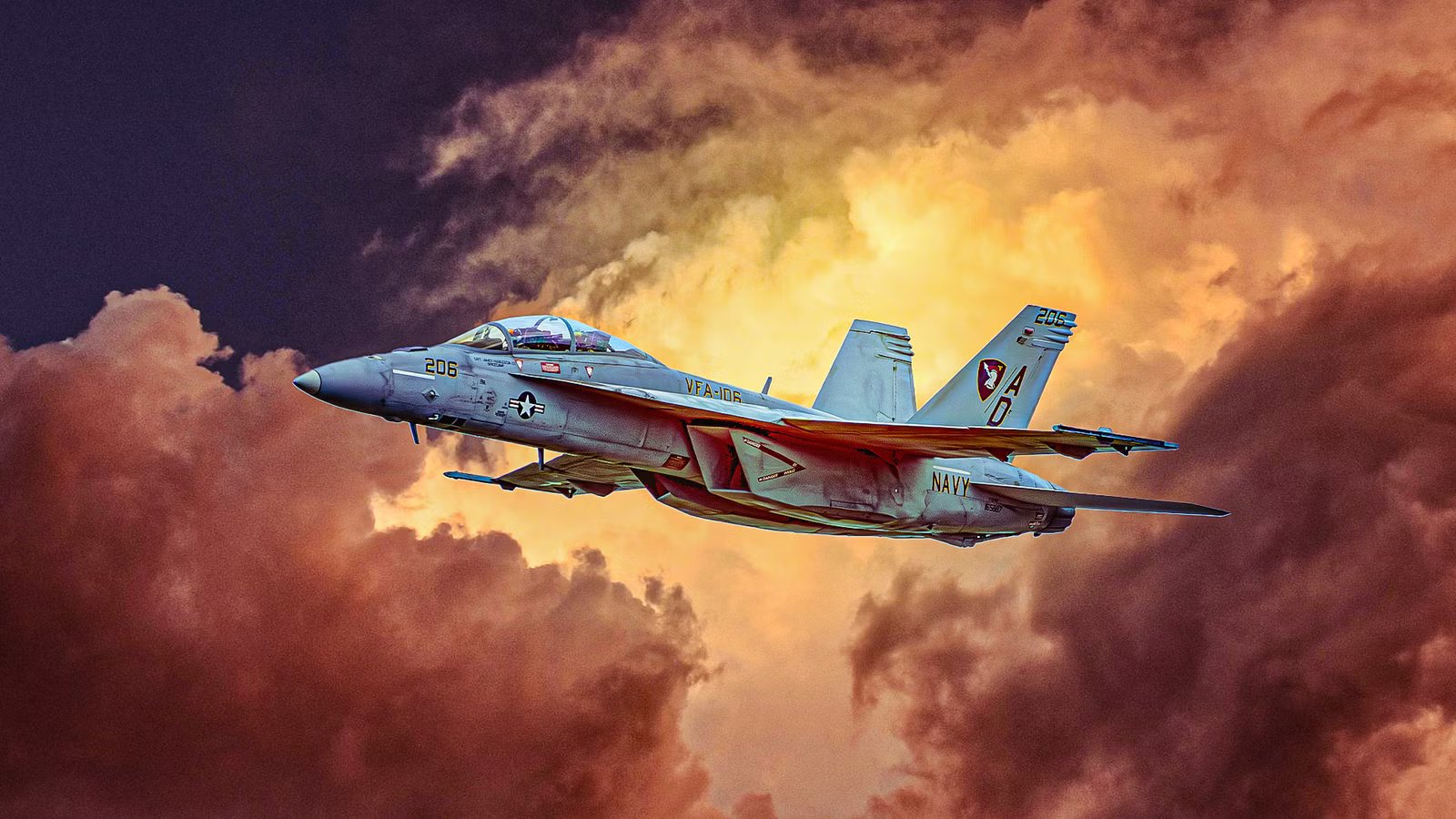
US Navy pay is standardized by rank and years of service in the United States, but fighter pilots receive significant additional incentive pay and bonuses. A typical instructor earns between $70,000 and $90,000 annually in direct pay. On top of pay, tax-free allowances, and health benefits, among other forms of compensation and benefits, combine for a full package valued in the range of $140,000 to $180,000.
A fighter pilot instructor typically refers to a Lieutenant or Lieutenant Commander who has completed their first fleet tour and returned to a training command or the Fleet Replacement Squadron (FRS) to teach. Due to combat pilot shortages, the Navy has significantly increased the Aviation Bonus (AvB) up to $35,000 or $50,000 per year in exchange for a 3-year commitment.
Wings Of Gold: The Price To Be A Naval Aviator

Being a Navy fighter pilot is considered by many to be the pinnacle of aviation because it combines extreme physical environments with a high-stakes, intellectual chess match. Navy fighter pilots operate a diverse fleet of advanced jets, ranging from fifth-generation stealth fighters to specialized electronic warfare platforms. Before considering whether flying for Uncle Sam is the right decision, consider all the aspects of the commitment beyond simply the paycheck.
Current Navy service commitments for aviation roles, effective March 2026, require a minimum of eight years active duty for fixed-wing jet pilots and Naval Flight Officers (NFOs), calculated from the date of designation as a Naval Aviator. NFOs in the fighter community (VFA and VAQ squadrons) follow a nearly identical pay and career progression to pilots.
Entering the world of Navy tactical aviation is a massive life decision. It is not a standard job but a 10-to-12-year initial commitment that dictates where you live, when you see your family, and how your career progresses. Many join to fly jets, but as you progress toward an instructor tour, you become a commissioned officer first and a pilot second. You will spend eight or more hours a day doing administrative work for schedules, maintenance oversight, legal, safety, and only a couple of hours flying.
The instructor tour is a standard shore duty rotation following deployment at sea with the Carrier Air Wing. The key difference between being a fleet pilot and an instructor pilot is that you will fly once or twice per day, which takes a significant physical toll as you must keep students moving through the program. In addition to all those flights, you will be expected to conduct multi-hour briefs and debriefs as well as provide classroom instruction on the ground.
The Paycheck: By the Numbers

The service demands a great deal from every member in its ranks, but the reward is not only an experience that cannot be replicated any other way on Earth, but the pay isn’t bad either. Many instructors fall into the peak bracket of Aviation Incentive Pay (AvIP), or ‘flight pay,’ adding $1,000 per month to their base pay, which is determined by rank and years of service. Flight pay is also based on years of aviation service. Aviation pay begins around $150 per month for new aviators and climbs to the maximum of $1,000 per month after a decade of flying in uniform.
Both pilots and NFOs are commissioned officers and receive the same base pay for their rank and the same flight pay rates based on their years of aviation service. Officers also receive non-taxable allowances for housing (BAH) and subsistence (BAS), which can add tens of thousands of dollars to total annual compensation depending on location. While their standard pay is identical, the AvB amounts offered at the end of initial service commitments may differ between pilots and NFOs based on the specific personnel needs for each community.
Below are estimated monthly base pay ranges for typical instructor ranks:
|
Pay Grade |
Monthly Salary Range |
|---|---|
|
O-3 (Lieutenant) |
$5,535 to $7,737 |
|
O-4 (Lieutenant Commander) |
$6,294 to $8,332 |
Not all instructor tours are equal in prestige or career impact. Only the very best pilots are chosen to be instructors at the TOPGUN school in Fallon, Nevada. Selection is highly competitive and almost guarantees a future path to squadron command. FRS instructors are similarly considered a high-flow tour with heavy flight time. Instructors who teach student naval aviators the basics in T-6B or T-45 trainer planes receive a less prestigious ranking under the promotion system, but are equally vital to naval aviation.

US Navy Vs. US Marines: How Do The Aircraft Fleets Compare?
A look at the differences in both the missions and the aircraft used by each service.
Navy Strike Fighters

The privilege that comes with being a naval aviator is flying some of the highest-performance and most cutting-edge aircraft in the world. Often described as a ‘controlled crash,’ landing a fighter jet on a pitching deck in the middle of a dark ocean is the ultimate professional challenge. Accelerating to over 150 miles per hour in two seconds during a ‘cat shot,’ or catapult launch, is a physical experience that cannot be found in any other profession. It is a moment of extreme intensity where physics are overwhelmingly tangible until the wheels leave the flight deck.
As the latest and greatest to join the fleet, the Lockheed Martin F-35C Lightning II is the world’s first carrier-capable stealth fighter. The F-35 FRS is highly simulator-heavy. Instructors spend massive amounts of time in high-fidelity sims because the jet is a single-seat aircraft, and there is no instructor in the back for a student’s first flight. Meanwhile, at weapons school for the F-35, the focus is heavily on data fusion and using sensors to control the battlespace.
The legacy ‘Rhino,’ or Boeing F/A-18E/F Super Hornet, is still the backbone of the fleet as the workhorse multirole strike fighter. Since there is a two-seat variant available, the vast majority of FRS training is done in the sky under a relentless schedule. TOPGUN instructors focus on Rhino kinematics and being the workhorse strike fighter that carries the heavy ordnance to the target.
There is even a specialized version of the Super Hornet dedicated to electronic warfare, the EA-18G Growler. Owing to its unique mission and specialized systems, FRS training for Growler crews is similar to the way that new F-35 pilots are trained, but with more time in the air thanks to the two-seat configuration. Similarly, the weapons school training is more academic with a focus on strategy and tactics, emphasizing the employment of weapon systems to dismantle an integrated air defense system (IADS) using jamming and anti-radiation missiles.
As cool as the job sounds, donning the uniform to join the Tailhook Community (Naval Aviators that fly carrier aircraft) is a commitment to the Constitution of the United States of America and a promise to honor hundreds of years of military legacy and tradition that come with it. When you sign on the dotted line to join the ranks of Naval Aviators, it is much more than just a job.

What Is The Typical Salary For A Fighter Jet Pilot In The US?
Fighter pilots are exceptionally well-paid.
Naval Flight Officers: The Backseater Experience

The NFO pipeline is a specialized training track that, while sharing a common starting point with pilots, quickly branches into distinct tactical specialties. All student NFOs (SNFOs) fly the T-6A Texan II at NAS Pensacola. Unlike pilots, who prioritize stick-and-rudder skills, SNFOs focus on visual and instrument navigation, communication, and basic airmanship from the back seat. The NFO instructors teach basic skills with radar, avionics, and how to talk to air control and the pilot.
FRS instructors follow a similar pattern of training rhythms but with far more complex systems on higher-performance aircraft with more advanced tactics. The NFOs that become ‘Patch Wearers’ at weapons school are tactical specialists. They can be the Navy’s world-leading expert on a specific air-to-air missile or a specific enemy radar. These subject-matter experts spend 10 hours in a vault for every one hour in the air.
At the Growler FRS, instructors focus on teaching students how to manage jamming pods without interfering with friendly systems. The Growler community has a unique airborne electronic attack weapons school, known as HAVOC. It is co-located with TOPGUN at the Naval Aviation Warfighting Development Center in Naval Air Station Fallon. Instructors here teach Steve the science behind blinding an enemy’s IADS and how to win an invisible war on the electromagnetic spectrum.

The World’s Largest Air Forces By Number Of Pilots
Which air force has the deepest roster?
Tailhook Life Versus Flying The Friendly Skies

If you value mission fulfillment and being part of an elite tactical community, the Navy’s Instructor tour is unmatched. If you value maximum earnings and total control over your schedule, the civilian airline pilot career path is objectively superior. Commercial airline pilots earn a higher salary ceiling than military aviators in general.
Despite the lower pay ceiling, joining the Navy to fly has a strong entry-level value, thanks to the strong starting salary combined with free flight training. The Navy invests roughly $1 million per pilot for high-performance jet training. Meanwhile, civilian pilots often self-fund training, which can cost more than $100,000 to earn enough flight hours and join a major airline.
The single most important factor in airline life is seniority, which does not exist in the same way in the military. In an airline, your hire date determines everything: your base, the aircraft you fly, your monthly schedule, and when you can take a vacation. Once you have seniority, you can bid for specific trips and days off, offering high predictability. Even a 20-year military veteran starts at the bottom slot on the seniority list when they join an airline.
Commercial pilots are paid primarily for flight hours, so when the flight ends, their work is almost always over. Only about 10% to 20% of a fighter pilot instructor’s time ‘on the clock’ is spent in the cockpit. The rest is spent on ground jobs, teaching academics, and high-pressure debriefs. Being a military instructor offers shore duty freedom from carrier deployments, but the daily schedule remains at the needs of the Navy. You are still a 24/7 military officer with significant administrative ground jobs.