dailynewsnblog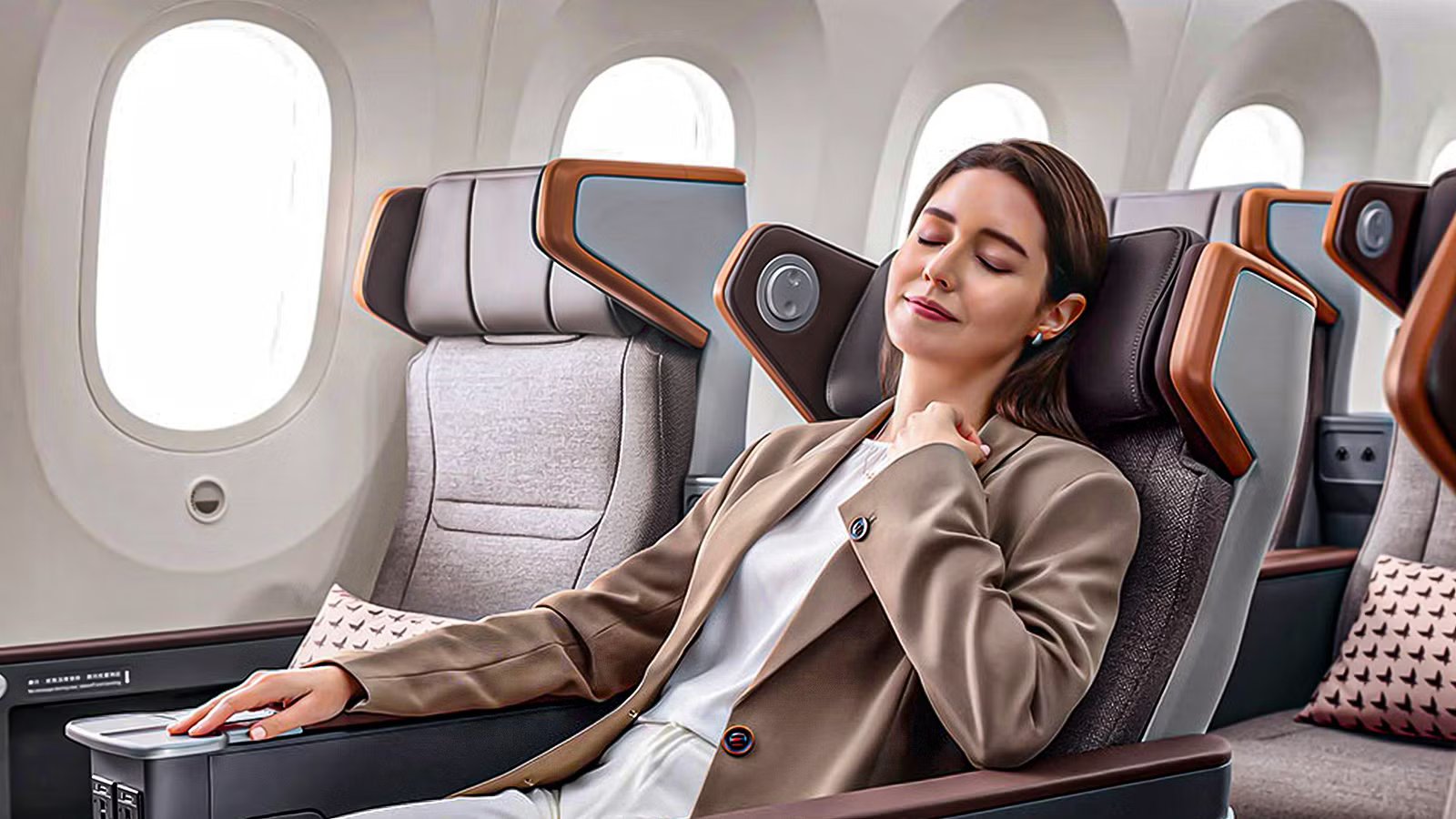
Premium economy has become one of the most competitive battlegrounds in global long-haul travel. In 2026, the best cabins are no longer just economy seats with a few extra inches of legroom. Still, they are rather carefully designed products that offer passengers noticeably wider seats, deeper recline, dedicated leg and footrests, smaller and quieter cabins, and a service standard that increasingly borrows from the more traditional playbook of business class.
For airlines, that makes premium economy a valuable revenue sweet spot. For travelers, it creates a genuine middle ground between the price shock of business class and the immense comfort compromises of flying in the main cabin. Let’s examine the airline offering the world’s most spacious and luxurious premium economy cabins by focusing on the details that matter most in practice. This article will analyze seat pitch, seat width, recline, cabin layout, and the overall sense of personal space.
What Role Does Premium Economy Play In The Market Today?

Premium economy sits between economy class and business class, and, in practical terms, it offers passengers a wider seat, improved legroom, deeper recline, better padding, and significantly larger entertainment screens. Most US carriers also pair this with upgraded meals and drinks, and often extras such as leg rests, priority boarding, and a smaller, quieter cabin. The goal is not to replicate business class, but rather to offer a meaningful comfort upgrade at a far lower price point.
That is why airlines market premium economy as a sweet spot product. It is noticeably better than economy on long-haul flights, but it is still reachable for travelers who would never pay for the comfort of a lie-flat bed. In today’s market, premium economy plays an increasingly important strategic role. It helps airlines capture higher-yield leisure travelers, small-business travelers, and corporate flyers whose companies will not pay for business class but will approve a step above economy.
It also allows carriers to segment the cabin more effectively and raise revenue without needing to devote as much space to fully flat seats. That matters in 2026, as premium demand remains strong, despite worsening market conditions amid conflict in the Middle East. Major legacy carriers, such as Delta Air Lines, are explicitly targeting premium travelers as a key driver of growth. Premium economy has therefore evolved from a niche add-on into one of long-haul aviation’s most important revenue products.
Who Initially Brought The Product To The Market?

The earliest premium economy products to enter the market, which were primarily focused on comfort, were much closer to a superior recliner cabin than the highly polished ‘mini business class’ products that exist today. The core idea behind these original cabins was very simple: they offered long-haul passengers a noticeably wider seat, more legroom, a deeper recline, better food, and a quieter, smaller cabin, all without the over-the-top costs associated with purchasing a business class seat.
Such seats were typically fixed-shell or cradle-style recliners with leg rests and larger armrests, but they were still clearly upgraded economy seats rather than something approaching a suite in terms of style and comfort. The overall emphasis remained on practicality, comfort, and value for travelers who were interested in more space but did not need a flat bed. EVA Air is routinely cited as having launched the world’s first premium economy product in 1992.
Meanwhile, Virgin Atlantic introduced its own version of such a cabin in the same year. By the late 2000s, a second wave had transformed the concept into a serious long-haul product, with Air New Zealand, Japan Airlines, and Qantas all introducing dedicated premium-economy cabins to their offerings.
That period was important because it proved that there was a durable market between the economy and business classes. Notably, many US airlines were still focused on extra-legroom economy products in the early 2010s, showing that true premium economy had not yet become an industry-wide standard.

Why Don’t Many US Airlines Offer Premium Economy On Every Aircraft?
Discover why airlines don’t want to install premium economy on short-haul aircraft.
When Did US Carriers Start Operating Premium Economy Cabins?

US-based legacy carriers were relatively late to the party when it comes to true premium economy cabins. For years, American Airlines, Delta Air Lines, and United Airlines all relied on extra-legroom economy products (which are still available) rather than a distinct long-haul cabin with its own seat, service, and fare category, according to Delta.
The real shift began with American Airlines, which announced international premium economy in December 2015 and then put it into regular service on its Boeing 787-9s in November 2016. This made it the first major US airline to offer a true long-haul premium-economy cabin.  Delta Air Lines followed suit not long after in 2017, introducing Delta Premium Select on select transpacific and transatlantic flights. These new premium economy cabins were key pieces of its new Airbus A350-oriented cabin strategy.
United Airlines was the last of the Big Three to join. The carrier announced United Premium Plus in 2018, beginning sales on December 3, 2018, and launching initial service for travel on March 30, 2019. In practical terms, the US legacy carrier’s premium economy rollout occurred within a tight three-year window, with all introducing the product before the COVID-19 pandemic brought the industry to a halt. This timing was crucial because it highlights just how quickly it gained market dominance.
Which Carriers Offer The Most Comfortable Premium Economy Cabins On The Market?

When judged exclusively by seat pitch, the most spacious premium economy cabins on the market today sit clearly above their competitors. EVA Air is one of the leading carriers, with the airline advertising an industry-leading 42 inches (107 cm) of pitch on its new 787-9 Premium Economy product. Japan Airlines is also offering the same amount of pitch on its JAL SKY PREMIUM seats on the A350-1000.
Air New Zealand also sits near the top, with its 777-300ER premium economy product offering around 41-42 inches of pitch (104-106 cm), which places it firmly in the top tier overall for legroom. Just below those leaders is Cathay Pacific, whose A350 premium economy cabin offers a pitch of 40 inches (102 cm), a generous amount that remains exceptionally so by today’s market standards.
After that, a large group of major global airlines clusters around 38 inches (97 cm). This has become the mainstream benchmark for a strong premium economy product rather than a class-leading one.
The 39-inch tier includes major carriers such as Virgin Atlantic, Delta, United, American, and ANA, all of which are significant providers of premium economy offerings to the industry. Therefore, 38 inches (97 cm) is roughly the standard, with everything above indicating that a particular cabin is among the most spacious in the sky.

42 Inches Of Pitch: Inside This Transpacific Airline’s Breathtaking Premium Economy Cabin
This Taiwan-based carrier operates a variety of routes across the Pacific.
What About Seat Width?

The conversation changes significantly when discussing seat width, which is one of the clearest ways to judge how spacious a premium economy seat really feels. Today’s leaders separate themselves quickly. Virgin Atlantic is the standout on paper, with its Boeing 787 Premium seats measuring 21 inches (53.3 cm) in width. This is unusually generous for this cabin class and comparable to what some airlines once offered in older regional business class products.
Just below that top spot are several strong long-haul products, all of which fall within the 19.5-inch (49.5-cm) range. These seats are often featured on Boeing 777-300ER premium economy products, with Singapore Airlines listing this exact width. American Airlines also reports the same width for its newer 787-9 models.
Cathay Pacific’s premium economy seat is 19.3 inches (49 cm) wide, while Delta, United, and Japan Airlines’ latest A350-1000 premium economy seats all sit in roughly the same range. That means width leadership is more fragmented than overall pitch leadership, with Virgin clearly ahead.
The Bottom Line

At the end of the day, premium economy is undoubtedly a capable and enjoyable cabin, provided you are willing to pay the premium price required to secure a seat. For those seeking an upgrade without incurring the high prices of lie-flat business class, Premium Economy can offer decent value.
The historical leaders in the world of premium economy cabins (such as EVA Air, which introduced the cabin) are still the airlines that are bringing the most comfortable cabins to the table today. However, the entry of US carriers to the premium economy cabin market in the years leading up to the pandemic fundamentally changed the game.
Today, premium economy is not just a product offered by certain luxury-oriented Asian carriers and European industry stalwarts. Rather, it is an everyday reality of flying on a major US carrier, and it sits in a clear fare niche while catering to its own kind of passenger. Like it or not, premium economy is here to stay.