dailynewsnblog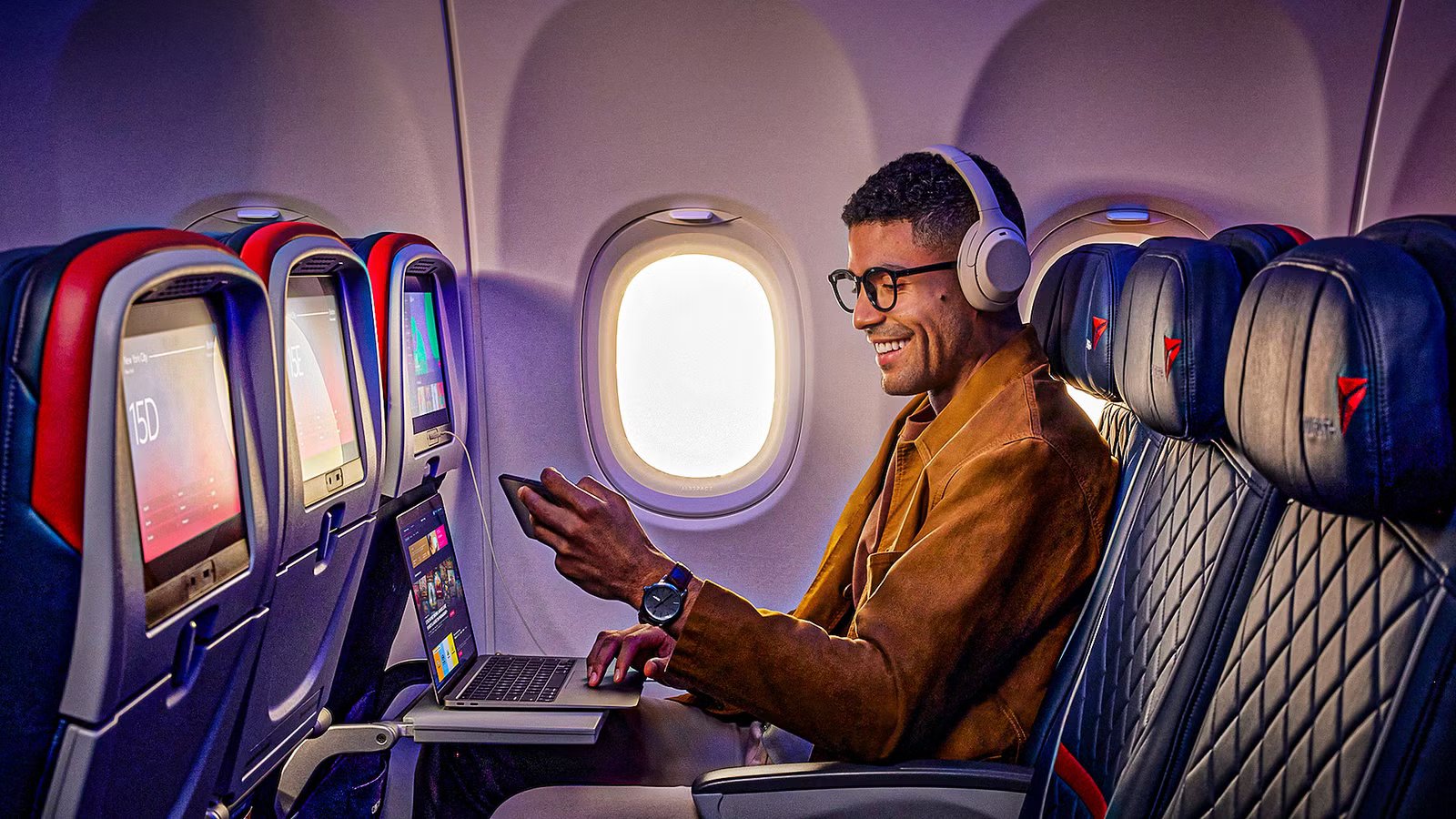
If there is one unique onboard technology package defining the  Delta Air Lines customer experience in 2006, it is Delta Sync. More than just a simple in-flight WiFi connection, Delta has turned connectivity into a broader digital ecosystem that links fast, free internet with a more personalized seatback screen, loyalty-driven offers, and real-time day-of-travel information. Delta Air Lines said in late 2025 that Delta Sync WiFi had reached its 1,000th aircraft, or around 75% of the fleet, while Delta Sync seatback entertainment has now officially been expanded to more than 300 aircraft and six fleet types. This highlights a deliberate effort to quickly and efficiently roll this product out across its fleet.
This product’s overall appeal is quite easy to understand. Passengers are getting a more at-home experience in the air, with the ability to resume content, view personalized recommendations, track connections, access partner perks, and ultimately use multiple devices in a far more seamless manner. Even anecdotal passenger reaction has been notably positive, with users consistently praising the smoother interface and the layover/connection information that the system can provide. In that sense, Delta Sync is not just another cabin amenity, but it is more so, becoming the digital layer that ties Delta’s premium brand promise together, turning the seat, the screen, the app, and the loyalty program into a single coordinated experience.
A Look At Delta’s Passenger Experience Strategy

Delta Air Lines’ passenger experience strategy is increasingly built around the idea that premium does not always mean a nicer seat or a better meal put in front of you. For high-yielding Delta Air Lines customers, who are of principal concern to the carrier and its shareholders, it also means reducing friction, increasing relevance, and making the journey feel personalized from booking all the way to arrival. At its core, this is a fundamental reason why Delta Air Lines has tied Delta Sync so closely to SkyMiles.
Passengers simply need to log in once, and then the airline will provide free WiFi, individualized entertainment from Delta’s vast in-flight library, as well as offers from partners like Paramount+, YouTube, Uber, and Resy. These all come alongside practical tools like real-time arrival and connection updates. In just as important a fashion, Delta Air Lines is trying to make the onboard experience feel consistent with how many people already happen to use technology on the ground. All of this is a key piece of Delta’s attempt to convince passengers to keep paying high premiums to fly the airline over its competitors.
The airline wants passengers on board to have no trouble efficiently switching between devices, expecting smart recommendations, and wanting information to be contextual rather than generic in nature. Delta executives have explicitly framed the goal as creating a seamless, elevated, and personalized journey, while outside coverage has noted that Delta Sync seatback improves satisfaction without reducing demand for seatback entertainment. In other words, Delta is not looking to fundamentally replace traditional in-flight entertainment, but it is rather making it more dynamic and useful, fitting into the airline’s broader strategy of using technology to reinforce its premium positioning.
Delta Sync Seatback: A Smart TV At Your Seat

The most visible part of this push is the airline’s plan to install advanced and capable seatback entertainment systems. The most noteworthy of these is Delta Sync seatback, which reimagines the traditional in-flight entertainment screen as something much closer to a smart TV. Delta Air Lines has indicated that it has spread the platform to more than 330 aircraft by late 2024, and that it will be available in five fleet types at that point, all before growing further in 2025, according to the carrier.
The seat’s value lies in combining entertainment with overall utility. Logged-in SkyMiles members can resume movies or shows across flights, receive real-time notifications about arrival and connecting flights, view upgraded flight trackers and airport maps, and access a more intuitive home screen that highlights content in a much more modern manner. Delta Air Lines has also added practical touches such as visible seat numbers during boarding, a kids-focused interface, and QR-based feedback tools.
Delta has continued to argue that the system itself has been designed to feel much more personal and secure in nature, with automatic logout and a more customized experience for each individual traveler. This is the kind of new technology that passengers actually notice because it changes the seatback from a passive movie monitor into a live travel companion. That ultimately helps explain why travelers and industry observers alike have responded so positively to it.

New Milestone: Delta Air Lines Equips 1,000th Aircraft With Sync Seatback & Free WiFi
The fleet is getting even better.
WiFi Becoming The Platform For Everything Else

The second piece of this story is Delta Sync WiFi, which matters not only because it is free for SkyMiles members, but also because Delta Air Lines is using it as the foundation for a broader onboard platform. Delta Air Lines said in December 2025 that fast, free WiFi had been installed on 1,000 aircraft and had already generated more than 100 million sessions. Earlier in 2025, the airline said all customers on its transatlantic network to Europe, Israel, and West Africa would enjoy access ot these seats, all while rollout continued across South America and into its regional aircraft.
Another noteworthy piece of this story is that Delta Air Lines is not treating WiFi as a commodity. Rather, it is layering exclusive content and commercial partnerships on top of it, including Paramount+, YouTube, Crunchyroll, Atlas Obscura, Uber offers, and an onboard Delta Shop. These are all ways in which the carrier believes it will be able to generate auxiliary revenue in situations where it would otherwise be infeasible.
At industry conferences in 2025, Delta Air Lines unveiled an even more ambitious roadmap. The airline is looking to advance its experience with a cloud-based next-generation seatback system with 4K HDR QLED displays, Bluetooth in all cabins, far greater onboard storage, smarter recommendations, and deeper integration with the carrier’s Fly Delta app. This suggests that the airline sees connectivity as a key piece of its cabin innovation question.
Why Is This Investment Worth It For Delta Air Lines?

As for Delta Air Lines, investing in this technology is worth it primarily because it supports revenue growth, loyalty, brand differentiation, and operational perception at the same time. First, free WiFi and smarter seatback screens make the airline more competitive with passengers who increasingly view connectivity as essential rather than optional. Second, since Delta Sync is tied to SkyMiles logins, it encourages loyalty enrollment and gives Delta a better platform for personalized offers, partner promotions, and future digital merchandising.
Third, it reinforces Delta’s premium brand image across the board. A cabin can feel more upscale not only because of upholstery and lighting, but because the digital experience feels fundamentally smooth, modern, and useful. Fourth, better information can reduce overall stress. Real-time connection details, airport maps, and arrival tools can make irregular operations and tight connections feel much more manageable, something which matters greatly for overall satisfaction.
Lastly, this kind of investment is scalable in nature. Once the connectivity and software backbone are in place, Delta Air Lines is capable of continuing to add features, content, and partners without reinventing the entire cabin product each time. That is why Delta’s technology strategy is so powerful in nature. It transforms a cost center like WiFi and entertainment into a long-term platform for overall retention, ancillary revenue, and premium positioning.

What You’ll Find On Delta Air Lines’ Luxuriously Retrofitted Airbus A350s
Delta Air Lines is home to 29 A30s in its fleet, with another 15 to arrive in the next few years.
What Are Competitors Doing At This Time?

Delta Air Lines is not alone, but competitors are approaching the problem from slightly different angles. American Airlines launched free high-speed WiFi for AAdvantage members in January 2026, saying that the service would roll out across more than 2 million flights a year and eventually cover all narrowbody and dual-class regional aircraft, with future personalization and digital-service opportunities built on top.
United Airlines is taking probably the boldest path, racing to install Starlink connectivity across its fleet. By February 2026, it said more than 300 regional aircraft were equipped, more than 25% of daily departures already had Starlink, and WiFi satisfaction on those aircraft had nearly doubled as a result. JetBlue remains a strong global benchmark in economy travel because it still offers seatback entertainment at every seat and free Fly-Fi broadband internet across all JetBlue-operated flights.
The competitive battlefield has undoubtedly somewhat shifted. Airlines are no longer debating whether passengers want better onboard tech. Instead, they are choosing to compete over who can turn connectivity into the most compelling full-trip digital experience. Delta’s advantage is that it currently appears furthest along in integrating WiFi, seatback entertainment, loyalty systems, and content into a single branded ecosystem.
What Is Our Bottom Line?

At the end of the day, legacy operators like Delta Air Lines have slowly begun to compete for passenger dollars with more than just the strength and overall diversity of their networks. Instead, they have begun to invest in offering differentiated product experiences, something which they have seen succeed in recent years.
No airline has been as effective at this as Delta Air Lines has, primarily due to that carrier’s continued commitment to developing unique kinds of experiences. This is what has allowed the carrier to consistently outperform its rivals in recent years in terms of overall revenue growth and many other key metrics.
Therefore, the fact that the airline has elected to invest in its in-flight products should not come as a surprise at all, especially to frequent fliers. Technology and connectivity are both now critical pieces of the puzzle for passengers across the income spectrum, and if Delta wants to continue charging premium prices, it will need to continue investing in these kinds of products.