dailynewsnblog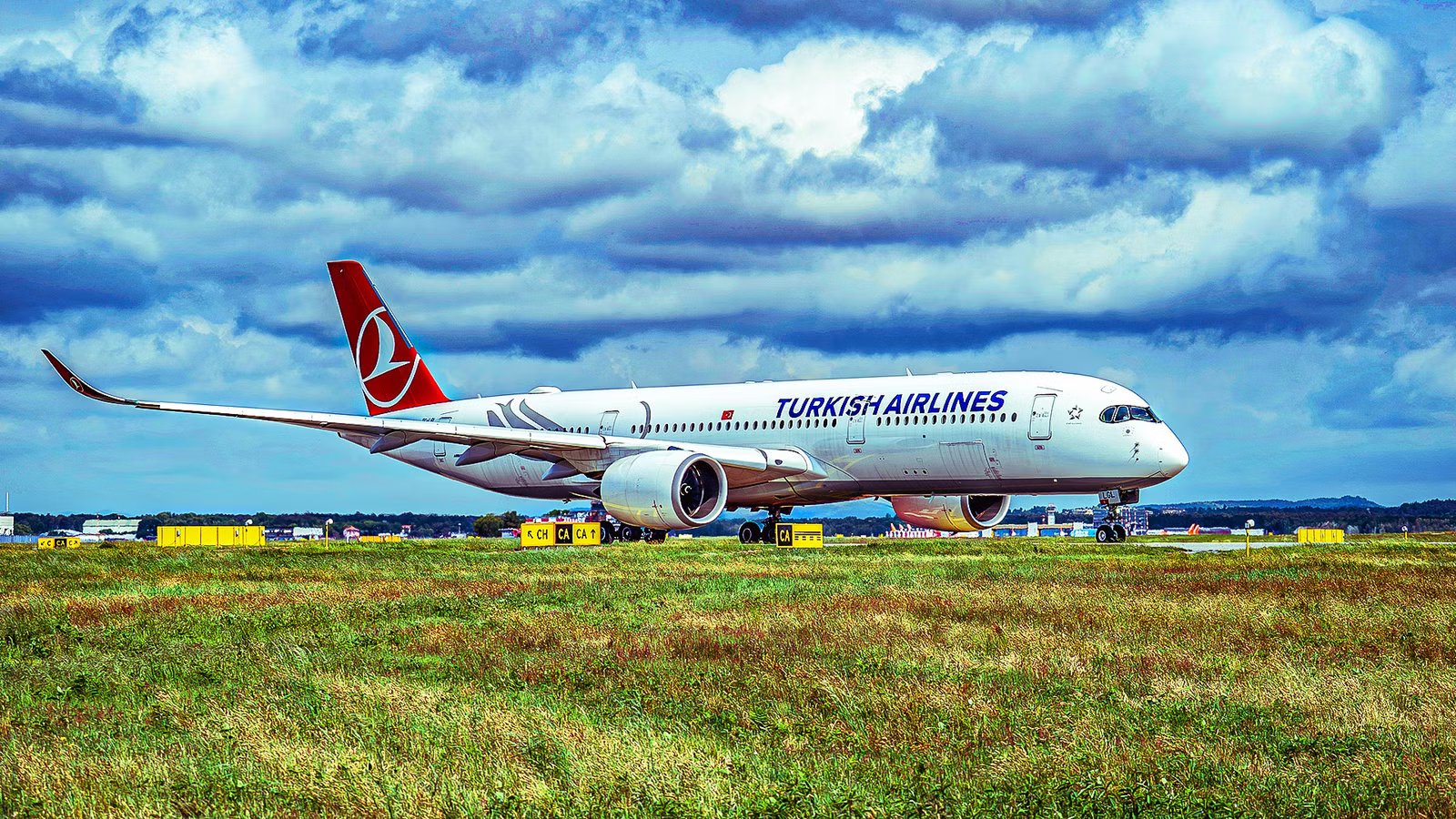
For passengers traveling between Europe and Australia, there are normally plenty of options. For instance, alongside a handful of direct services offered by Qantas, flyers from all over the continent can make easy connecting journeys via hubs in Southeast Asia and the Middle East. However, with the latter market now clouded by geopolitical tensions and uncertainty, airlines from the European end of this route are upping the ante.
Indeed, while there are currently three one-stop routes between Europe and Australia, this will increase to five within the next 10 months, representing a 66% increase in terms of the raw number of routes served. Let’s take a look at how the new additions complement the existing routes on this corridor.
British Airways Doubles Its Australian Presence

British Airways currently flies from its main hub at London Heathrow Airport (LHR) to Sydney Kingsford Smith (SYD) via Singapore Changi (SIN) on a daily basis. According to present scheduling data made available by Cirium, an aviation analytics company, these flights will be operated by the Boeing 777-300ER until March 28. Thereafter, the switch to the IATA Summer Schedule will see BA replace its Triple-Sevens with the 787-9 on this route.
This week, the carrier made headlines by announcing that it would be adding a second Australian route to its portfolio. From January 2027, BA plans to serve Melbourne (MEL) via Kuala Lumpur (KUL) on a daily basis, with this move likely being a response to the drop in demand for travel between Europe and Australia via the Middle East. It also announced a new route to Colombo, and Neil Chernoff, its Chief Planning & Strategy Officer, said:
“We’re delighted to announce sizeable growth to our flying schedule for winter 2026, including two notable new destinations that I’m confident will prove popular with our customers.”
Finnair Is A New Entrant To The Australian Market

The other new route that will shortly grace the Europe-Australia market will be operated by Finnair using its flagship Airbus A350-900 widebody twinjet aircraft. Flying from its main hub at Helsinki Vantaa Airport (HEL), October 25, 2026, will see it begin serving Melbourne via Bangkok (BKK) in line with the start of the IATA Winter Schedule. These flights will operate on a daily basis, with passengers able to take advantage of convenient flight timings.
Indeed, Finnair explains that “the flight is scheduled to depart from Helsinki shortly after midnight, arriving in Bangkok in the afternoon, and (…) reaching Melbourne the following morning.” This will enable onward connections with its oneworld partner Qantas. Likewise, the return flights will also land in Helsinki early in the morning, giving passengers the chance to connect onto Finnair’s European flights, some of which are flown by the A350.
While BA’s Australian expansion was likely prompted by the drop in Middle Eastern demand, Finnair announced this new route before the onset of the conflict. Still, it does reflect a shift in network strategy, with Simple Flying reporting last month that the carrier had explained at a recent press event that, on the long-haul front, the US is no longer its main priority. Instead, the Asia-Pacific market will be its secret weapon, and demand is on the rise.

First Time In 14 Years: 3 European Airlines Plan Australia Flights In 2026
Despite the number of operators, Middle Eastern and Asian carriers will still carry the bulk of the market’s passengers…
Turkish Airlines’ Two-Part Strategy

Situated at the crossroads of Europe and Asia, Turkish Airlines’ main hub at Istanbul Airport (IST) has long served as a key intercontinental gateway. As far as the carrier’s Australian coverage is concerned, it serves two destinations: Melbourne via Singapore and Sydney via Kuala Lumpur. Curiously, these stopover points are the other way round to BA’s planned pair of Australian routes, but, as seen above, they are located nice and close together.
Turkish Airlines favors the Airbus A350-900 on both of these routes, with its 329-seat capacity being noticeably higher than the 254-seat Boeing 777-300ERs and 216-seat Boeing 787-9s being used by British Airways on its Sydney flights this month. However, this is offset by Turkish Airlines’ lower frequencies: in March, it is serving Melbourne (via Singapore) three times a week, with five weekly departures on the Sydney (via KL) route.