dailynewsnblog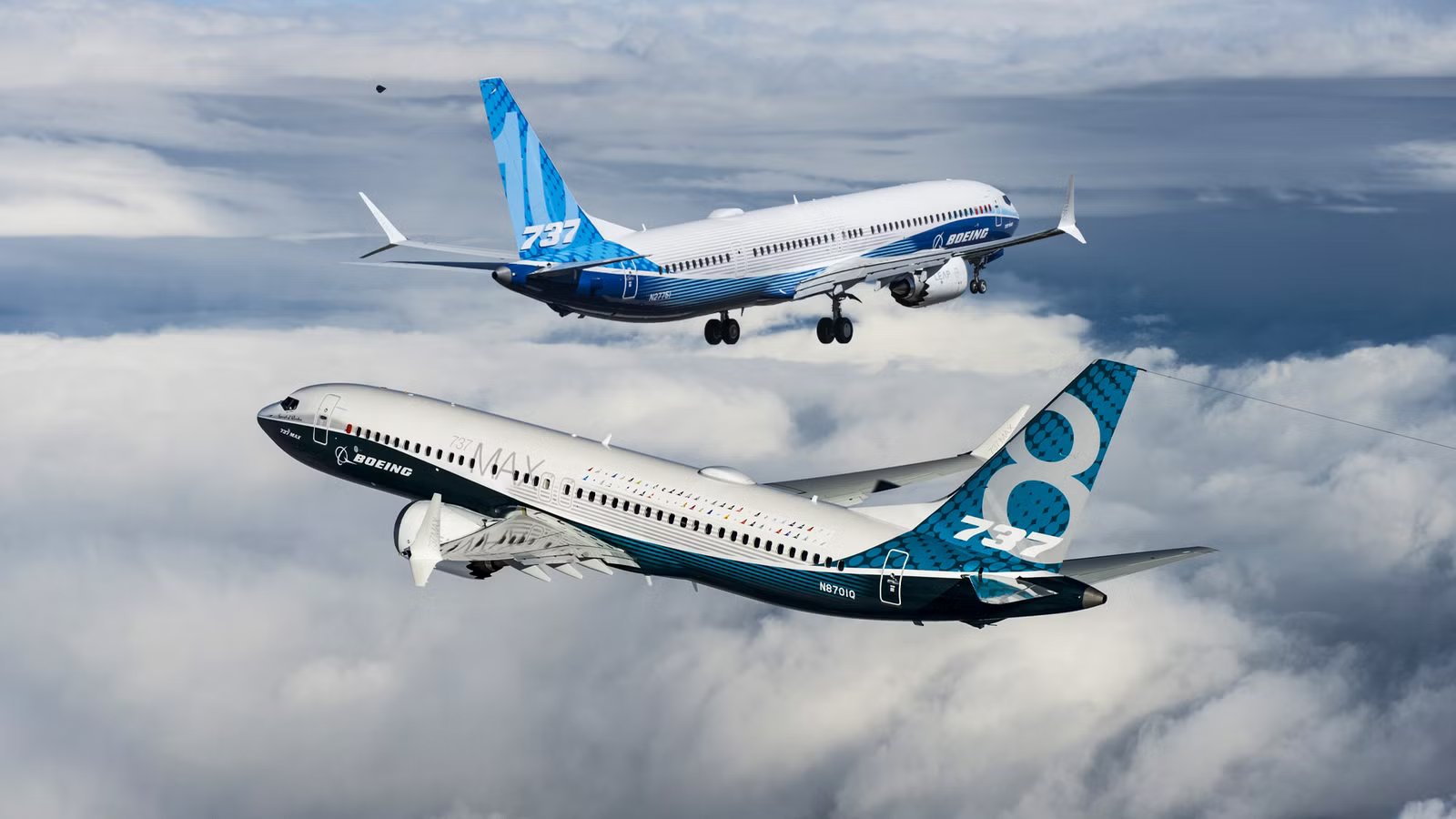
The Boeing 737 MAX family represents the latest evolution of the world’s most prolific narrow-body aircraft, yet the performance profiles of its different variants can often seem counterintuitive to the casual observer. This guide examines the critical distinctions between the Boeing 737 MAX 8, the undisputed workhorse of the series, and the Boeing 737 MAX 10, the largest and most ambitious stretch of the airframe to date. To help understand these differences, this article provides a thorough analysis of how  Boeing has balanced passenger capacity against fuel efficiency, explaining the technical reasons why the larger variant actually covers less ground than its smaller sibling.
Understanding these differences is essential for grasping the complexities of modern fleet planning, where every additional seat comes at the cost of aerodynamic weight and fuel volume. While it may seem logical that a larger aircraft should be more capable in every metric, the reality of aeronautical engineering dictates a series of trade-offs that define where and how these planes can fly. This exploration will demystify the range paradox of the MAX family, providing clarity on why the MAX 8 remains the global favorite while the MAX 10 fills a specific, high-density niche in the market.
Longer Doesn’t Mean Further

The most common point of confusion for those following the MAX program is why the MAX 10, despite being the largest aircraft in the family, possesses the shortest range. In the world of narrow-body jets, increasing the length of the fuselage, known as a stretch, inevitably adds structural weight without necessarily increasing the total fuel capacity. The MAX 10 is approximately 66 inches (1.68 meters) longer than the Boeing 737 MAX 9 and over 10 feet longer than the MAX 8, which requires additional airframe reinforcement and heavier systems to maintain structural integrity.
Because both the MAX 8 and the MAX 10 utilize the same wing and fuel tank configuration, the extra weight of the MAX 10’s longer body and its increased passenger load means the engines must work harder to maintain flight. This higher fuel burn rate per mile directly reduces the total distance the aircraft can travel before reaching its reserves. While the MAX 8 can comfortably bridge transatlantic gaps or connect distant regional hubs, the MAX 10 is physically limited by the reality that its fuel-to-weight ratio is less favorable for long-haul endurance.
The increased take-off weight of a fully loaded MAX 10 often requires longer runways or more thrust, which can lead to performance penalties at high-altitude or hot-weather airports. This makes the MAX 8 a more versatile go-anywhere aircraft that can handle a wider variety of global routes. The MAX 10 was never designed to be a long-range explorer; instead, it was engineered as a high-efficiency shuttle designed to move as many people as possible over medium distances, where seat-mile costs are more important than total range.
The 737 MAX Is A Key Asset

The physical stretch of the MAX 10 fuselage directly impacts the internal cabin architecture and determines how many travelers can actually be accommodated in a single journey. The MAX 8 is designed for a balance of comfort and density, whereas the MAX 10 pushes the limits of the narrow-body cabin to maximize revenue per flight. This extra length creates a significantly larger canvas for airlines to configure their seating tiers, allowing for more flexible premium and economy sections, and importantly, more paying passengers in seats.
In a typical two-class configuration, the MAX 8 usually carries between 162 and 178 passengers, while the MAX 10 can comfortably house between 188 and 204. For low-cost carriers utilizing a high-density, single-class layout, the MAX 8 maxes out at 210 seats, whereas the MAX 10 can add another 20 beyond this.
This increase in capacity is why the MAX 10 is often viewed as a major asset for domestic routes with high demand but limited takeoff slots. By fitting 20 or more additional passengers into the same departure window, airlines can significantly lower their operating costs per person. However, this dense packing means that the MAX 10 won’t feel as spacious as the MAX 8, particularly during the boarding and deplaning processes that naturally take longer with a higher head count.

Why The Boeing 737 MAX 10 Has Such A Long Fuselage
Boeing’s longest 737 yet: will it revolutionize air travel or struggle to take off?
Built For Purpose

The challenge of stretching a low-slung airframe like the 737 is rooted in the simple geometry of rotation. As the fuselage grows longer, the distance between the main landing gear and the tail decreases, leaving less room for the nose to rise before the rear of the aircraft strikes the runway. For the 737 MAX 10, this was a critical hurdle because the airframe sits much closer to the ground than its competitors. Boeing engineers had to find a way to allow for a steep enough takeoff angle without completely redesigning the wing or the wheel well, which would have destroyed the fleet commonality that airlines like  Southwest Airlines value so highly.
The solution was a semi-levered, telescoping landing gear system that physically changes its height during the takeoff roll. As the aircraft accelerates, the main gear extends by 9.5 inches, effectively propping the jet up higher to provide the necessary clearance for the tail. To ensure the gear still fits into the standard wheel well during flight, a clever component known as a shrink link pulls the extension back in as the gear retracts.
|
Feature |
737 MAX 8 Landing Gear |
737 MAX 10 Landing Gear |
|
Type |
Standard Oleo-Pneumatic |
Trailing-Link Levered |
|
Ground Clearance |
Standard |
Increased by 9.5 inches |
|
Extension Mechanism |
Fixed Length |
Telescoping With Shrink Link |
|
Wheel Well Size |
Standard |
Standard (Same as MAX 8) |
This feature is particularly relevant for the East Asian market, where Japanese carriers like Skymark Airlines have expressed significant interest in the MAX 10. In Japan, high-density domestic routes often require aircraft that can maximize passenger count while operating out of airports with strict noise and performance envelopes. By utilizing this levered gear, the MAX 10 can lift its heavy, two hundred and thirty passenger frame off the runway with the same pilot techniques used for the smaller MAX 8, maintaining a seamless transition for flight crews.
Differences In Output Performance

In terms of economic performance, the primary metric of success is cost per available seat mile (CASM). This calculation determines how much it costs to fly one seat for one mile, factoring in fuel, maintenance, crew wages, and landing fees. The MAX 10 was specifically engineered to dominate this metric by stretching the existing airframe to its physical limit, allowing airlines to spread their fixed operational costs across a much larger group of paying passengers.
Even though the MAX 10 offers superior unit costs, it does come with a higher trip cost than the MAX 8. This means it is more expensive to operate the aircraft for a single flight from point A to point B, regardless of how many people are on board, due to the increased weight and fuel burn. However, if an airline can consistently fill more than 80 percent of the seats, the MAX 10 becomes significantly more profitable than its smaller sibling. This is why the larger variant is often preferred for domestic hub-to-hub routes where demand is almost guaranteed to be high, whereas the MAX 8 is the better choice for thinner routes where a larger plane would fly with too many empty rows.
Boeing positioned the MAX 10 as a direct response to the increasing size of global passenger demand, aiming to provide a plane that could match the efficiency of wide-body jets on shorter, regional hops. The ability to harvest more revenue from a single takeoff slot at a congested airport can really unlock access to higher profit margins that the smaller MAX 8 simply cannot reach in high-density environments. As airlines continue to navigate shifting travel patterns, the move toward these high-capacity variants reflects a broader industry trend toward maximizing every square inch of available cabin space.

What Are The Largest Boeing 737 MAX Fleets In The World?
US carriers make up a large share of the global 737 MAX fleet.
Interesting New 737 MAX Routes

The geographic reach of the 737 MAX family is where the operational split between the MAX 8 and the MAX 10 becomes most apparent. While they share the same DNA, their performance envelopes dictate entirely different mission profiles that define how an airline connects its network. The MAX 8 is increasingly being utilized as a long-range tool, capable of crossing oceans to connect secondary cities, whereas the MAX 10 is built to be a regional player that moves massive volumes of people between major metropolitan hubs.
In recent years, the MAX 8 has redefined the narrow-body market by proving it can handle transatlantic sectors of up to 3,550 nautical miles with a full passenger load. Carriers like  Air Canada and
  United Airlines have deployed the variant on routes such as Montreal to Nantes and Newark to Glasgow, journeys that exceed 3,200 miles and require over seven hours of flight time. In contrast, the MAX 10 has a range ceiling of approximately 3,100 nautical miles, a limitation that effectively removes most true long-haul narrow-body options from its capability list.
An airline focused on thin international routes where filling 200 seats is difficult will find the MAX 8 to be the perfect fit, as its lower fuel burn and extended range allow for profitable operations on niche city pairs. Conversely, for a carrier operating out of slot-constrained airports where every departure must count, the MAX 10’s ability to carry 20 additional passengers outweighs its lack of range. It is an aircraft designed for the shuttle era, where the goal is to move the maximum number of people over three to five hour stages with the lowest possible overhead.
Density Over Range

The future of the MAX family will likely see a symbiotic relationship between these two variants rather than a competition for dominance. The MAX 8 will continue to be the standard-bearer for versatility, serving as the go-to choice for airlines that need a reliable aircraft for everything from short regional hops to seven-hour transatlantic crossings. It has already solidified its place in the aviation world, even after a troubled past.
Meanwhile, the MAX 10 is poised to become the ultimate specialized tool for high-traffic domestic corridors, offering the lowest seat-mile costs in the Boeing narrow-body lineup. While certification delays still hold it back, its arrival will allow many airlines to maximize every seat available on some of the highest-demand routes in the world.
As production rates target 47 aircraft per month by the end of 2026, the range paradox will become a standard part of airline strategy. Carriers will utilize the MAX 8 for its endurance and go-anywhere capability, while deploying the MAX 10 to squeeze every bit of profit out of high-demand routes. Ultimately, the difference between these two jets is a matter of mission. The MAX 8 connects the world, while the MAX 10 masters the density of the modern hub.