Trending News:AI startups are eating the venture industry and the returns, so far, are goodAlabama student reportedly fell to his death in Barcelona waters by accident | AlabamaFederal departments, agencies to shed 12,000 full-time equivalent positions – NationalNo. 4 Kansas vs. No. 5 St. John’s NCAA Tournament predictions: Odds, recent stats, trends, and best betsThe Iran war already hit gas prices. What it’s coming for next.Why Was The Boeing 777-300 A Failure?Strictly’s longest-serving dancer, Karen Hauer, quits show after 14 years | Strictly Come Dancing‘It’s stupid’: why western carmakers’ retreat from electric risks dooming them to irrelevance | Automotive industryWhy annuities matter for retirees in volatile markets: Athene COO3/20: CBS Evening News – CBS NewsBaffling Crimson Desert Images Have Ignited A Generative AI ControversyIran War Live Updates: U.S. Lifts Sanctions on Iranian Oil as War Enters Fourth WeekCattle producers push back as N.B. moves to end provincially run veterinary careConrad Black: Triumph in Iran is comingI Tried On the Watch Every Chic Dresser Is Eyeing for SpringLots of Apple devices, Galaxy S26, Dell XPS 16 and more'Wowzer!' – Shoes fly and athletes collide in mixed relayCanada’s Einarson into world curling semifinalsProperty taxes are skyrocketing. But states are learning that cutting them has major consequences.Japan beat Australia to lift Women’s Asian Cup title | Football NewsBig money flows into state attorney general races as legal battles shape American politicsUK government yet to trial OpenAI tech months after signing partnership | Technology policyBest Air Purifiers of 2026: Don’t Suffer Bad Winter Air Quality With These Top ModelsWhy British Airways, Finnair & Turkish Airlines Are Betting Big On AustraliaHigh Gas Prices, Driven Up by the Iran War, Loom Over the MidtermsDoes Jury Duty Season 2 Justify Its Existence?‘Eerie parallel’: Archived stamps reveal Canada was prepared to ration gas in the 1979 oil crisisFog and overcast to kick off first spring weekend in TorontoTwo bets and an Eliminator pick for the men’s tournament games SaturdayDreame’s self-cleaning L10s Pro Ultra is nearly $1,000 off its original list price‘Her warmth filled the kitchen every morning’: the magic – and tenacity – of Jenni Murray | Jenni MurrayTom Kean Jr.’s political roots date to 1776. Is that enough to protect the Republican’s House seat?Race played a role in Ontario drug dealer’s sentencing: ‘This somewhat attenuates his moral responsibility’Inside BTS’ “Arirang” Comeback Costumes by Designer Jay SongzioNew pill cuts “bad” cholesterol by 60% in major trialIran Unwilling to Talk About Hormuz as Regime Digs InQuebec baseball icon Rodger Brulotte dead at 79 – MontrealWATCH: Looking back at the life and legacy of Chuck Norris, who died at age 86RFK may replace entire panel of CDC vaccine advisors again, ally lets slipKKR's Akash Deep ruled out of IPL 202650 Best Game Boy Advance Games Of All TimeIran War Live Updates: U.S. Lifts Sanctions on Iranian Oil as War Enters Fourth WeekAcross-the-board executive job cuts won’t address ‘staggering’ growth in bureaucracy’s upper ranks, says ex-civil servant 3 credits short of a degree, he left NSCAD for a music career. The school is now honouring him71 Best Podcasts (2026): True Crime, Culture, Science, FictionDoulas can improve health outcomes for women and babies. Insurers are taking notice.Global oil shock ripples through Canada’s economy: FP VideoIn South Australia One Nation has put meat on the bones of its polling surge – now both major parties need to respond | South Australian election 2026New AI tool predicts cancer spread with surprising accuracyAlexa Chung Just Followed This Specific Style Rule in ParisIran says US and Israel attacked Natanz nuclear facility | NewsCanadians believe Israelis face more prejudice due to Iran war: pollUS accuses Iran’s government of operating hacktivist group that hacked StrykerVanderbilt vs. Nebraska prediction, odds, spread, time: 2026 NCAA Tournament picks from proven modelFrustrated flier says “we should not be punished” over funding fight in CongressWhat are we all playing this weekend?Global oil shock ripples through Canada’s economy: FP VideoBest easter ideas 2026: Baskets, fun activities & home décor inspiration – NationalA retro Starship Troopers shooter, a video store sim and other new indie games worth checking outFrom Goop to gavel: Gwyneth Paltrow’s wardrobe clearout heads to auction | Gwyneth PaltrowFederal departments, agencies to shed 12,000 full-time equivalent positionsTory peer accuses Nick Timothy of ‘instilling fear’ over Islamic prayers | ConservativesU.S. eases Iranian oil sanctions in scramble to contain energy prices, handing Tehran a boostLiverpool team news v Brighton:The Oil Prices You See Don’t Tell the Market’s Real StoryThe 'r-word' is seeing a resurgence. What happened?Work is underway on Trump’s second border wall. It’s bigger than the first.Boring Phone Designs, Begone. I’m Seeing a New Wave of Fresh Looks for 2026First Grammarly cloned me without permission. Then another AI company asked if it could do the same—for $2,000Demna’s Star-studded Gucci Debut Elevates Fashion Month RankingsCanada’s oil producers in line for C$90bn windfall from Iran warN.S. premier popularity drops amid controversial budget cuts, partial reversal800 days in death’s shadow: The hellish work of Israel’s physical anthropologistRange Limitations & Passenger Seating Capacity DifferencesThe dominant basketball program in a conference is leaving. So why aren’t their opponents celebrating?Merz Plans Trump Call While Doubling Down on MAGA CriticismUS interest in electric vehicles surges as gas prices jump amid Iran war | BusinessThese electronic Polaroids are powered by your phone’s NFC chipWorld Open: Ronnie O’Sullivan beats Wu Yize in decider to reach finalRussian ship potentially bringing oil to Cuba is test of Kremlin allyshipMost NDP leadership candidates say they’re in no hurry to become MPsNP View: Justice by skin colourTrump’s Ballroom Architect Is Skilled at Shrugging Off OutrageDOGE goes nuclear: How trump invited silicon valley into America’s nuclear power regulatorWhat we’ve been playing this weekWall Street priced a swift bombing campaign. What it got was an energy war.Iranian among two charged over alleged attempt to enter UK nuclear submarine base | UK newsTransfer rumors, news: Arsenal, Man City, Man Utd eye TonaliThe Best Jeans, Tops, and Shoes From the Nordstrom Spring SaleLive Updates: BTS Takes the Stage After Nearly 4 YearsJamie Sarkonak: The crusading judge who helped Liberals build a race-based sentencing regime‘Jury Duty Presents: Company Retreat’ Almost Makes Corporate Culture Seem FunFreeing kids from ICE detentionRussia Says Drone Attacks Repelled Near Bashneft Oil RefineriesVivian Bercovici: Regime change in Iran is no longer a fantasyWATCH: Rise in gas prices show no sign of slowing down, analyst saysJeff Bezos’ Blue Origin enters the space data center game10 years ago, Marvel finally found the right actor to bring The Punisher to life‘I have fought for Aaron’: A Ugandan mother confronts disability and stigma | WomenCathie from Canada: Today’s News: Back at it, folks
Welcome to Daily News & Blog – your go-to source for the latest news, insightful blogs, and trending stories from around the world.
Who We Are
At Daily News & Blog, we are passionate about delivering accurate, timely, and engaging content across various categories, including world news, economy, technology, sports, gaming, travel, fashion, health, and more. Our goal is to keep you informed, inspired, and ahead of the trends.
What We Offer
✔ Breaking News & In-Depth Analysis – Stay updated with real-time updates and well-researched articles. ✔ Diverse Topics – Covering everything from global events to lifestyle, entertainment, and innovation. ✔ Engaging Blogs – Thought-provoking opinions and expert insights on trending subjects. ✔ Reliable Sources – We curate information from trusted news providers and industry experts.
Our Mission
We aim to be more than just another news website. Our mission is to create a platform where information meets authenticity, helping our readers navigate an ever-changing world with clarity and confidence.
Join Us
Follow us for daily updates and be part of a growing community that values knowledge and meaningful discussions.
📩 Have a story or feedback? Contact us at info@dailynewsnblog.com
Trending News:AI startups are eating the venture industry and the returns, so far, are goodAlabama student reportedly fell to his death in Barcelona waters by accident | AlabamaFederal departments, agencies to shed 12,000 full-time equivalent positions – NationalNo. 4 Kansas vs. No. 5 St. John’s NCAA Tournament predictions: Odds, recent stats, trends, and best betsThe Iran war already hit gas prices. What it’s coming for next.Why Was The Boeing 777-300 A Failure?Strictly’s longest-serving dancer, Karen Hauer, quits show after 14 years | Strictly Come Dancing‘It’s stupid’: why western carmakers’ retreat from electric risks dooming them to irrelevance | Automotive industryWhy annuities matter for retirees in volatile markets: Athene COO3/20: CBS Evening News – CBS NewsBaffling Crimson Desert Images Have Ignited A Generative AI ControversyIran War Live Updates: U.S. Lifts Sanctions on Iranian Oil as War Enters Fourth WeekCattle producers push back as N.B. moves to end provincially run veterinary careConrad Black: Triumph in Iran is comingI Tried On the Watch Every Chic Dresser Is Eyeing for SpringLots of Apple devices, Galaxy S26, Dell XPS 16 and more'Wowzer!' – Shoes fly and athletes collide in mixed relayCanada’s Einarson into world curling semifinalsProperty taxes are skyrocketing. But states are learning that cutting them has major consequences.Japan beat Australia to lift Women’s Asian Cup title | Football NewsBig money flows into state attorney general races as legal battles shape American politicsUK government yet to trial OpenAI tech months after signing partnership | Technology policyBest Air Purifiers of 2026: Don’t Suffer Bad Winter Air Quality With These Top ModelsWhy British Airways, Finnair & Turkish Airlines Are Betting Big On AustraliaHigh Gas Prices, Driven Up by the Iran War, Loom Over the MidtermsDoes Jury Duty Season 2 Justify Its Existence?‘Eerie parallel’: Archived stamps reveal Canada was prepared to ration gas in the 1979 oil crisisFog and overcast to kick off first spring weekend in TorontoTwo bets and an Eliminator pick for the men’s tournament games SaturdayDreame’s self-cleaning L10s Pro Ultra is nearly $1,000 off its original list price‘Her warmth filled the kitchen every morning’: the magic – and tenacity – of Jenni Murray | Jenni MurrayTom Kean Jr.’s political roots date to 1776. Is that enough to protect the Republican’s House seat?Race played a role in Ontario drug dealer’s sentencing: ‘This somewhat attenuates his moral responsibility’Inside BTS’ “Arirang” Comeback Costumes by Designer Jay SongzioNew pill cuts “bad” cholesterol by 60% in major trialIran Unwilling to Talk About Hormuz as Regime Digs InQuebec baseball icon Rodger Brulotte dead at 79 – MontrealWATCH: Looking back at the life and legacy of Chuck Norris, who died at age 86RFK may replace entire panel of CDC vaccine advisors again, ally lets slipKKR's Akash Deep ruled out of IPL 202650 Best Game Boy Advance Games Of All TimeIran War Live Updates: U.S. Lifts Sanctions on Iranian Oil as War Enters Fourth WeekAcross-the-board executive job cuts won’t address ‘staggering’ growth in bureaucracy’s upper ranks, says ex-civil servant 3 credits short of a degree, he left NSCAD for a music career. The school is now honouring him71 Best Podcasts (2026): True Crime, Culture, Science, FictionDoulas can improve health outcomes for women and babies. Insurers are taking notice.Global oil shock ripples through Canada’s economy: FP VideoIn South Australia One Nation has put meat on the bones of its polling surge – now both major parties need to respond | South Australian election 2026New AI tool predicts cancer spread with surprising accuracyAlexa Chung Just Followed This Specific Style Rule in ParisIran says US and Israel attacked Natanz nuclear facility | NewsCanadians believe Israelis face more prejudice due to Iran war: pollUS accuses Iran’s government of operating hacktivist group that hacked StrykerVanderbilt vs. Nebraska prediction, odds, spread, time: 2026 NCAA Tournament picks from proven modelFrustrated flier says “we should not be punished” over funding fight in CongressWhat are we all playing this weekend?Global oil shock ripples through Canada’s economy: FP VideoBest easter ideas 2026: Baskets, fun activities & home décor inspiration – NationalA retro Starship Troopers shooter, a video store sim and other new indie games worth checking outFrom Goop to gavel: Gwyneth Paltrow’s wardrobe clearout heads to auction | Gwyneth PaltrowFederal departments, agencies to shed 12,000 full-time equivalent positionsTory peer accuses Nick Timothy of ‘instilling fear’ over Islamic prayers | ConservativesU.S. eases Iranian oil sanctions in scramble to contain energy prices, handing Tehran a boostLiverpool team news v Brighton:The Oil Prices You See Don’t Tell the Market’s Real StoryThe 'r-word' is seeing a resurgence. What happened?Work is underway on Trump’s second border wall. It’s bigger than the first.Boring Phone Designs, Begone. I’m Seeing a New Wave of Fresh Looks for 2026First Grammarly cloned me without permission. Then another AI company asked if it could do the same—for $2,000Demna’s Star-studded Gucci Debut Elevates Fashion Month RankingsCanada’s oil producers in line for C$90bn windfall from Iran warN.S. premier popularity drops amid controversial budget cuts, partial reversal800 days in death’s shadow: The hellish work of Israel’s physical anthropologistRange Limitations & Passenger Seating Capacity DifferencesThe dominant basketball program in a conference is leaving. So why aren’t their opponents celebrating?Merz Plans Trump Call While Doubling Down on MAGA CriticismUS interest in electric vehicles surges as gas prices jump amid Iran war | BusinessThese electronic Polaroids are powered by your phone’s NFC chipWorld Open: Ronnie O’Sullivan beats Wu Yize in decider to reach finalRussian ship potentially bringing oil to Cuba is test of Kremlin allyshipMost NDP leadership candidates say they’re in no hurry to become MPsNP View: Justice by skin colourTrump’s Ballroom Architect Is Skilled at Shrugging Off OutrageDOGE goes nuclear: How trump invited silicon valley into America’s nuclear power regulatorWhat we’ve been playing this weekWall Street priced a swift bombing campaign. What it got was an energy war.Iranian among two charged over alleged attempt to enter UK nuclear submarine base | UK newsTransfer rumors, news: Arsenal, Man City, Man Utd eye TonaliThe Best Jeans, Tops, and Shoes From the Nordstrom Spring SaleLive Updates: BTS Takes the Stage After Nearly 4 YearsJamie Sarkonak: The crusading judge who helped Liberals build a race-based sentencing regime‘Jury Duty Presents: Company Retreat’ Almost Makes Corporate Culture Seem FunFreeing kids from ICE detentionRussia Says Drone Attacks Repelled Near Bashneft Oil RefineriesVivian Bercovici: Regime change in Iran is no longer a fantasyWATCH: Rise in gas prices show no sign of slowing down, analyst saysJeff Bezos’ Blue Origin enters the space data center game10 years ago, Marvel finally found the right actor to bring The Punisher to life‘I have fought for Aaron’: A Ugandan mother confronts disability and stigma | WomenCathie from Canada: Today’s News: Back at it, folks
This is The Takeaway from today’s Morning Brief, which you can sign up to receive in your inbox every morning along with:
Wall Street initially priced in a swift US bombing campaign as President Trump made his move against Iran. What investors got was an oil war.
Stocks pulled back again this week as oil prices remained elevated and the Pentagon again ramped up its capacity to strike at Iran, sending three warships to the Middle East and thousands more Marines.
Iran, meanwhile, remains defiant, vowing to sustain attacks on Gulf nations and maintain a menacing hold on the Straight of Hormuz.
Three weeks into the war, the prospect of the US taking over a key Iranian energy terminal — in an effort to get oil shipments flowing again — highlights the rapidly expanding scope and stakes of the conflict.
Some analysts warned that investors have still not come to grips with the risks. Under threat of attacks on crucial infrastructure and the disruption that has already rocked energy markets, an understanding of the war as a reverberating, economic power struggle, rather than a brief and contained military campaign, is coming into view.
Reconciling what was once thought of as a compressed timeline of limited consequence with more wide-ranging ramifications is part of the narrative unfolding on Wall Street.
Now a key challenge remains: How should investors gauge the impact of an oil shock with an uncertain outcome? Here are three questions to think through the war in Iran:
Read more: How oil price shocks ripple through your wallet, from gas to groceries
What is the off-ramp for this conflict, and when?
If the strait remains closed to passage for a sustained period of time, the economic disruption could trigger a global recession.
Oil officials in Saudi Arabia told the Wall Street Journal that prices could soar past $180 per barrel if the waterway remains under threat into late April. Economists say that $150 is viewed as a key pain threshold that would lead to curtailed demand and a slowdown of commercial and social activity in the US.
With such a timeline in mind, the White House is under pressure to urgently open the strait back up. But rather than seek an off-ramp by declaring some sort of military victory and withdrawing forces, the US appears to be escalating, alongside Iranian attacks on Gulf neighbors.
The Trump administration is considering plans to capture or isolate Iran’s key oil hub, Kharg Island. With control over that key territory, the thinking goes, Washington could negotiate with Tehran to reopen the strait and perhaps work toward a lasting diplomatic resolution. However feasible such a plan may be, another off-ramp for the US would be accepting the next iteration of the Iranian regime as a more tolerable geopolitical partner than the last ayatollah, akin to the situation in Venezuela.
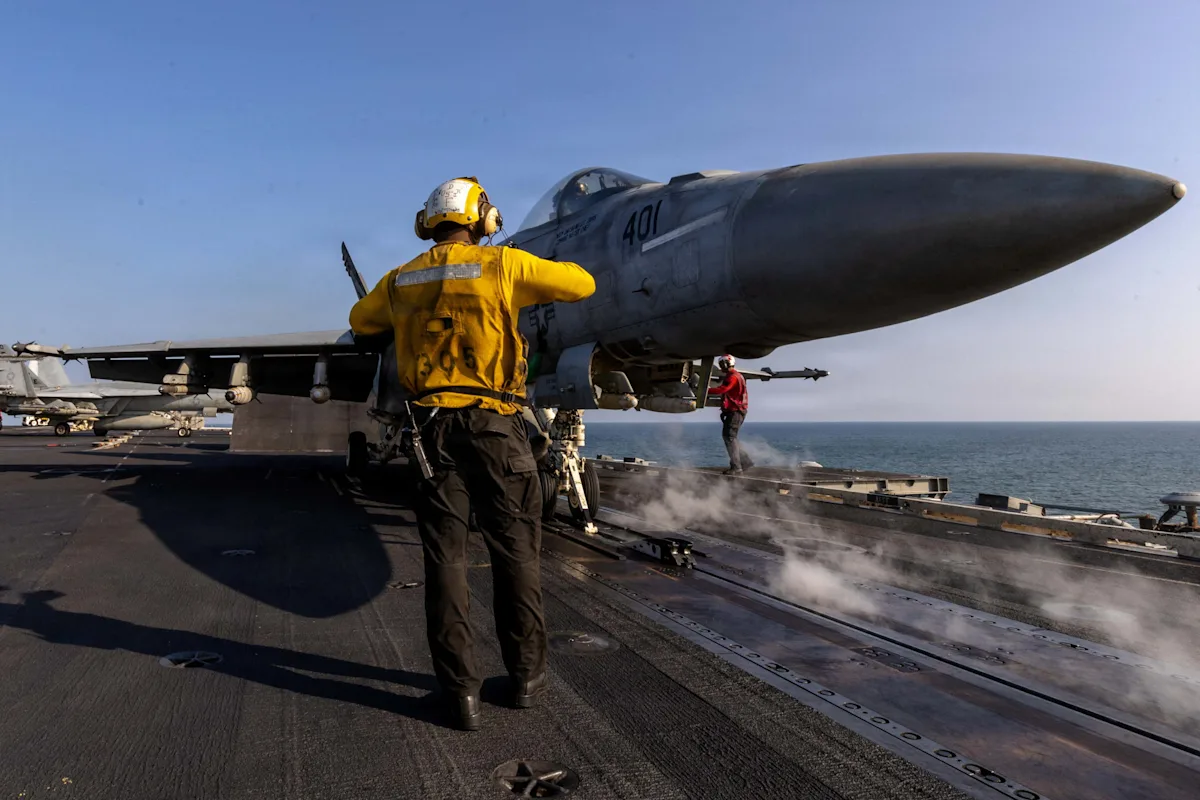
A U.S. Navy sailor signals an F/A-18E Super Hornet on the flight deck of the Nimitz-class aircraft carrier USS Abraham Lincoln in support of the Operation Epic Fury attack on Iran at an undisclosed location March 4, 2026. (U.S. Navy/Handout via REUTERS / File Photo) ·Reuters / Reuters
Earlier this week, US central bankers voted to keep interest rates on hold, with Chair Jerome Powell noting that it’s still too early to tell what the war’s economic impacts will be. But his cautious tone at the press conference nudged Wall Street to reassess the timeline for rate cuts.
As Bank of America analysts wrote in a note on Friday, “The Fed delivered a hawkish hold” as it prepares for another supply shock. While the White House can lift sanctions and go to the basement for the reserves, the Fed needs to wait and see.
The Fed revised inflation forecasts higher for 2026 and 2027, and several governors expect no more cuts this year, even as the average 2026 cut projection among the board remained at one.
Read more: How jobs, inflation, and the Fed are all related
Some analysts say that the Fed could start raising rates again sometime in 2027. Even before the Iran war, the central bank was in a difficult position. Inflation remains stubbornly elevated just as the labor market flashes signs of weakness.
But instead of juicing the economy with a rate cut this summer, markets now expect the Fed to hold steady, confronted with risks to slowing growth and rising inflation. In that situation, Fed thinking advises yet another round of “watch and wait.”
US consumers are close to facing a national average price of $4 per gallon of gas, according to data from AAA. So the immediate impacts are real and squeezing households on the lower end of the income spectrum.
But the conflict underscores how economic consequences in the US can turn out to be minimal in the abstract, aggregate sense, but detrimental for individuals.
Lori Calvasina, head of US equity strategy research at RBC Capital Markets, said in a note on Friday that, in a survey of corporate commentary, several firms noted how resilient the economy was before the conflict. One company, she said, pointed out that people at the top of the K-shaped economy are more immune to these kinds of destabilizing events. Others highlighted how consumer confidence is continuously tested or desensitized.
“What we read adds to our understanding of why the US equity market has been fairly resilient since the Iran strikes, and also leads us to believe that it may simply take more time for the equity community to fully understand the impacts from an extended conflict,” she said.
If the past few years have taught us anything, it’s that we have a durable American consumer and a forgiving stock market. But this time, the potential range of consequences feels exceedingly wide.
Hamza Shaban is a reporter for Yahoo Finance covering markets and the economy. Follow Hamza on X @hshaban.
Click here for the latest economic news and indicators to help inform your investing decisions
Read the latest financial and business news from Yahoo Finance
The Iran war already hit gas prices. What it’s coming for next.
Mortgage rates A third place the Iran war is poised to take an even bigger financial toll on Americans is in the mortgage market. The average interest rate on a…


 dailynewsnblog