dailynewsnblog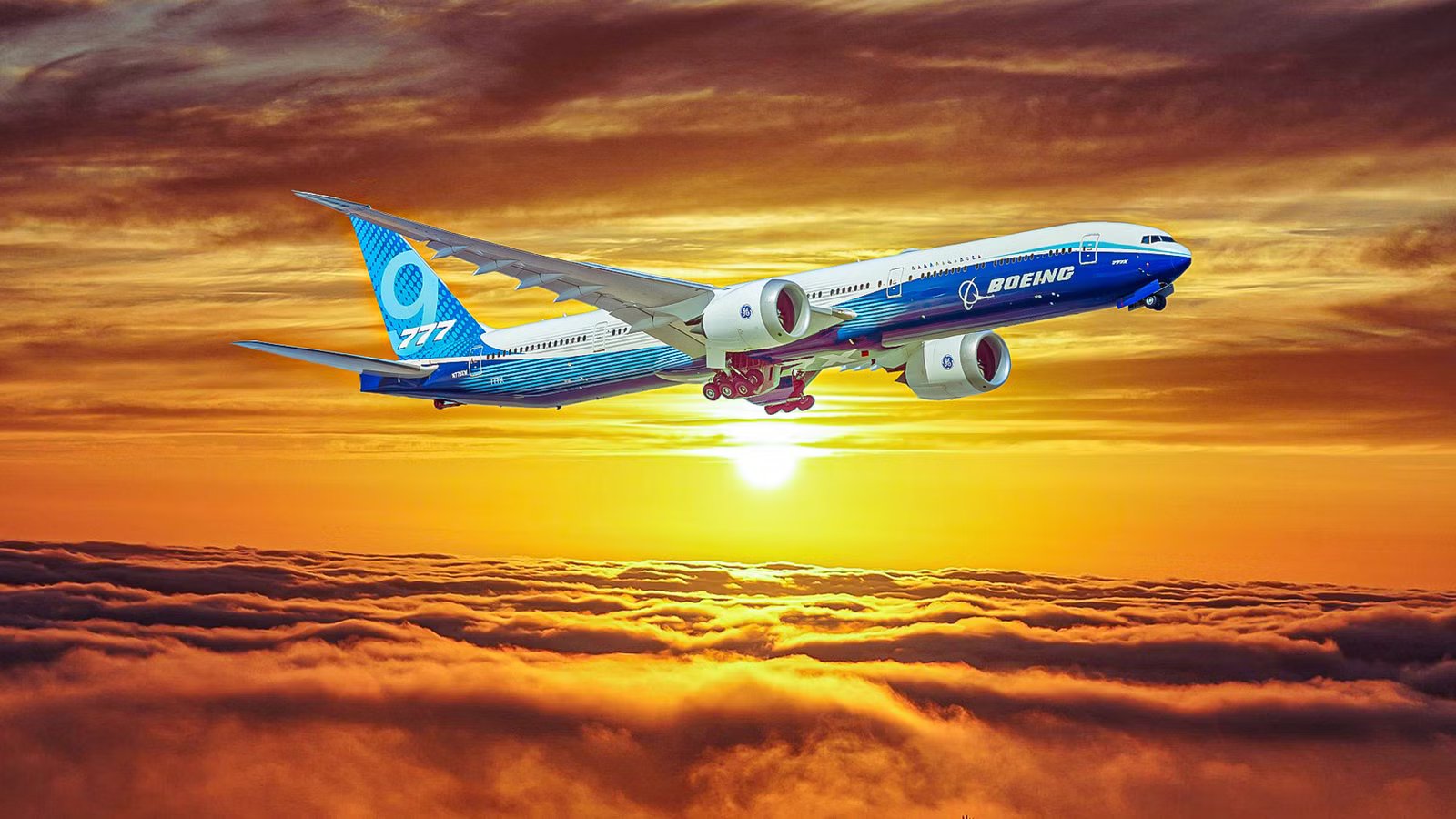
The long-awaited arrival of the next generation of widebody aircraft will reshape some of the world’s longest airline routes, and the aircraft expected to make the most significant impact in the near future is the Boeing 777X. Boeing’s latest flagship widebody aircraft has been designed for high-capacity, long-haul operations, and once it finally enters commercial service, airlines will likely deploy it on some of the longest and most strategically important routes in their networks.
One airline already preparing for that future is  Singapore Airlines. The carrier has ordered 31 Boeing 777-9 aircraft, which will likely be used to operate long- and ultra-long-haul flights from its hub at
  Singapore Changi Airport (SIN). The widebody will become a key part of the Asian airline’s fleet, and it will operate on some of the carrier’s longest routes.
The Boeing 777X’s Ultra-Long-Haul Potential

For Singapore Airlines, the introduction of the Boeing 777X could open the door to operating some of the longest routes ever flown by the aircraft. Singapore Airlines’ current longest route is between Singapore Changi Airport (SIN) and New York John F. Kennedy International Airport (JFK), a journey that already tops the list of the longest non-stop commercial flights in the world.
The distance between the two airports stretches to 9,536 miles (15,348 km), with flights operated by specially configured Airbus A350-900ULR aircraft. Singapore Airlines’ fleet boasts seven of these aircraft, which are also deployed on services to  Newark Liberty International Airport (EWR) and
  Los Angeles International Airport (LAX). The carrier’s A350-900ULR aircraft feature only business class and premium economy cabins, with the less dense configuration, together with additional fuel tanks, helping to extend the aircraft’s range.
However, once the Boeing 777-9 enters service, there is speculation that the aircraft could eventually be used on similarly demanding routes within the airline’s network, although its range does not quite stretch as far as Singapore to New York. With its large capacity and improved efficiency compared with earlier generations of widebody aircraft, the jet is expected to be well-suited to high-demand intercontinental flights linking Singapore Airlines’ hub with destinations across North America or Europe.

Why The Boeing 777X Will Evolve Long-Haul Flying
The aircraft features many new innovations from the older generation 777s.
Singapore Airlines — A Leader In Ultra-Long-Haul Flying

Singapore Airlines has long been associated with ultra-long-haul travel, with the airline’s network spanning more than 100 destinations across several continents. The carrier’s hub at Singapore Changi Airport also serves as one of the world’s most important and highest-rated aviation gateways.
Founded in 1972, the  Star Alliance carrier has built a reputation for premium service and operational efficiency. Over the decades, it has consistently been among the first airlines to introduce new aircraft types and advanced cabin products, often using them on some of the longest routes in commercial aviation – for example, the carrier’s Airbus A350-900ULR routes between Singapore and North America.
Looking ahead, Singapore Airlines plans to modernize its fleet further with new widebody aircraft, including the Boeing 777X. The airline has ordered 31 Boeing 777-9 aircraft, which are expected to eventually replace older Boeing 777-300ER aircraft in its fleet.
All About The Boeing 777X

The Boeing 777X represents the latest evolution of the highly successful Boeing 777 family. Designed as a successor to aircraft like the Boeing 777-300ER and even some aging Boeing 747 aircraft, the 777X combines high capacity with improved efficiency. The 777X family consists of two passenger variants – the 777-8 and the larger 777-9. The 777-9 is expected to be the first to enter service and typically seats around 426 passengers in a two-class configuration, making it one of the largest twin-engine passenger aircraft ever built.
One of the Boeing 777X’s most distinctive features is its large composite wings with folding tips. When extended in flight, the wingspan stretches to over 233 ft (71 m), which is the largest ever for a commercial aircraft, and the folding mechanism allows the aircraft to use existing airport gates designed for earlier 777 models. This is in contrast, for example, to the Airbus A380, which required many airports around the world to modify their infrastructure when it entered commercial service back in 2007 with Singapore Airlines.
Powering the Boeing 777X are two General Electric GE9X engines, which are among the most powerful and efficient turbofan engines ever developed. These engines, combined with aerodynamic improvements, are expected to reduce fuel consumption significantly compared with previous generation widebodies.
The aircraft also promises improvements for passengers, and Boeing has incorporated features derived from its popular Boeing 787 family, including larger windows, improved cabin humidity, and lower cabin altitude, all designed to make long flights more comfortable. With a range of roughly 8,388 miles (13,499 km) for the 777-9 and even longer for the 777-8 variant, the aircraft is designed specifically for long-haul and ultra-long-haul markets.

Is A Boeing 777X Bigger Than An Airbus A380?
The size of the Boeing 777X explained, and what it means for the “minijumbo’s” future.
Delays To The Boeing 777X Program

Despite the aircraft’s promising design, the Boeing 777X program has experienced several delays over the past decade. Originally scheduled to enter service in 2020, the aircraft’s debut has been repeatedly pushed back due to technical challenges and regulatory certification requirements. Last year,  Boeing announced that the first deliveries are now expected in 2027, and these delays have forced airlines that ordered the aircraft to adjust their fleet plans while waiting for the new jet to arrive. For airlines like Singapore Airlines, the delay means continuing to operate older aircraft for longer than originally planned.
Boeing has acknowledged that this situation can increase costs for carriers that must extend the service life of existing jets while awaiting replacements. However, Singapore Airlines’ leadership has indicated that the delay will not significantly disrupt its operations, and according to the airline’s CEO, the company has built flexibility into its fleet strategy, allowing it to manage the postponement without major operational consequences.
|
Ranking |
Airline |
Boeing 777-8 |
Boeing 777-9 |
Boeing 777-8F |
Total |
|---|---|---|---|---|---|
|
1 |
Emirates |
35 |
235 |
– |
270 |
|
2 |
Qatar Airways |
– |
90 |
34 |
124 |
|
3 |
Cathay Pacific |
– |
35 |
– |
35 |
|
4 |
Singapore Airlines |
– |
31 |
– |
31 |
|
5 |
Lufthansa |
– |
20 |
7 |
27 |
 Emirates is set to be the world’s largest operator of the Boeing 777X, with a staggering 270 examples on order. This is perhaps unsurprising, given that the carrier, based at
  Dubai International Airport (DXB), is already the largest operator of the aircraft’s predecessor, the 777-300ER. Boeing has so far received more than 500 orders for its 777X aircraft, the largest of which are outlined in the table above.
The Boeing 777X — Ideal For Long Routes

When the Boeing 777X eventually enters service, airlines are expected to use it primarily on long-haul routes where both range and capacity are important. One of the key advantages of the aircraft is its ability to carry a large number of passengers efficiently over long distances, and with seating for more than 400 passengers in typical configurations, the 777-9 offers significantly more capacity than many other modern twin-engine aircraft.
For airlines operating high-demand routes, this capacity can translate into lower operating costs per passenger, and combined with improved fuel efficiency, the aircraft is designed to reduce overall operating costs compared with earlier widebody models. The aircraft’s range also makes it suitable for routes connecting major global hubs separated by vast distances, and Boeing has highlighted potential markets such as Frankfurt Airport (FRA) to Singapore Changi, Seoul Incheon International Airport (ICN) to  London Heathrow Airport (LHR), and
  Tokyo Narita Airport (NRT) to New York John F. Kennedy International Airport (JFK) as examples of sectors the aircraft could operate efficiently.
These types of routes are precisely the markets where airlines like Singapore Airlines thrive, as with its strategic hub in Southeast Asia, the airline is ideally positioned to connect Europe, North America, and Australia with the rapidly growing Asia-Pacific region. A high-density aircraft like the 777X, provided the carrier can consistently fill it with high load factors, will ultimately enable lower cost-per-seat operating economics on these long-haul services.
What Might The Future Look Like?

Once Singapore Airlines receives its Boeing 777-9 aircraft, the type will likely become a core part of the airline’s long-haul fleet, and the aircraft is expected to replace older Boeing 777-300ER aircraft on many routes while also supporting network growth.
Initially, Singapore Airlines’ Boeing 777-9s will likely appear on established high-demand routes such as Singapore Changi Airport (SIN) to London Heathrow Airport (LHR), one of the airline’s longest current Boeing 777 routes at around 6,764 miles (10,885 km). From there, the airline could expand the aircraft’s use to other major destinations across Europe and North America.
In the longer term, it is possible that the Boeing 777X could operate routes approaching the limits of the aircraft’s capabilities. While the Airbus A350-900ULR currently dominates ultra-long-haul flights in the airline’s fleet, the 777X could complement these operations by offering far greater capacity on similar long sectors, and if that happens, Singapore Airlines could eventually deploy the aircraft on one of the longest routes the 777X will ever fly, further cementing its reputation as one of the world’s pioneers in ultra-long-haul aviation.