dailynewsnblog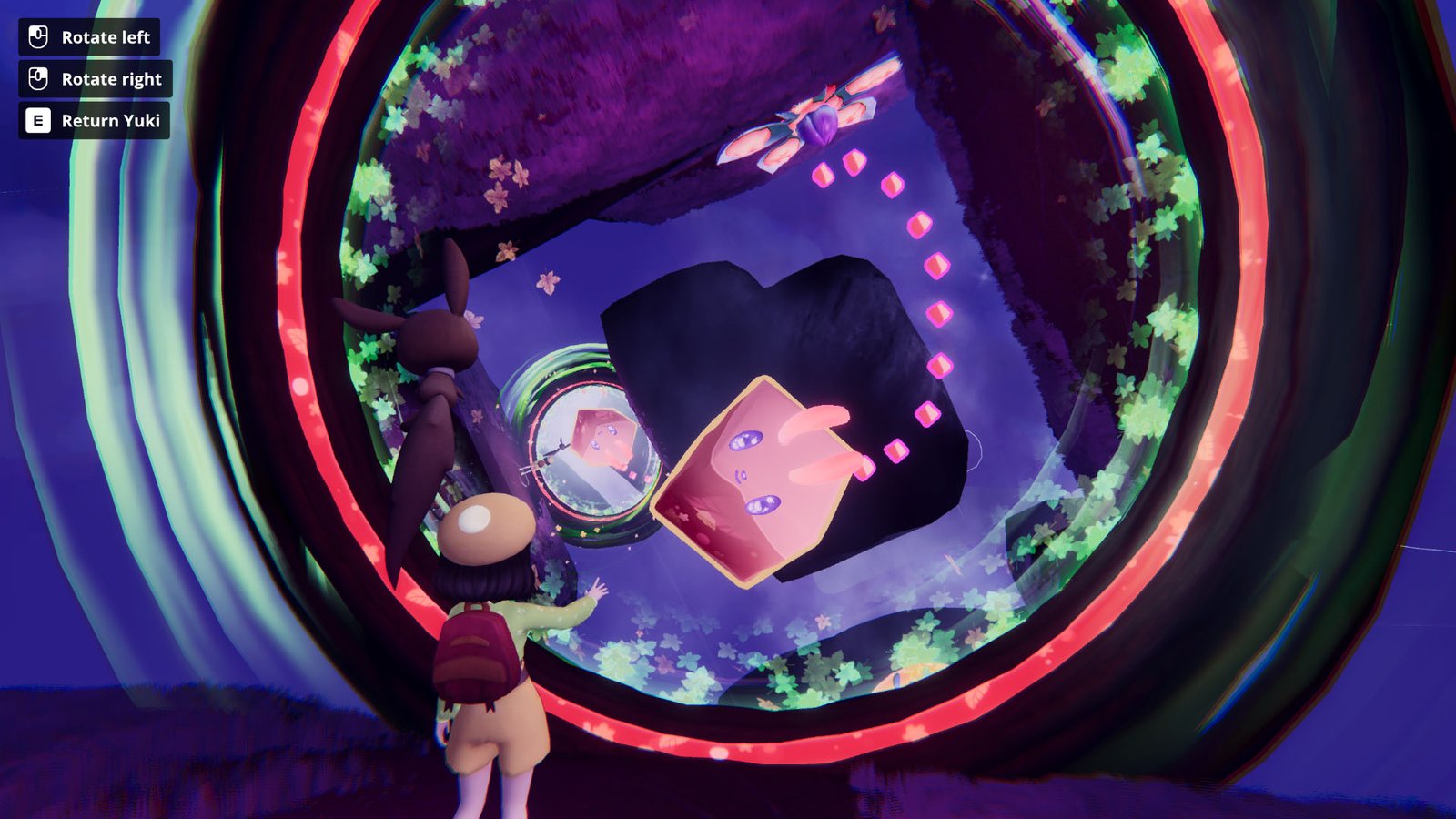
If you love games that challenge your perception and reward thinking outside of the box, upcoming physics puzzler Nomori may be right up your alley. At the recent ID@Xbox event at GDC, I was able to play through the demo and chat with Studio Director Marnix Licht, who leads Enchanted Works’ small remote team distributed across the Netherlands.
In Nomori you play Kiko, a young girl who, in classic folktale form, gets sidetracked on the way to her grandmother’s house. Soon she finds herself lost in a whimsical spirit world of floating islands populated with friendly mushrooms, giant talking cats, and the like. It’s all drawn from Japanese folklore, particularly via the beloved work of animation legend Hayao Miyazaki and Studio Ghibli, like “Spirited Away” and “Princess Mononoke.”
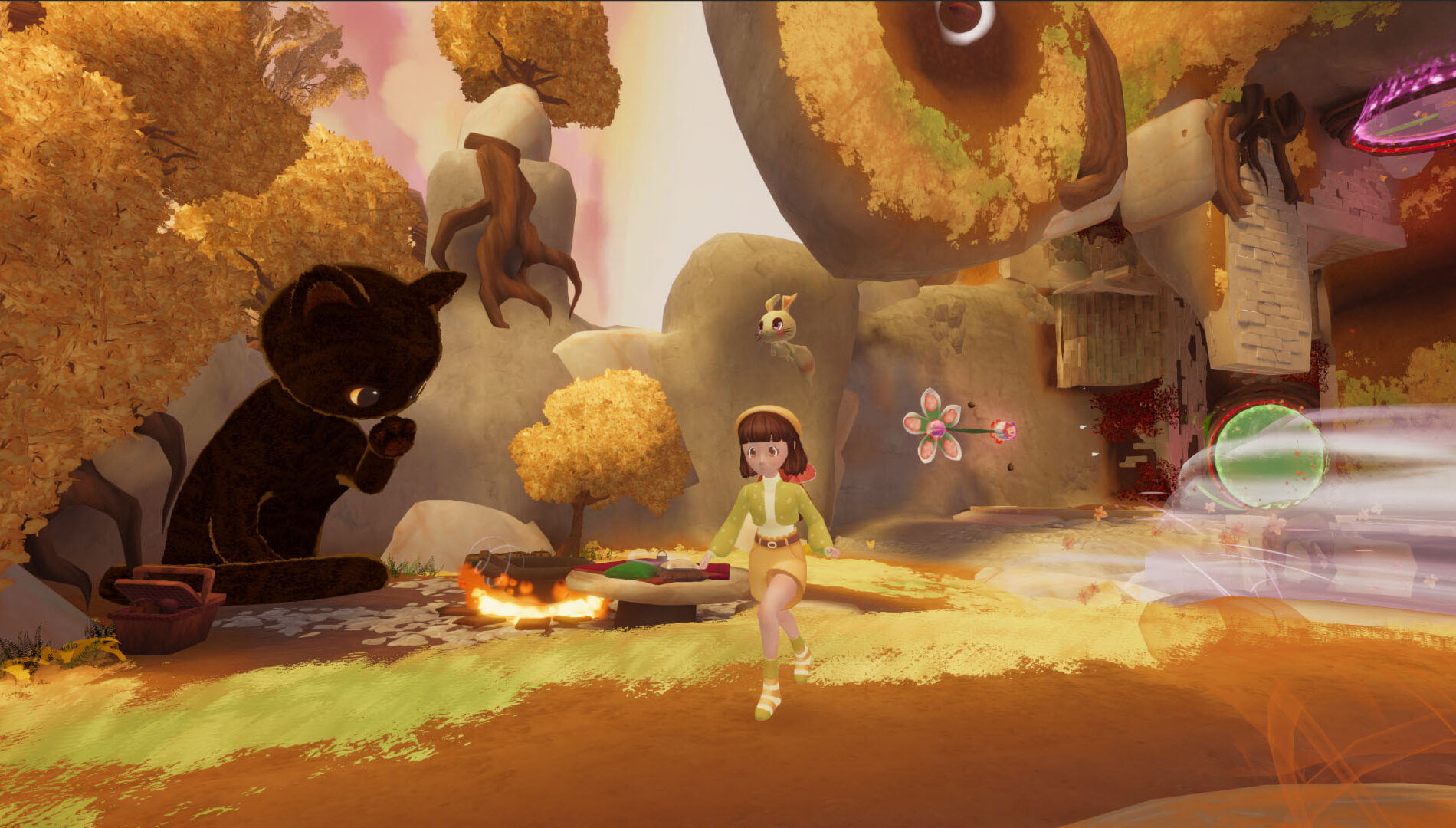
That extremely cozy and inviting surface belies a much trickier puzzle design, however. Licht told me that one of their core observations at the start of development was that often a game with gentle vibes has similarly gentle puzzle mechanics. They supposed that many people might like a game with a cozy aesthetic, but far trickier and more nuanced underlying gameplay, akin to Portal, which is a comparison that will shortly become obvious.
Initially the challenge is simple navigation and platforming, making your way across a series of floating islands that are connected by fixed portals. The first twist comes when you find that portals maintain orientation, so the direction of gravity when you enter will be the same for you wherever you exit. So, for instance, you can step through a portal at the bottom of a cliff face and emerge through a perpendicularly oriented portal onto that cliff as your new ground.
“If Portal is all about conservation of momentum, Nomori is about conservation of orientation,” Licht told me. He also brought up the work of surrealist illustrator M.C. Escher as a big and obvious inspiration for this relativistic relationship to space.
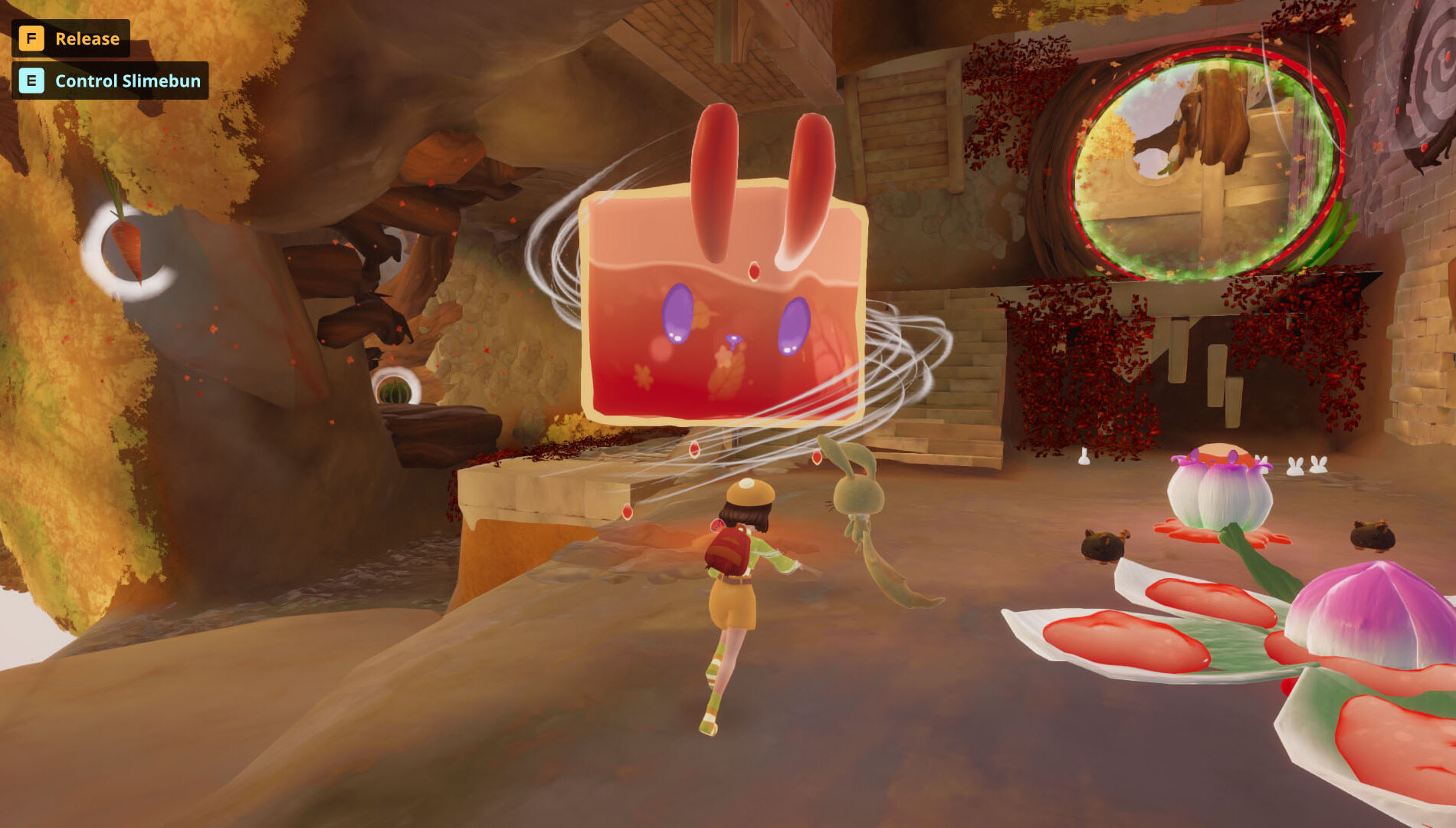
The next major element introduced is a large, friendly gelatinous cube with bunny ears called a Slimebun. You can pick it up and telekinetically move it around with your Wind Grasp ability to use as a mobile platform and as a key to open the door to the next island. Invoking Portal again, Licht called it “the ultimate companion cube.” Eventually, you can also reverse its direction in time, scrubbing it back and forth along its previous path like with Link’s Recall ability in The Legend of Zelda: Tears of the Kingdom, creating a moving platform for your traversal.
The moment that really made me lean forward and recognize what this game has cooking was when Kiko could start rotating the portals in 90-degree increments, changing the orientation at which you came out (and thus the direction of gravity when you did). I’d been breezing through the introductory puzzles to this point, but suddenly I had to start rotating the space in my mind like a Rubik’s Cube and just ended up doing a lot more experimentation.
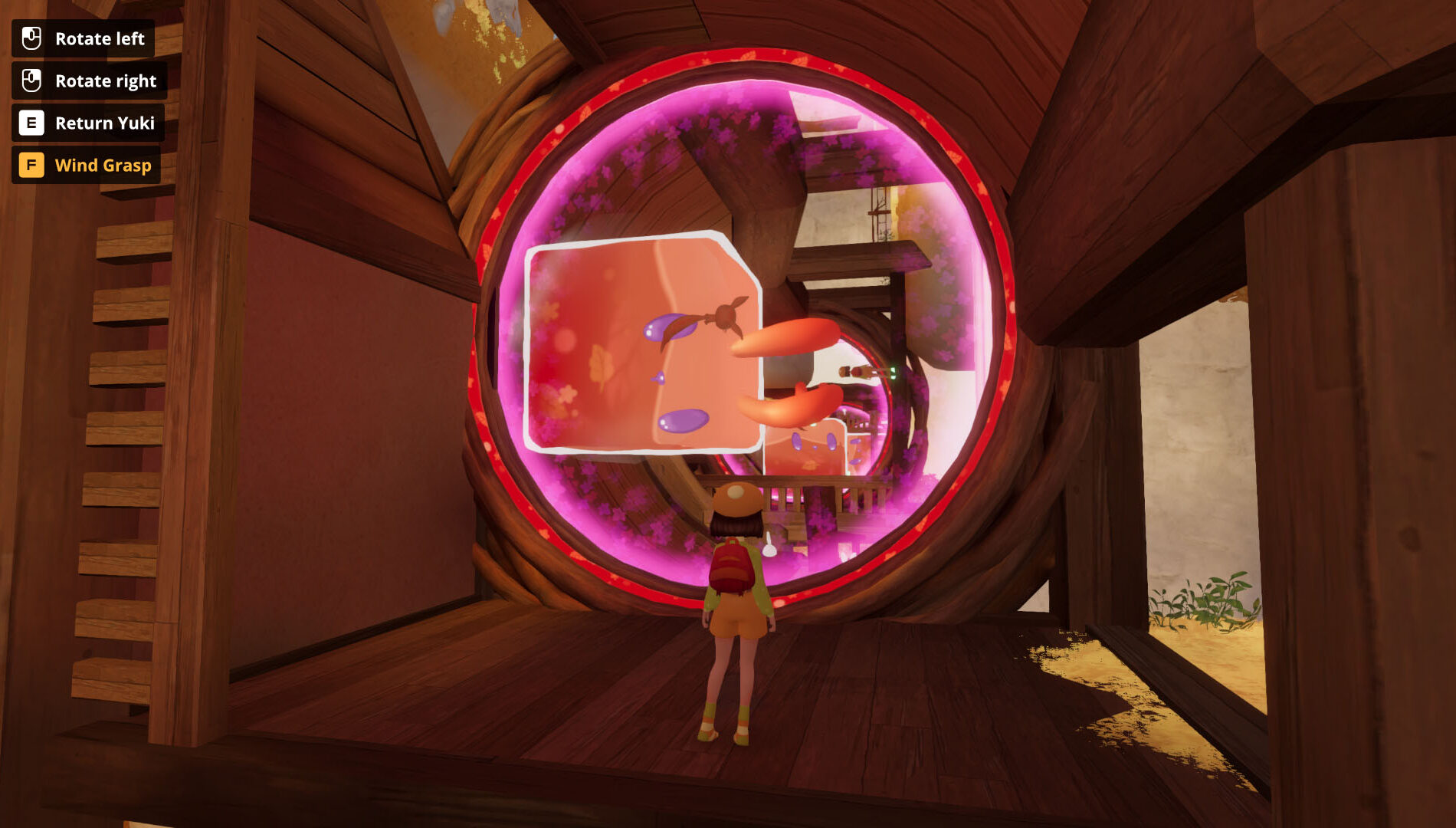
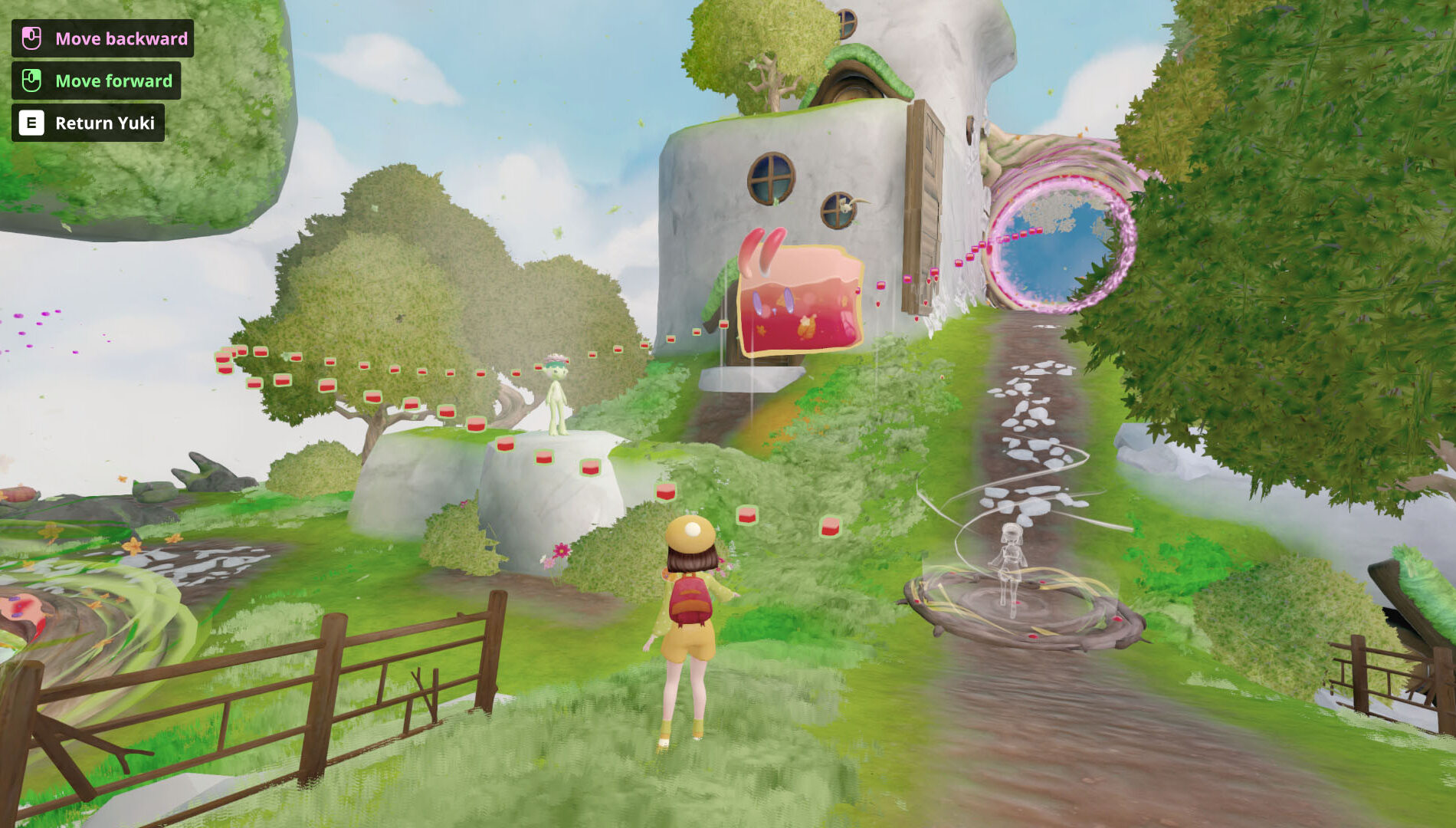
The Slimebun has a sloshing layer of liquid on its bottom and bunny ears on top, which are important cues for making its orientation obvious. This is crucial because Wind Grasp lets you send it through portals without you, bringing it out nearby with a different direction of gravity than you, for instance turning it falling down into your elevator ride up. This gets even more complicated with moving it back and forth in time, since its path (helpfully represented in the world with a dotted line) retains orientation to the Slimebun and not the environment, so you can use that in conjunction with rotating portals to do some tricky things.
By grounding the world in consistent (but interesting) physics and giving you a growing array of open-ended tools, Nomori increasingly allows for multiple solutions to its problems as it goes on and grows in complexity, which can give you that delicious feeling that you’ve outsmarted the game for coming up with something that doesn’t seem intended. Licht and team have rewarded this directly by placing Kodamas (collectible spirits) based on spots their playtesters have managed to reach that they hadn’t initially intended to be accessible.
Nomori is charming and thoughtful, and I’m now very excited to see all the directions its relativistic portal puzzling goes across the whole game when it comes to Xbox Series X|S and Xbox on PC later this year, with support for Xbox Play Anywhere.