dailynewsnblog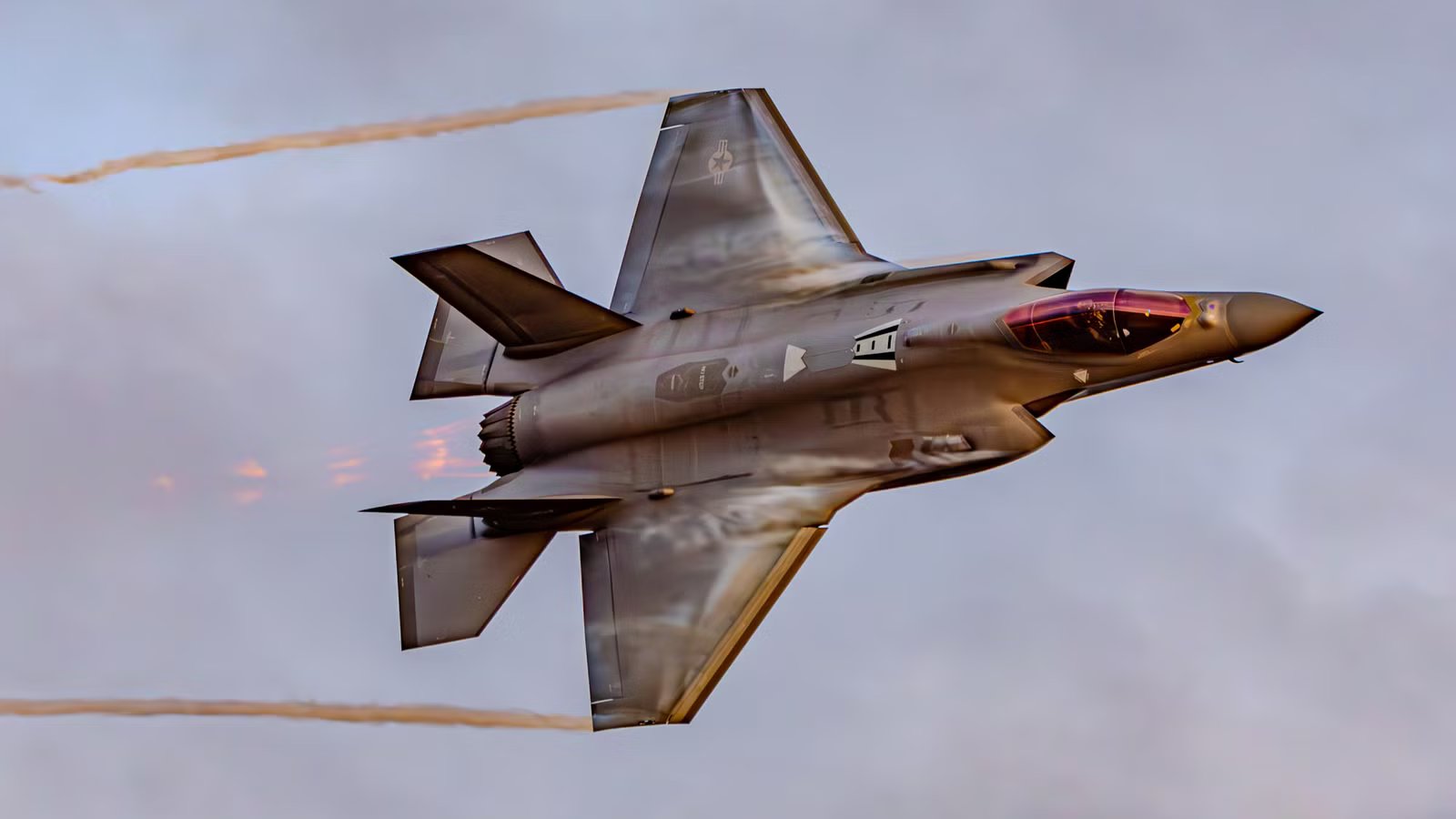
Australia has canceled (or, rather, paused) its planned purchase of a fourth squadron of Lockheed Martin F-35 Lightning II fighter jet aircraft. The F-35 is now fully operational in Australia and forms the backbone of the country’s fighter jet capability. The door remains open for Australia purchasing a fourth squadron of F-35s, but the longer it’s delayed, the more choice Australia will have in purchasing upcoming aircraft, like the Tempest/GCAP.
Australia’s F/A-18 legacy Hornets have now been fully retired. Some of the legacy Hornets were sold to Canada, which used them for parts, as well as complete aircraft, to keep its aging fleet of legacy Hornets flying. For now, Australia will extend the life of its Super Hornets to keep operating into the 2040s through a series of upgrades, while spending the money saved on purchasing more munitions and other systems.
Australia Is Currently The Largest Export Customer

Australia received its final Lockheed Martin F-35 in December 2024. While it has a program of record for a total of 100 F-35s, it has only committed to purchasing 72 of them. Having received all 72, Australia is now the largest export customer of the F-35 in the world. It has more F-35s in service than the United Kingdom, which has received around 44 of its 48 contracted examples. The UK is expected to place its next order soon.
Italy has around 40 F-35s in service (both A and B models), while Israel has around 48 aircraft, of which none are known to be lost in the ongoing conflict with Iran. Japan is thought to have received over 40 aircraft, while Norway has become the first country to have completed its program of record for 52 F-35As. Considering Australia’s program of record for 100 F-35s, the only export customers with greater numbers are the UK, Japan, and Italy, with Australia receiving more of its aircraft faster.
Most European countries have ordered around 50 or fewer F-35s, while Canada has a program of record for 88 F-35s. Of these, 16 have been contracted with the first now built. Canada is considering reducing its F-35 purchase due to geopolitical complications. The largest operators and customers for the F-35 are the US Air Force, US Marine Corps, and the US Navy. So far, Lockheed Martin has delivered around 1,300 F-35s of all variants to all customers.
The Question Of Super Hornets

With 72 F-35As in service, Australia now has three active F-35 squadrons. These are complemented by a fleet of 24 F/A-18 Super Hornets and 12 EA-18G Growlers. The Super Hornets were purchased as a stopgap measure to ensure there was no capability gap between Australia’s now-retired F-111 Aardvark and legacy Hornets and the then-delayed F-35.
In April 2024, Australian Aviation reported that “the federal government has confirmed it has put on hold plans to buy a fourth squadron of F-35s and will instead redirect some of that investment towards long-range missiles.” The decision was taken after Australia decided to upgrade its existing Super Hornet fleet and keep them flying into the 2040s; previously, it had been intended to retire the Super Hornets by around 2027.
|
Australian combat aviation fleet |
Quantity (Per Royal Australian Air Force) |
|---|---|
|
F-35 Lightning II |
72 |
|
F/A-18 Super Hornet |
24 |
|
EA-18G Growler |
12 |
|
MQ-28 Ghost Bat |
TBD |
|
Boeing P-8A Poseidon |
13 (one on order) |
By delaying the retirement of the Super Hornet, Australia is able to free up funds to invest in more long-range missiles and other capabilities. In discussions about how many aircraft a country has, magazine depth, maintenance logistics, trained pilot depth, and available funds are often glossed over. These are critical to being able to effectively use the aircraft that an air force actually has.

How Many F-35s Are In Service With The US Air Force?
The US Air Force has over 400 and perhaps closer to 500 F-35s in inventory, while Lockheed has delivered over 1,000 F-35s in total.
The F-35 Is Its Own Enemy

Paradoxically, Australian Defence Industry Minister Pat Conroy said at the time that there were two main reasons for keeping the Super Hornets in service and to cancel or delay the fourth F-35 squadron. One reason was that the Super Hornets were “doing great work.” The second, and counterintuitive, reason was that the “Joint Strike Fighter [F-35] is even more capable than we initially thought.”
In other words, the F-35 is so advanced that Australia doesn’t currently see the need to purchase more of them to reach the level of capabilities that it requires. The lower number of F-35s gives Australia the desired capability, taking pressure off purchasing more of them. Australia’s squadron of Growlers is also significant. It is the only operator of dedicated electronic warfare aircraft outside of the United States Navy.
The Growlers are operated by No. 6 Squadron and are based in RAAF Base Amberley. It is unclear if the F-35s will eventually replace these aircraft, as the F-35 is now one of the world’s formidable electronic warfare aircraft in its own right. In leaked Canadian (as well as prior Finnish) evaluations, the F-35 dramatically outperformed Super Hornets with Growlers and Gripens with GlobalEyes, even when operating alone.
More F-35s Could Yet Return To The Australian Fleet

In March 2025, the Australian Coalition pledged to acquire more F-35s if it won the Australian federal elections. It seemed that a Coalition government would boost the country’s F-35s to 100 aircraft, in line with the country’s program of record, and the first of these aircraft was expected to arrive by 2029. However, the Coalition dramatically lost the election.
Instead, the Labor Government returned to power, and it says the delay in Super Hornet retirement makes the F-35 purchase unnecessary. This shows there is still an appetite in Australia to acquire the remaining 28 F-35s for a fourth squadron. The Coalition believes they should be purchased now, while the Labor Government thinks the decision should be kicked down the road a few more years, as the Super Hornet retirement is delayed.
The Super Hornet remins a very capable and modern aircraft, and the US Navy is still purchasing them, with the last examples expected to roll off the assembly line in 2027. The US Navy doesn’t plan to fully replace them until its F/A-XX enters service in enough numbers decades from now. However, by kicking the can down the road, more options for Australia emerge in the 2030s.

Will Lockheed Martin Catch Up F-35 Delays In Time For The 2030 US Marine Hornet Replacement?
It seems that the Marines will be able to more or less transition to the F-35B and F-35C by 2030.
The Tempest/GCAP Offers An Alternative Super Hornet Replacement

Since the May 2025 elections in Australia, there doesn’t appear to have been new reporting on the matter, and it seems that the government is sticking with its plan to keep the Super Hornets in service until the 2040s. As stated, this leaves the door open to ordering the remaining F-35s, although facts could change between now and then. The next combat aircraft planned for the RAAF is the upcoming Boeing Australia Ghost Bat loyal wingman drone.
How Australia proceeds with future fighter jet acquisitions could also depend on how the Ghost Bat program, or others like it, progress over time. Another factor is that Australia doesn’t need to purchase more fighter jets until deep in the 2030s, when next-generation fighter jets may become available. The United States is rushing the development of its 6th-generation F-47 air dominance fighter jet. While the US previously banned the export of the F-22, Trump suggested in 2025 that it was open to exporting the F-47.
Perhaps more importantly, the Tempest/GCAP sixth-generation program is being developed by the UK, Japan, and Italy. That aircraft is scheduled to enter service in 2035, and in 2025, Australia announced it was actively exploring involvement in the program. It is seen as a potential replacement for its F/A Super Hornets. Notably, the F-47 will be a highly specialized aircraft, while the Tempest is to be a more flexible platform. The UK, Japan, and Italy all plan to operate it alongside their fleets of F-35s.
Australia’s F-35s Are Fully Operational

In December 2025, the Australian Defence Force declared Final Operational Capability for its fleet of F-35s, meaning that all of these jets are now able to perform their full range of required missions. While this was announced in December, it had been achieved in July 2025, although it’s unclear why the ADF didn’t announce the milestone at the time.
The first F-35s arrived in Australia in 2018, while the final nine of the 72 examples purchased arrived in December. This means Australia received its F-35s at a faster rate than other key US allies. For example, the first F-35 was handed over to the UK in 2012, with the first arriving in the country in 2016, and making its maiden operational sorties in 2019. As of 2026, the UK still hasn’t received all of its initial 48 examples.
While Australia may not be buying the final squadron, at least for now, it highly values the aircraft. Australia first joined the F-35 development program in 2002, although it didn’t formally choose to purchase any until 2006. It had been scheduled to receive the last of the 72 jets in 2023, but this was delayed by the TR-3 upgrade that was resolved last year. The upgrade clears the way for Block 4, which includes the powerful new APG-85 radar and an improved Distributed Aperture System.