dailynewsnblog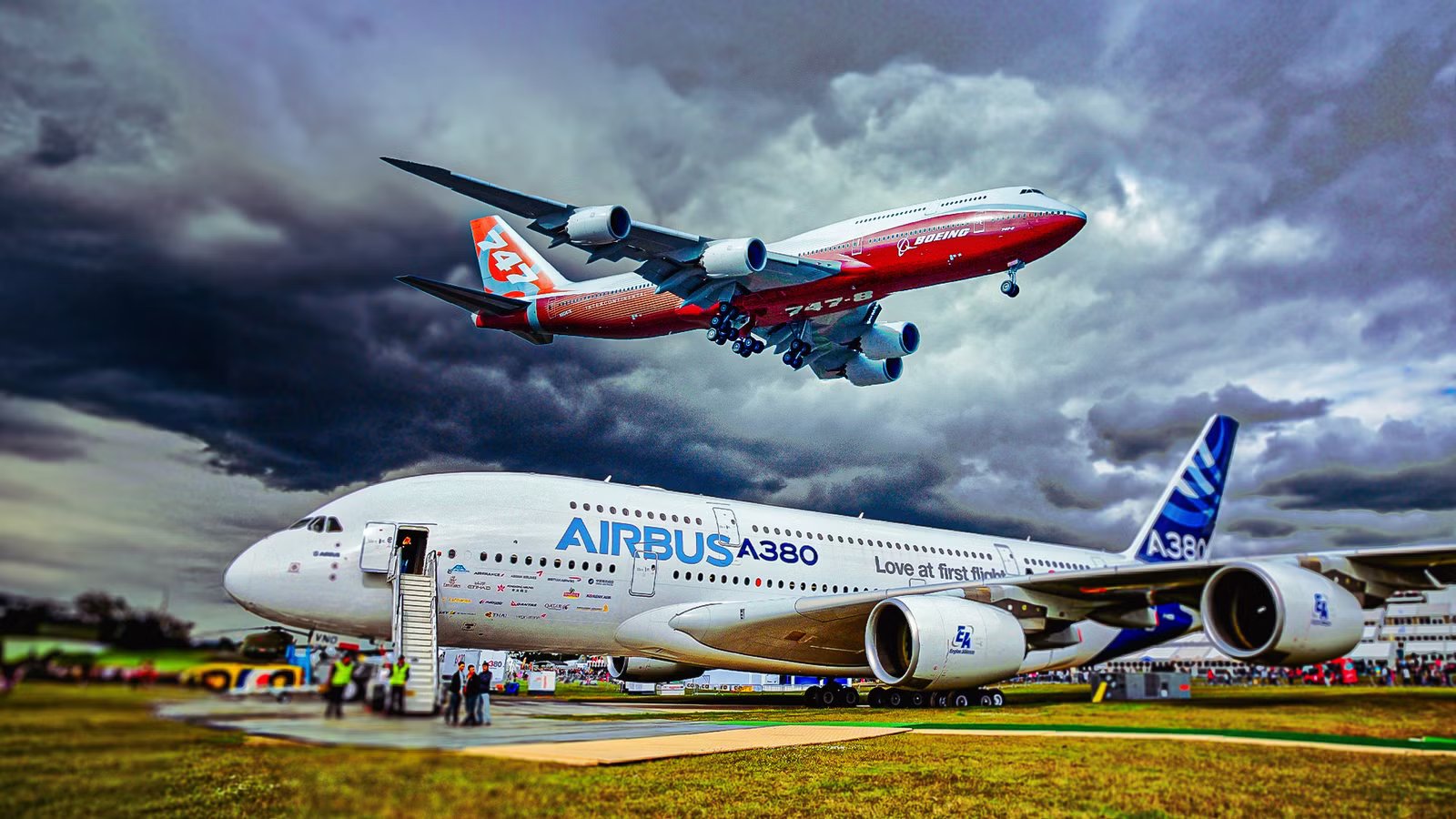
The Airbus A380 and Boeing 747 are two of the most recognizable aircraft ever to take to the skies. While both are four-engined, long-haul giants featuring two passenger decks, they were designed in very different eras, with completely different priorities in mind. As a result, the experience on board these aircraft differs far more than many passengers might initially expect.
Where the Boeing 747 helped define the golden age of long-haul travel, the Airbus A380 was built decades later with a strong focus on passenger comfort, space, and modern cabin design. From cabin noise and turbulence perception to onboard amenities and the unique upper deck experience, passengers will quickly notice that these two aircraft offer distinctly different journeys.
A Look At The A380’s Passenger Experience

The Airbus A380 was designed with passenger comfort as a priority, leading to a quieter, smoother, and more spacious experience. In fact, the A380 is widely considered one of the quietest commercial aircraft cabins ever built, thanks to strategic engine placements and heavy insulation that reduce vibration and noise. Furthermore, the aircraft’s massive wings and weight provide a stable flight experience and reduce disturbances caused by turbulence.
However, one of the most notable aspects influencing the passenger experience is perhaps the aircraft’s spaciousness. The two full passenger decks and straight sidewalls, combined with an already wide fuselage, create a large open cabin feel. Contributing to this spacious feeling are the aircraft’s large windows, which create a brighter cabin. For passengers, especially on the upper deck, the aircraft also offers ample storage space, which can help passengers stay more organized on long-haul flights.
Besides the passenger experience designed by Airbus, a huge differentiator is, of course, also what some airlines decide to do with the aircraft themselves. Especially when looking at premium cabins, airlines such as Qatar Airways and Emirates have introduced unique features. Both Qatar and Emirates feature a full-fledged bar on board their A380s, allowing passengers to stretch and enjoy a different environment than just their seats. And perhaps even more unique is Emirates’ shower experience for first class passengers.
How Does The Passenger Experience On The Older 747 Compare?

While the Boeing 747 is certainly an iconic aircraft, for passengers, it might feel outdated. This is especially the case when compared to most modern aircraft, such as the Boeing 787, or the Airbus A350, and also the A380. However, this shouldn’t come as a large surprise, as the aircraft was designed decades before the A380 first took flight. Where the 747 stands out the most, however, is, of course, the small upper deck, which on most airlines features premium cabins such as business class or first class. For many passengers, sitting in this partial upper-deck feels like an exclusive and cozy experience, making you almost forget you are traveling on one of the largest airlines in the world.
Besides nostalgia, where the 747 differs most from the A380 is engine noise, which is significantly louder. This is especially the case when flying on older 747 models such as the 747-400. Additionally, the 747 will feel less spacious to passengers as the fuselage is narrower, and its windows are smaller than those of the A380. However, compared to most aircraft, the aircraft still provides a more spacious feeling. Due to the aircraft’s age and the fact that most airlines have already retired the type, or are planning to do so, there are also fewer non-special features, such as showers or bars, on today’s 747s.

Airbus A380 Vs. Boeing 747: How Do They Compare On Ultra-Long-Haul Flights?
Does it make a significant difference to to choose one aircraft or another for a long flight? If so, that’s the thing, which is the best airliner?
An Overview Of The Short-Lived A380

The Airbus A380 is the world’s largest passenger aircraft and the only true full-length double-deck jet aircraft. While the aircraft’s first flight was only in 2005 and its first commercial flight wasn’t until 2007, when it entered service with Singapore Airlines, Airbus had already started studies to develop the aircraft back in 1988. However, it wouldn’t be until 1990 that the project was publicly announced.
After the aircraft successfully entered commercial service in 2007, production peaked in 2012, with 30 new aircraft being constructed. However, by 2021, in the midst of the COVID-19 pandemic, Airbus made the decision to discontinue production of the aircraft after less than two decades, as the A380 did not succeed in the modern aviation market on a large enough scale. This short production was also not enough to recover the massive development costs of the aircraft.
Over the course of the aircraft’s production, 254 units were built, including the three test aircraft. While most of the original operators still operate the aircraft, others, such as Air France and China Southern, have already retired them. As a matter of fact, Air France was the first airline to fully phase out the aircraft in 2020. This is not to say, however, that other current operators have not also already phased out some older units.

It’s 2025, But Why Do Some Airlines Still Love The Airbus A380?
Popular with passengers but airlines have gradually phased them out.
A Closer Look At The Beloved Boeing 747

For decades, the 747 served as the flagship of the global aviation industry, shaping long-haul travel as we know it today. However, with the first aircraft entering commercial service back in 1970, and only a handful of passenger airlines still operating the type, the end of an era is approaching. The aircraft’s first-ever flight was on February 9, 1969, with Pan Am, marking the start of the widebody age of jet travel, as the four-engined, partially double-decked aircraft was the first widebody to ever take to the skies.
From that moment, it quickly earned itself the nickname “Jumbo Jet.” Since that first delivery, more than 1,500 aircraft of the type have been delivered to airlines around the world, including the last 747 aircraft ever produced in December 2022. Over the years, Boeing developed multiple variants of the aircraft, including the original 747-100, the shortened, odd-looking 747SP (Special Performance), the 747-200, the popular 747-400, and the more recent Boeing 747-8i (Intercontinental), which only entered commercial service in 2012. The majority of 747 airplanes still flying today are either the -400 or the -8 variant, especially in passenger operations. However, some older variants are still flying.
Often, these aircraft operate for non-commercial or special purposes, such as for military operations or as test aircraft. Today, only four passenger airlines operate the aircraft. With 26 aircraft, Lufthansa is currently the largest operator of the passenger-configured 747 variants. While two aircraft have recently been purchased by the United States Air Force for the Air Force One program, the remaining fleet appears not to be retired for the years to come.

The Aircraft Set To Replace The World’s 1st Partial Double-Deck Jetliner
Which aircraft will fill the gap left by the iconic Boeing 747?
These Are The Biggest Jumbojet Operators In The World

Following the 747’s nickname “Jumbojet”, the only suitable nickname for the even larger A380 was “Superjumbo.” However, as most already know, these large aircraft are headed for retirement after only a few markets worldwide can sustain the aircraft capacity, and smaller, more efficient twin-jets have become the norm. When looking at the combined total of jumbo jets still flying around as of writing,  Emirates leads in the number of total aircraft. Whereas the second-largest jumbojet operator, Lufthansa, is perhaps the most exciting as the airline operates a diverse fleet of 32 Airbus A380, 747-400, and 747-8i aircraft.
As mentioned earlier, there are only four airlines left in the world that operate the Boeing 747. These airlines include the aforementioned German flag carrier Lufthansa, Korean Air,  Air China, and the sanctioned Russian airline Rossiya Airlines. Lufthansa currently still operates eighteen 747-8I and eight 747-400 aircraft; the second-largest operator, Air China, operates seven -8s and two -400s. Korean Air and Rossiya Airlines still operate five aircraft, with Korean Air having a fleet of -8s and Rossiya flying the -400. Interestingly enough, both Air China and Korean Air operate one 747 in a VIP configuration for their respective governments.
|
(Super)jumbo Operators in 2026 |
||||
|---|---|---|---|---|
|
Airline |
A380-800 |
Boeing 747-8i |
Boeing 747-400 |
Total |
|
Air China |
7 |
2 |
9 |
|
|
All Nippon Airways |
3 |
3 |
||
|
Asiana Airlines |
6 |
6 |
||
|
British Airways |
12 |
12 |
||
|
Emirates |
116 |
116 |
||
|
Etihad Airways |
7 |
7 |
||
|
Global Airlines / Hi Fly Malta |
1 |
1 |
||
|
Korean Air |
6 |
5 |
11 |
|
|
Lufthansa |
8 |
18 |
8 |
32 |
|
Qantas |
10 |
10 |
||
|
Qatar Airways |
8 |
8 |
||
|
Rossiya Airlines |
5 |
5 |
||
|
Singapore Airlines |
12 |
12 |
||
In contrast to the 747, the A380 still has a larger number of operators around the world. Of these eleven operators, there is one airline that stands out with over a hundred aircraft of the type: the Dubai-based carrier Emirates, which operates by far the largest part of the global A380 fleet. With 116 aircraft in its current fleet, Emirates is the largest operator of the type, followed by British Airways and Singapore Airlines, which operate 12 aircraft as of writing. In third, there is Qantas with 10 aircraft of the type, while Lufthansa and Qatar Airways are tied in fourth place with eight aircraft. Other notable operators, among others, include All Nippon Airlines (ANA), which was the last airline to order the aircraft, and the ambitious Global Airlines, which leases the aircraft from Malta-based charter airline Hi Fly Malta.