dailynewsnblog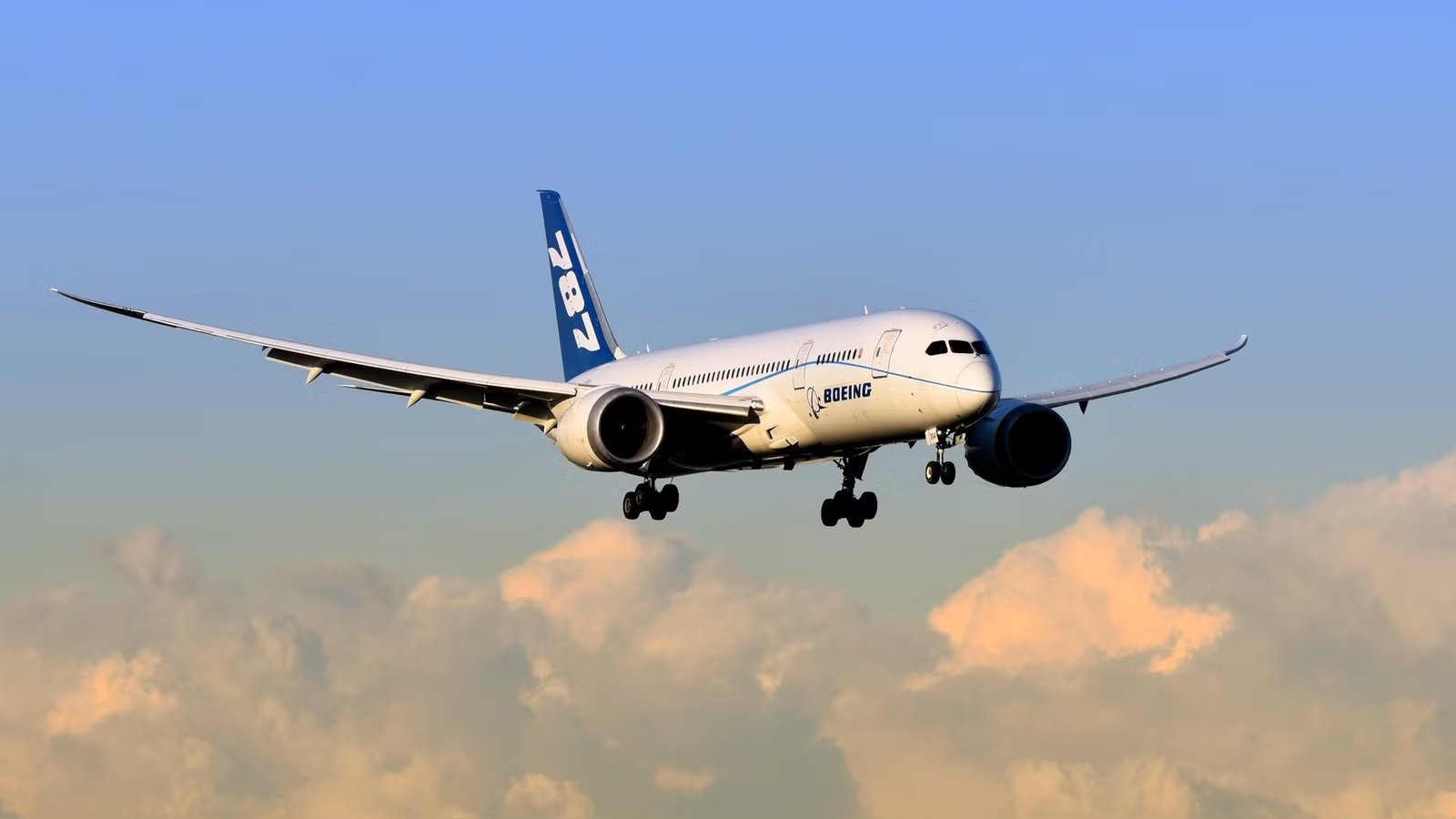
The 787 is Boeing’s most modern and most efficient widebody airliner in service today. Similarly, the Airbus A350 is Airbus’s most technologically advanced aircraft program, essentially serving as the company’s equivalent to the 787 (although the two are not necessarily comparable in size). Both are among the world’s first two majority carbon-composite airliners, and they incorporate a wide variety of technological innovations to improve fuel efficiency, safety, and passenger comfort.
The A350 includes three variants: the smaller A350-900, the larger A350-1000, and the newest variant: the Airbus A350F. This is the newest and most technologically advanced freighter design on the market, and has received 101 orders since its program launch in 2021, an impressive figure for this market. However, Boeing, despite being far larger than Airbus in the commercial cargo market, has not launched a 787 freighter.
An Overview Of The Boeing 787 Dreamliner

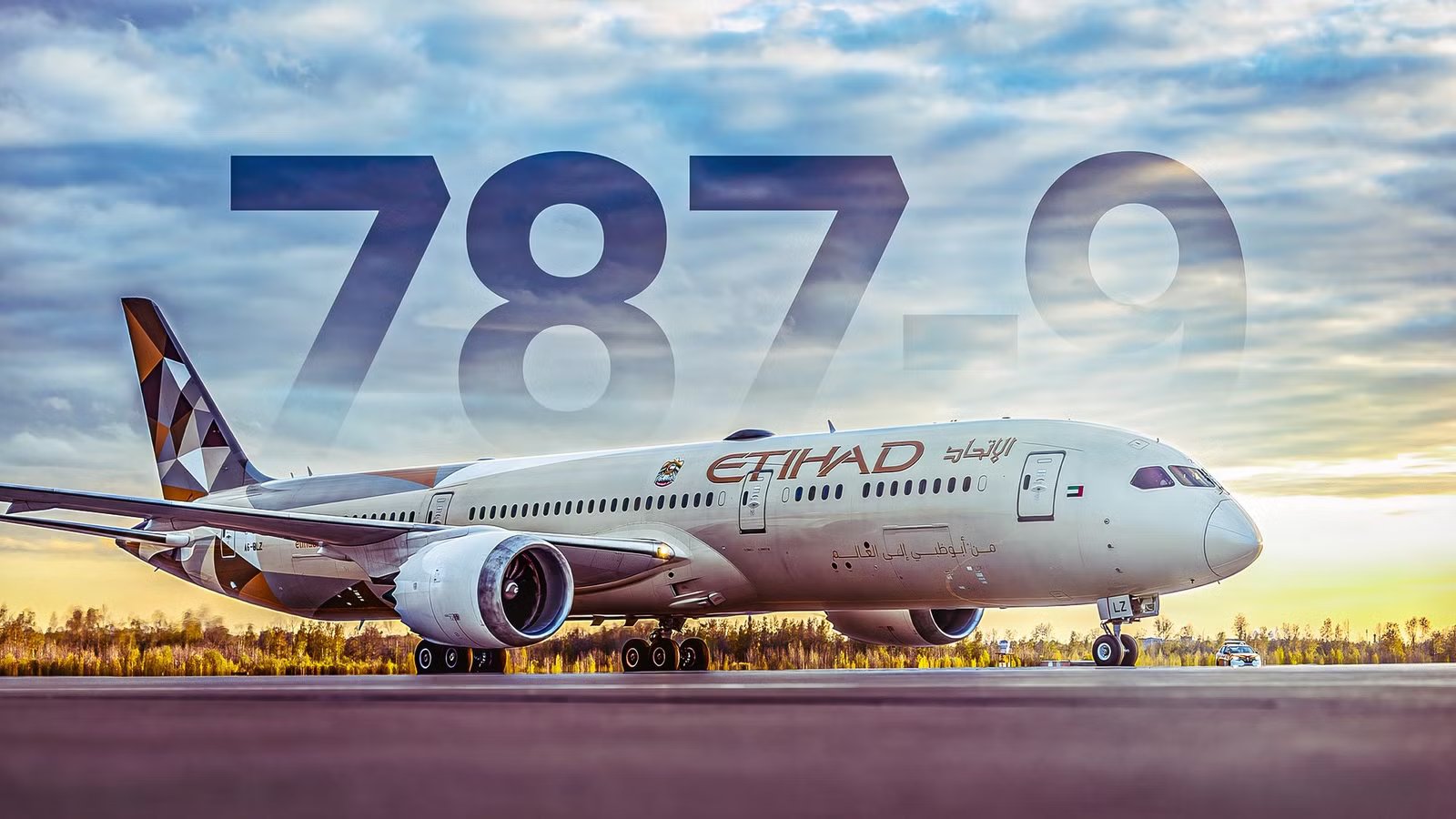
The Boeing 787 Dreamliner comes in three variants: the 787-8, the 787-9, and the 787-10. The 787-8 was the original variant to debut. As such, it used to feature significant differences from the rest of the family, although some elements of the design have since been revised for greater commonality. The 787-8 also has a lower Maximum Takeoff Weight than the rest of the family, and is also the smallest 787 model.
The 787-9 included significant design changes that, altogether, allowed for an increase in MTOW from 227.9T to 254T. This means that, despite the 787-9’s fuselage stretch, it actually has more range than the 787-8. The 787-9 was later developed into a more traditional stretch variant called the 787-10, which retains the structure and MTOW of the 787-9. Due to the longer fuselage, the 787-10 does have the shortest range in the Dreamliner family.
The Airbus A350F is unique in that its fuselage length is between the A350-900 and A350-1000. Otherwise, cargo versions of an aircraft are typically based on a preexisting passenger model: the Boeing 777F, for instance, is directly based on the Boeing 777-200LR. However, despite three preexisting variants each capturing a distinct slice of the market, no Boeing 787 variant has ever been turned into a cargo plane.
The Boeing 767-300F Is Still In Production

The Boeing 767 is the oldest widebody still in production, with the only two variants on sale being the 767-2C tanker model and the 767-300F. The 767-300F is the freighter version of the 767-300ER, and it has sold nearly 300 examples. Additionally, Boeing still has 18 767-300Fs in its order backlog. This variant has been tremendously popular with cargo airlines, and it’s been incredibly profitable for Boeing, especially in recent years, given that the 767 program has long been paid off.
The 767-300F is essentially the only new aircraft option on the market for those desiring a small widebody freighter with reasonable capability. It’s cheap and effective with minimal risk given its modest size, and major carriers like FedEx Express and UPS Airlines have grown particularly fond of the type. With the 767F still selling, Boeing has had little need to produce a 787 freighter as of now.
|
Boeing’s Current Freighter Lineup |
|---|
|
Boeing 767-300F |
|
Boeing 777F |
|
Boeing 777-8F |
The market for new widebody freighters is small. Airbus is only selling one (the A350F), and  Boeing only sells two (the 767-300F and the 777-8F). Any variant of the 787 would be too close in size to either the 767-300F or the Boeing 777, and when the 767-300F continues to make money, there’s little incentive to replace it with a Dreamliner model. However, the 767-300F is scheduled to end production in 2027, which could pave the way for an all-cargo Boeing 787.

787-8 Vs 787-9 Vs 787-10: How The Dreamliner Variants Differ
The three 787 variants are tailored to different market segments to fill niches and offer a placement for different previous-generation aircraft.
The Impact Of The Boeing 777F

The Boeing 777F, based on the 777-200LR, has long been Boeing’s most popular cargo aircraft. It’s far larger than the 767-300F, and it also has a range of 4,970 NM (9,200 KM), making it the longest-range freighter in its time. The Boeing 777F has received well over 300 orders, with 47 examples still in the backlog, making it even more successful than the Boeing 767-300F. This is also significantly more than the 747-400F or 747-8F.
The 777-8F is intended to replace the 777F, with entry into service expected for 2028. This aircraft will feature the 777X’s new wing and General Electric GE9X engines, along with a fuselage stretch. While the 787 is meant to fly long distances, the 777-8F is designed to carry massive payloads over those same long-distance routes. The 777-8F has also proven popular in the market, with 63 examples ordered since the program’s launch in 2022.
|
777-8F Customers |
Number Ordered |
|---|---|
|
Qatar Airways |
34 |
|
Cargolux |
10 |
|
Korean Air |
8 |
|
Lufthansa |
7 |
|
China Airlines |
8 |
|
All Nippon Airways |
2 |
|
Silk Way West Airlines |
2 |
Both the 787 and 777 are long-range airliners, but the 787 is smaller. However, Boeing also has the 767-300F as a smaller cargo aircraft. A 787F would almost certainly be more expensive than a 767-300F, and for cargo airlines, fuel efficiency matters less because of how they use their aircraft. As such, the 787F would primarily appeal to airlines seeking an aircraft with a longer range than the 767, but that doesn’t have the demand to fill a 777F. In other words, this is a narrow slice of a small market.
The Issue With Using The 787 To Replace The 767

As previously mentioned, fuel efficiency is less important to cargo airlines than passenger airlines. This is because cargo carriers utilize their aircraft less on a given day, and they typically schedule their planes to fly shorter segments than a long-range passenger widebody. As such, the incredible fuel efficiency of the 787 would have less of an impact, while the high purchase price of a hypothetical 787F would be far more impactful.
Another issue with the 787 is its size. The Boeing 787-8 is the smallest passenger widebody that Boeing sells today, it is still rather large compared to the 767. This is most problematic when discussing wingspan, as large 767 operators like FedEx and UPS have developed parking spaces at their major hubs, specifically around the 767, to fit as many aircraft as possible. The 787’s wingspan, however, is over 40 feet (12.55 meters) wider than the 767.
|
Specifications |
Boeing 767-300F |
Boeing 787-8 |
Boeing 787-9 |
|---|---|---|---|
|
Length |
180 feet 3 inches (54.94 meters) |
186 feet 1 inch (56.72 meters) |
206 feet 1 inch (62.81 meters) |
|
Wingspan |
156 feet 1 inch (47.57 meters) |
197 feet 3 inches (60.12 meters) |
197 feet 3 inches (60.12 meters) |
|
MTOW |
186.9T |
227.9T |
254T |
The result is that replacing 767-300Fs with 787Fs would cause major logistical challenges and could result in a loss of ramp capacity. The 787, particularly the 787-9, is most comparable to an Airbus A330 or McDonnell Douglas MD-11, and as such, it’s a big plane to replace the 767. While the 767-300F will end production in 2027, this issue, combined with the large number of young 767-300Fs, suggests that there may not be a market for 787 freighters for several additional years.

The Aircraft Replacing The Boeing 747 Freighter
When the Boeing 747 freighter era ends, discover how Boeing’s 777s and Airbus’ A350F will redefine the future of global air cargo.
Why The Situation Is Different With The A350F

Boeing has long been established in the market for new freighters, with a successful product line consisting of the 767-300F, 777F, and, formerly, cargo versions of the Boeing 747. Airbus, in contrast, found success with the freight variants of the A300 and A310, but then delivered only 38 A330-200Fs. Given that production of the A330-200F has ended, Airbus’s newbuild freighter lineup outside of the A350F is nonexistent.
The A350F is unique in that it’s sized between the A350-900 and A350-1000. This makes it longer than any 787 variant, and it’s set to have an MTOW of 319 tonnes, the same as the A350-1000. Rather than compete for the 767-300F or A330-200F market, the A350F is instead marketed as a replacement for the Boeing 747-400F. After all, the aircraft is the same length as the 747-400F, and it will feature an enormous side cargo door to replicate the 747’s nose door for large payloads.
If Boeing does eventually proceed with a 787F, the plane would target a fundamentally different market than the A350F. Instead, Boeing offers the 777-8F as its answer to the A350F. The 777-8F will be a similar size to the A350F, and both aircraft are aimed at replacing aging 747-400Fs. Both aircraft have already proven popular with 777 and 747 operators, especially given that they both essentially succeed the popular 777F.
The Bottom Line

A Boeing 787 freighter may be an inevitability as the end of the 767-300F’s production will leave the large Boeing 777-8F as the company’s only newbuild freighter model. Additionally, Boeing is reported to have developed the Dreamliner with a cargo variant in mind, with certain systems and wires having been routed around where a cutout for the cargo door would be placed. However, this likely won’t come out for several years, even after the 767-300F production ends.
Cargo airlines rarely purchase new aircraft, so the large fleet of young 767-300Fs and 767-300ERs that can be converted means that sales would be limited. The A350F and 777-8F benefit from the large fleet of old 747s as well as the comparative lack of comparable passenger aircraft that can be economically converted.