dailynewsnblog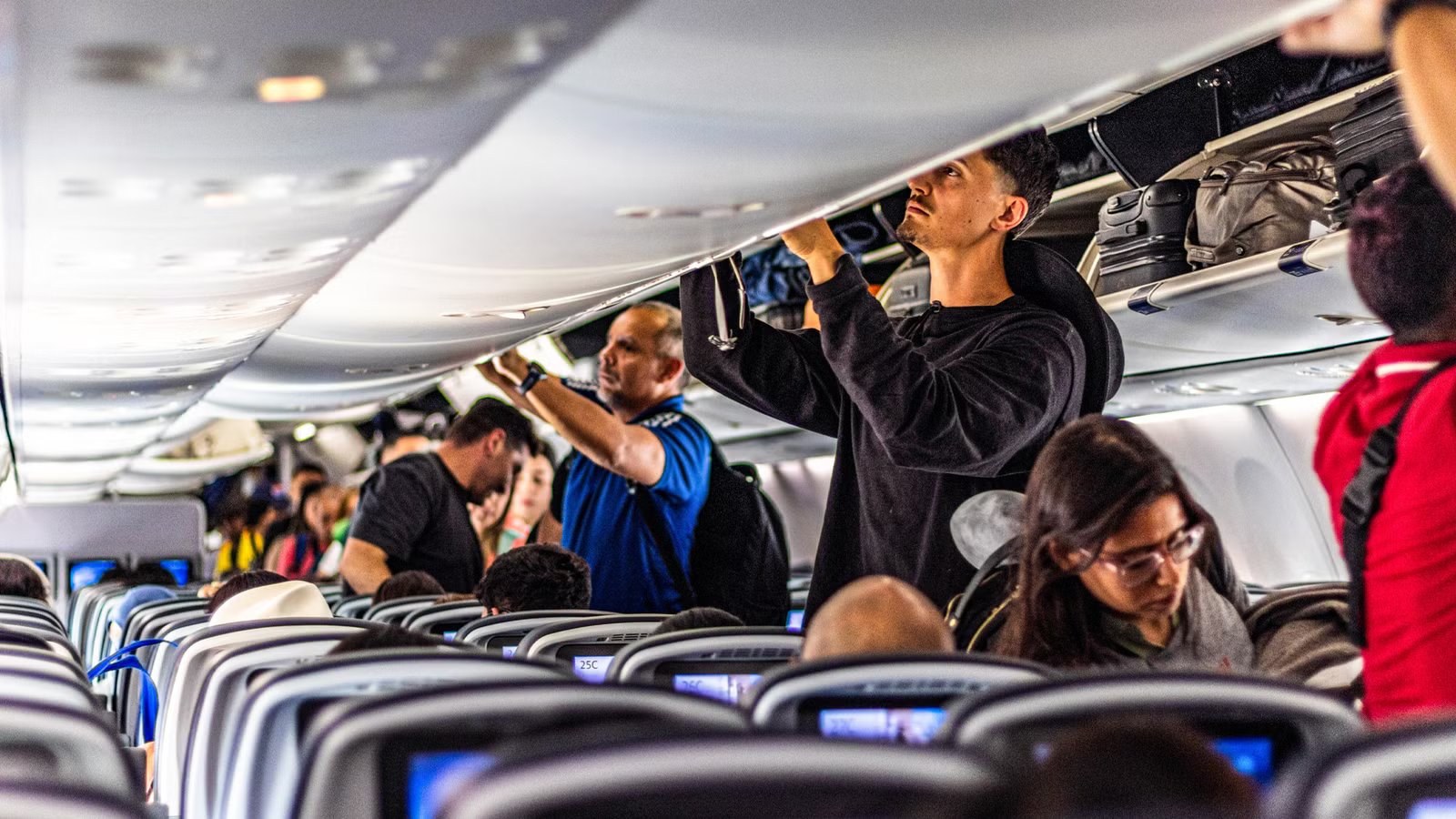
The aim of any Flight Attendant or cabin crew member is to have a safe and efficient flight. Often just seen as servers, flight attendants are trained in all manner of emergency situations to ensure the safety of all passengers and crew onboard. Flight attendants are safety professionals, and most actually love their job and make flights as pleasant as possible.
We often joke that once passengers board an aircraft, they seem to have packed their brains in their hold luggage. Sometimes, passenger behavior is a little unusual and unexpected, but we see these behaviors all the time. So, which passenger habits annoy the crew the most? Let’s find out.
1
Not Watching The Safety Demonstration
Important information in case of emergency

The safety demonstration is an essential piece of information that we are legally obliged to perform on every single flight. It is for every passenger’s safety should there be an emergency evacuation on land or water. These can be planned in advance by the crew if they know of a potential emergency and can prepare for the best possible outcome (planned emergency). In an unplanned emergency, an emergency situation occurs without warning and the crew (both flight crew and flight attendants) have to react immediately.
In general, we see that most passengers do not watch the safety demonstration, which is surprising as it could save their lives. Maybe a passenger doesn’t want to think about what might happen, so they remain in denial and ignore this important information. The other case is often that passengers think they’ve seen it all before, are regular travelers, and don’t need to watch it again. The reality is that not all aircraft are the same, and although most airline procedures are very similar, there may be differences. Luckily, emergencies are rare.
The safety demonstration shows passengers how to use their own safety equipment, including the safety card, seat belt, oxygen mask, and life jacket. Most importantly, it tells you how to assume the brace position in an emergency landing and where the emergency exits are located. A passenger should always check how many rows their nearest exit is in front of or behind them. One thing that really annoys flight attendants and flight crew is seeing passengers take their baggage with them during an evacuation, even though the instructions are clear to leave all belongings behind. This impedes a fast evacuation and can damage the slide or hurt you or others. Overall, the safety demonstration is there to increase the passengers’ chances of survival in an emergency.
2
Ignoring Crew Instructions
Following safety procedures

Flight attendants follow very formal safety procedures every flight to make sure that the flight is as safe as possible. When a crew member asks a passenger to do something, it’s for good reason and safety is the motive behind it. Some passengers do not follow the flight attendants’ instructions because they think the request is silly and seemingly unimportant, or is just to inconvenience them. They do not understand that safety is behind everything we do.
If a flight attendant asks you to open a window blind on takeoff or landing, it’s so they can see outside conditions in case of an emergency evacuation. This could include fire, water levels, engine condition, obstructions, or weather conditions. If they ask you to put your tray table up and seat back upright, it’s not to cause inconvenience; it is to ensure that you and everyone else in the row and the row behind you can evacuate without being trapped by a seat or a table.
Baggage and personal items should be stored securely so they do not become a projectile object during an emergency landing. Wearing a seat belt is not optional, but it increases your chances of survival. Transport Canada offers excellent advice on how to be a responsible passenger and follow the crew’s instructions. Disobeying a crew member can result in flight delays, flight bans, imprisonment, or fines of up to $37,000 in the United States.
3
Not Paying Attention To The Seat Belt Sign
Always pay attention

The seat belt sign is there for a very good reason: to protect passengers from harm. Flight attendants will check that all passengers are wearing their seat belts every time the sign is illuminated and switched on, including during taxi, takeoff, landing, and turbulence. It is always advisable to wear a seat belt at all times whilst seated and to pay attention to the seat belt sign. If the seat belt sign is off, it is usually safe to go to the lavatory or stretch your legs, but turbulence can occur at any time, so it’s better to keep it on whilst seated.
Prior to take-off and landing and during turbulence, flight attendants have to complete ‘cabin secure’ checks to ensure that the cabin is free of obstacles, all passengers are strapped in, seatbacks are upright, and tray tables are stowed. Exits also must be completely clear.
The ‘cabin secure’ is then passed to the senior crew member, who informs the flight deck that the cabin has been secured. Severe turbulence can occur without warning at any time, and more cases are reported every year, with many people being injured because they were not securely strapped in, so it is better to be on the safe side.
Another example of passengers misunderstanding the seat belt sign is when they try to leave their seat during taxiing, to visit the lavatories or take something out of their bag. Flight attendants will then have to make an announcement telling all passengers to remain seated while the seat belt sign is on. Another bugbear is passengers standing up and taking out their baggage before the aircraft reaches the gate. Again, this is not permitted. If the aircraft has to brake suddenly during the taxi, standing passengers can fall or be injured.
4
Rudeness Or Entitlement
Looking for unruly passengers

Whilst boarding, flight attendants carefully observe passengers and look for unusual behavior or ‘red flags’. It is better to solve any potential issues on the ground before they escalate in the air. Flight attendants try to assess if a passenger may later become a problem passenger or unruly passenger. This can be caused by alcohol, drugs, medication, anger management issues, or entitlement. It is easier to offload an unruly passenger on the ground than to deal with a full-blown fight in the air, which may result in restraint, diversion, and fines or imprisonment.
Please be polite and courteous to fellow passengers and the crew. If you need something and press the call bell, please be aware that if we are working in the cabin, it may take some time to get to you. Do not press it repeatedly, unless it is an emergency. Please do not touch us, pull at our uniform, or call us ‘stewardess’ to try and get our attention. If we are talking to you in the cabin during service, please remove your headphones so that you can hear us.
Flight attendants would really appreciate it if passengers did not hand them trash during the meal or bar service. Please also consider hygiene and do not hand a crew member a sick bag or dirty diaper during this time. Wait until we have finished service, and then we can dispose of it. Also, do not use the tray table or an empty crew or passenger seat to change a baby’s diaper. There are baby-changing tables in most lavatories. Perhaps it sounds surprising, but we see this regularly. Please do not stack up all the meal trays together with trash on top, as we have an individual space for each tray in the cart, and this just adds to our workload.
5
Passenger Quirks
Unusual behaviors

The flight attendants will help you find your seat and find space for your luggage. This may not be directly about your seat, but they will try their best. They will immediately know if your carry-on bag is too large for the overhead locker and will likely place it in the hold instead. They will help you to move the bag into the locker, but please do not ask them to lift it for you. If you have packed a heavy bag, then you should also be able to lift it into the locker. Many flight attendants have been injured lifting a passenger’s bag.
Why do some passengers decide to have bare feet on an aircraft? Also, considering hygiene, it is advisable to keep your shoes on when visiting the lavatory. The water on the floor is usually not water, and do you really want that on your socks or bare feet? Try to be considerate of other passengers around you; they don’t want to deal with a dirty environment either. Often, on long-haul flights, we see passengers congregate near the galleys and lavatories and start exercising. Flight attendants call it the galley gym; just be aware that it is not a gym space, but a working kitchen galley.
Finally, do not ask a flight attendant for an upgrade unless you are paying for it on board. They do not have the authority to issue upgrades; that is something only the ground staff can do, if they so choose, in case of seats being oversold, for example. Upgrades are very rare and should never be expected or demanded. If there is a delay or issue with a connecting flight, please don’t get mad at the crew; they will provide information if they have any updates. It is an inconvenience to us too; we may need to get home to friends and family too, and we don’t earn any extra for the extra time onboard. Overall, just be nice to your crew; they are looking after you and your safety every single flight.

What Are The Top Tips For Plane Etiquette?
One of the most hotly argued discussions in travel is what’s the rule around armrests.