dailynewsnblog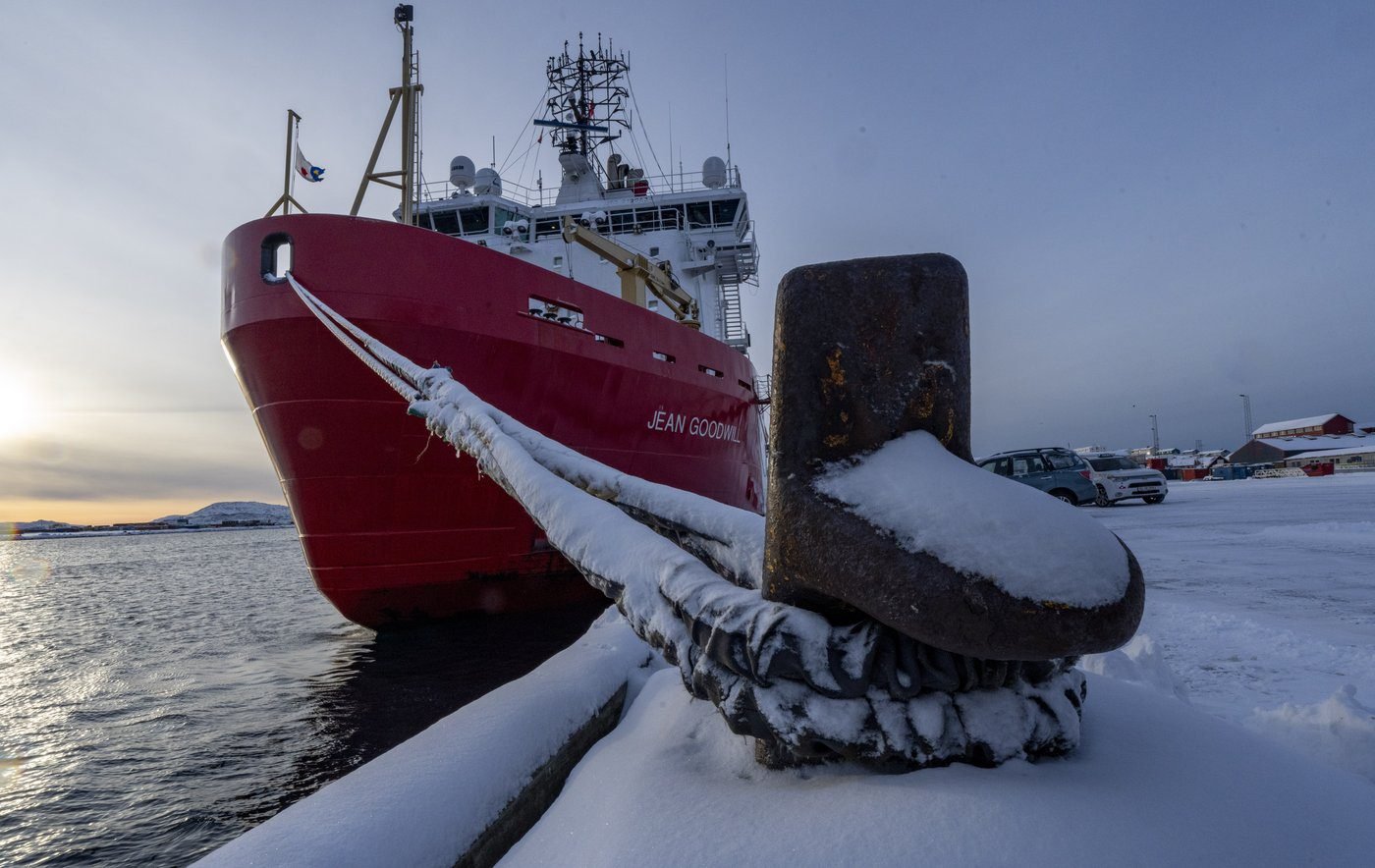
OTTAWA — The Carney government is leaving Inuit communities at risk of Chinese surveillance and economic dependence and isn’t facing up to the threat China poses to the North, critics say.
“Inuit communities are central to the challenge. Yet they are often not provided with the resources, information or technical support needed to fully assess these complex Chinese investment proposals,” said Elizabeth Donkervoort, director of the China Strategic Risks Institute think tank.
“We need to make sure that Inuit and Indigenous communities are genuine partners in addressing these issues,” she told a March 9 news conference on Parliament Hill.
Donkervoort’s group released a report earlier this month arguing that Ottawa must help Inuit resist Beijing’s attempts to extend its influence across the Canadian Arctic.
The report says those attempts could take the form of Chinese investment in mining projects, offers of collaboration with Chinese polar research vessels and financial support for badly needed infrastructure, such as transportation links and broadband internet.
“These infrastructure investment offers from China can appear attractive because they’re addressing real community needs,” Donkervoort said.
She said this pattern could have “the cumulative effect of an incremental strategy that builds access relationships and influence in the Arctic over time,” bringing with it threats to the environment and to local autonomy.
Donkervoort compared China’s Arctic outreach to its Belt and Road development plan, which has left some smaller nations indebted to Beijing or subject to its political coercion.
“It’s not that these northern communities aren’t aware of the potential risks. But they are not given the information, or (don’t) have the China-specific expertise that is necessary, to evaluate the full impact of these seemingly local projects,” she said.
The Inuit Tapiriit Kanatami, which represents Inuit in Canada, has said repeatedly that Inuit want to play a role in defending Canada’s Arctic sovereignty and that northern communities must benefit from and be consulted on defence investments in the region.
The group has urged intelligence officials to share more detailed information about security risks in the Arctic.
At the March 9 press conference, Conservative MP Shuvaloy Majumdar said Canada’s regulatory agencies and laws are siloed and Ottawa isn’t doing enough to fight foreign interference in the North.
“The Investment Canada Act does not adequately capture unsolicited or subnational foreign infrastructure offers, particularly those directed at Indigenous or territorial governments,” he said.
“Fragmented federal co-ordination has left openings for exploitation, and they must be closed immediately.”
Majumdar noted that the Canadian Security Intelligence Service, in testimony on Feb. 12 to the House foreign affairs committee, flagged China as “a primary threat” to Canada’s Arctic sovereignty.
CSIS assistant director Paul Lynd said Russia primarily has military aims in the Arctic, is partially constrained by sanctions and poses less of a threat to the region than China.
“They are of less concern than, say, the activities of China and other hostile state actors at this time … where the concern would be more about economic security,” Lynd testified
“The concerns we have are clandestine or deceptive investment practices, or economic engagement in certain market sectors in the Arctic,” he added, citing China’s interest in critical minerals.
“The PRC is among the primary threats to the security of Canada. It’s absolutely an actor that we are concerned about in terms of threat-related behaviour in the Arctic.”
In its 2024 Arctic foreign policy, the federal government said China seeks commercial shipping and natural resource opportunities. It said Beijing sends research vessels into the Arctic, including “dual-use” ones with both research and military applications.
At a conference in Ottawa on Wednesday, senior Canadian diplomat Weldon Epp said Global Affairs Canada is trying to work with Indigenous communities to give them more of a role in shaping and executing Canadian diplomacy.
Epp, who oversees Canada’s diplomacy in the Indo-Pacific, told the conference held by the Japanese embassy and the Macdonald-Laurier Institute that Canada has “made down payments” on that work.
“We’re continuing to make investments within government and beyond on (China) expertise. This includes deep engagement — which was overdue — with Indigenous rights-holders,” he said.
“As an Arctic state, Canada’s relationships with Inuit, Métis, First Nations and government partners across the Arctic and Northern Canada are top of mind. We need to work to ensure there’s resilience, access to information and knowledge to help with decision-making, across the whole surface area of our complex federation.”
Asia Pacific Foundation vice-president Vina Nadjibulla said she’s noticed that cabinet ministers have avoided calling out China as a threat actor ever since Prime Minister Mark Carney’s January visit to Beijing.
“We need to be careful not to move too far into self-censoring, in an attempt to not cause unhappiness on the part of Beijing,” she said. She noted that Foreign Affairs Minister Anita Anand was the only panellist at a Munich Security Conference discussion in February who did not name China as a threat in the Arctic.
“Our foreign minister exclusively focused her remarks on Russia — the word China didn’t enter into her discussions,” Nadjibulla said. “When our energy minister (Tim Hodgson) speaks of critical minerals, he speaks about the dominance of a country, or dominance of one player, without naming China, when it’s obvious that we’re speaking about China.”
Majumdar said he worries that Ottawa is appeasing China due to “a fundamental misunderstanding of the threat to the Canadian strategic interest.”
“Beijing is not waiting for Canada to catch up. Its polar research vessels, deep sea monitoring systems and state-directed Arctic strategy are already operational,” he said.
“While Liberals debate frameworks and timelines, the (Chinese Communist Party) in Beijing is moving quietly, deliberately and with strategic intent.”
Anand’s spokesperson Myah Tomasi told The Canadian Press that the federal government is working in partnership with Indigenous Peoples as outlined in its Arctic foreign policy.
“We will continue to be strategic in prioritizing pragmatic cooperation with non-Arctic states and actors that align with Canadian interests and objectives,” she wrote. “Canada is maintaining economic and national security guardrails while, at the same, supporting and growing well-established trade and investment ties with China.”
China has long said it wants to collaborate with Canada to advance peace, science and commerce in the North, and rejects claims that it is a disruptive power.
In January, Chinese Ambassador to Canada Wang Di called out American threats to take over Greenland and insisted Beijing would never pursue such an erratic and aggressive approach to Arctic nations.
China has for years called itself a “near-Arctic state,” despite the fact that its borders are nearly 1,500 kilometres distant from the Arctic Circle.
Analysts have reported a shift away from that phrasing in recent years. Jennifer Spence, director of the Arctic Initiative at Harvard Kennedy School’s Belfer Center for Science and International Affairs, noted in January that China has shifted to research after underwhelming efforts to expand trade in the Arctic — efforts that included working with Russia to develop shipping lanes.
Donkervoort said if Canada prioritizes “economic investment over everything,” it risks losing sovereignty over Canadian territory.
“China promotes the idea that the Arctic should be treated as a global commons, where non-Arctic states have equal rights of access and extraction that directly challenges (the) Canadian long-standing position that waters such as the Northwest Passage fall under Canadian jurisdiction,” she said.
Washington has long shared China’s position on the Northwest Passage and argues it is an international strait.
This report by The Canadian Press was first published March 19, 2026.
Dylan Robertson, The Canadian Press