Oil and natural gas prices soar as Iran attacks Gulf energy facilities. Brent crude nears $114


BANGKOK (AP) — Global oil and natural gas prices soared Thursday after Iran attacked a key natural gas facility in Qatar that can supply one-fifth of the worlds gas as well as two oil refineries in Kuwait.

The attacks added to fears the energy crisis triggered by the closure of the Strait of Hormuz to tanker traffic may be longer and more extensive than feared, with lasting damage to oil and gas production.

Brent crude, the international benchmark, rose to near $114 per barrel, up from under $73 per barrel on the eve of the war.

The European TTF benchmark for natural gas prices traded 24% higher on Thursday.

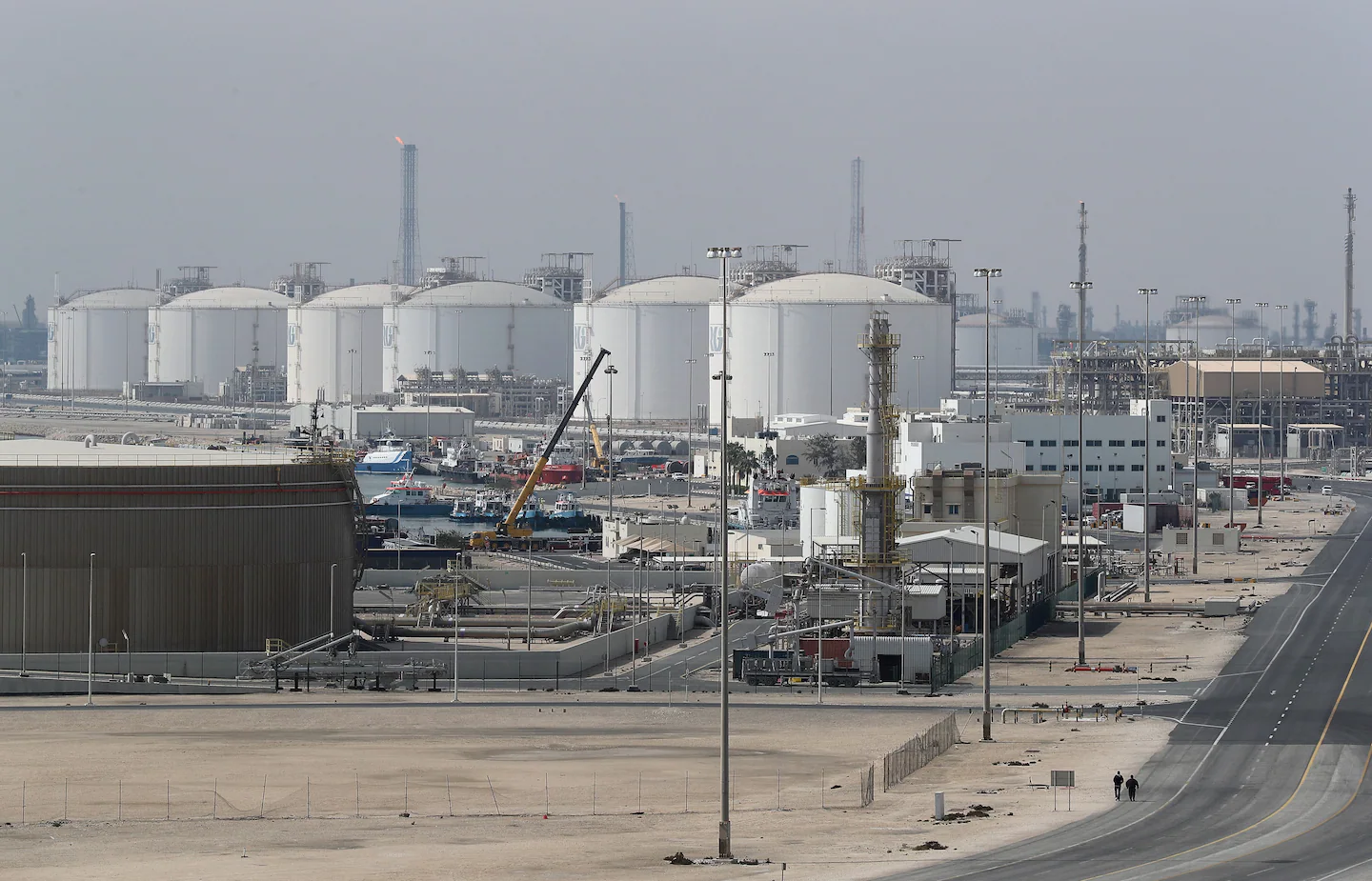
The Iranian attack hit the Ras Laffan terminal for shipping out liquefied natural gas in Qatar. Qatar normally supplies some 20% of the world’s consumption of LNG, which can be carried by ship. The facility shut down after a drone attack. The closure of the Strait of Hormuz to most tanker traffic has left the gas with nowhere to go.

World shares retreated after stocks on Wall Street slumped as oil prices resumed their climb.

U.S. stocks also sagged due to a report that said inflation was primed to worsen even before the war with Iran sent oil and gas prices spiking. That, and comments from the head of the Federal Reserve, led investors to expect there’s less chance of getting the lower interest rates that they crave.

U.S. futures were little changed, while Treasury yields pushed higher, lending still more strength to the U.S. dollar, which has gained against other major currencies since the war began.

Oil prices have soared because the war has disrupted the Persian Gulf’s energy industry.

Iran is intensifying its attacks on its Gulf Arab neighbors’ energy infrastructure as it hits back following an Israeli attack on its main natural gas field.

If the disruptions keep oil and gas prices high for long, they could create a debilitating wave of inflation for the global economy.

U.S. benchmark crude oil gained 1.1% to $96.45 a barrel early Thursday, while the Henry Hub future contract, the benchmark for U.S. natural gas, gained 3.3%.

In Asian share trading, Tokyo’s Nikkei 225 fell 3.4% to 53,372.53 as the Bank of Japan opted to keep its benchmark interest rate on hold at 0.75%, citing the war with Iran as one factor.

In its monetary policy statement the BOJ said that “in the wake of increased tension in the Middle East, global financial and capital markets have been volatile and crude oil prices have risen significantly; future developments warrant attention.”

Higher oil prices are a heavy burden for Japan, which like South Korea and Taiwan depends on imports of most raw materials for industries that rely heavily on oil and its derivatives.

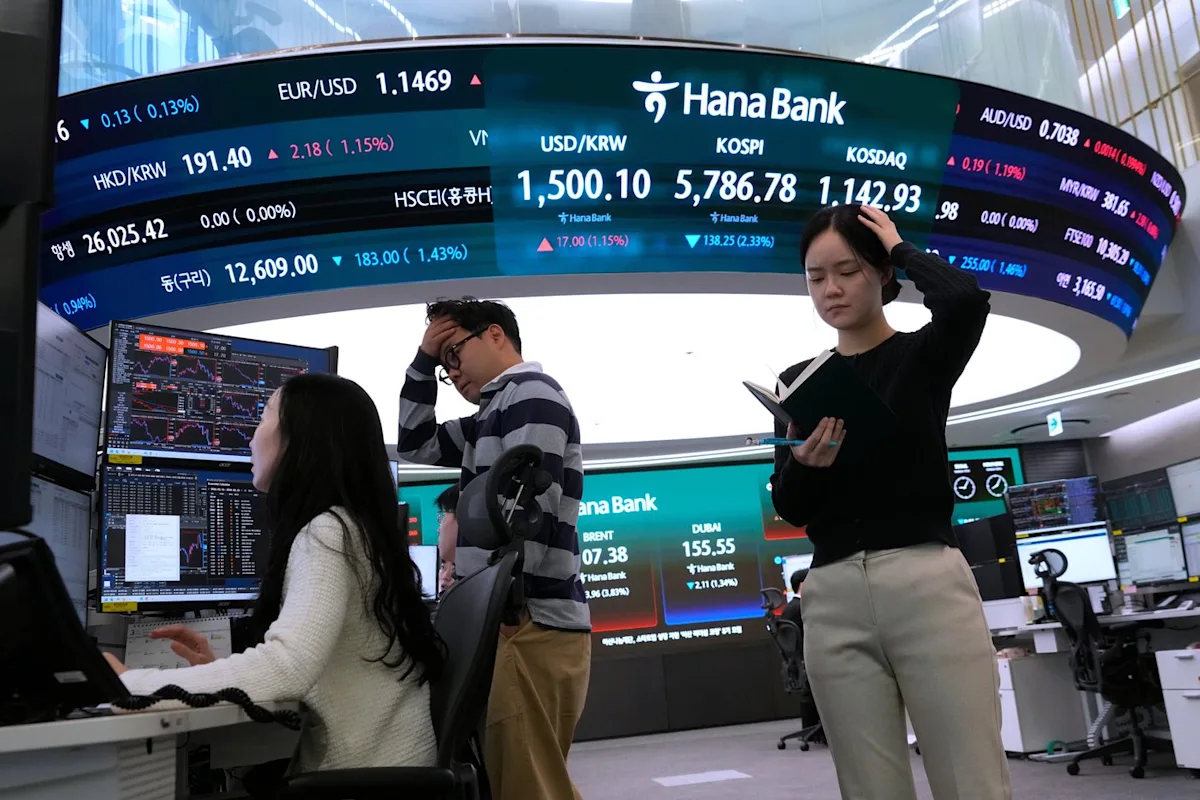
The Kospi in Seoul lost 2.7% to 5,763.22.

In Hong Kong, the Hang Seng slipped 2% to 25,507.89, while the Shanghai Composite index shed 1.6% to 3,996.44.

Australia’s S&P/ASX 200 lost 1.7% to 8,497.80 and Taiwan’s Taiex fell 1.9%. In India, which has also suffered from shocks to supplies of oil and gas, the Sensex lost 2.3%.

“The combination of higher oil, rising U.S. yields, and a stronger dollar is acting as a macro wrecking ball across Asian assets and currencies,” Stephen Innes of SPI Asset Management said in a commentary.

On Wednesday, the S&P 500 fell 1.4% to 6,624.70, flipping to a loss for the week so far. The Dow Jones Industrial Average dropped 1.6% to 46,225.15, and the Nasdaq composite slid 1.5% to 22,152.42.

The losses deepened after the Fed decided to keep its main interest rate steady, instead of resuming cuts meant to give the job market and economy a boost.

“We just don’t know,” Fed chair Jerome Powell said about what will happen with oil prices, along with how long President Donald Trump’s tariffs will take to work their way fully through the system.

A report released Wednesday morning showed inflation pressures were already building before the war began. It said inflation at the U.S. wholesale level unexpectedly accelerated last month to 3.4%.

In other dealings early Thursday, The U.S. dollar fell to 159.71 Japanese yen from 159.88 yen. The euro rose to $1.1467 from $1.1453.

___

McHugh contributed from Frankfurt, Germany.

Elaine Kurtenbach And David Mchugh, The Associated Press


Source link

  • Related Posts

    Bank of England holds main interest rate at 3.75% as Iran war jolts inflation expectations

    LONDON (AP) — The Bank of England held its main interest rate at 3.75% on Thursday as the sharp oil and gas price hikes following the start of the Iran…

    Tulsi Gabbard Declines to Say If Iran Posed an ‘Imminent Threat’

    IE 11 is not supported. For an optimal experience visit our site on another browser. Long Lines Worsen at US Airports as More TSA Agent Call Out 02:05 Senators Clash…

    Leave a Reply

    Your email address will not be published. Required fields are marked *

    You Missed

    Bank of England holds main interest rate at 3.75% as Iran war jolts inflation expectations

    Bank of England holds main interest rate at 3.75% as Iran war jolts inflation expectations

    PwC partners who fail to embrace AI have no future at firm, US CEO warns | PwC

    PwC partners who fail to embrace AI have no future at firm, US CEO warns | PwC

    Fitbit’s AI health coach will soon be able to read your medical records

    Fitbit’s AI health coach will soon be able to read your medical records

    Tulsi Gabbard Declines to Say If Iran Posed an ‘Imminent Threat’

    Tulsi Gabbard Declines to Say If Iran Posed an ‘Imminent Threat’

    More Cesar Chavez Fallout Expected After Sex Abuse Accusations

    Trump threatens Iran’s South Pars gas field if strikes on Qatar continue

    Trump threatens Iran’s South Pars gas field if strikes on Qatar continue