dailynewsnblog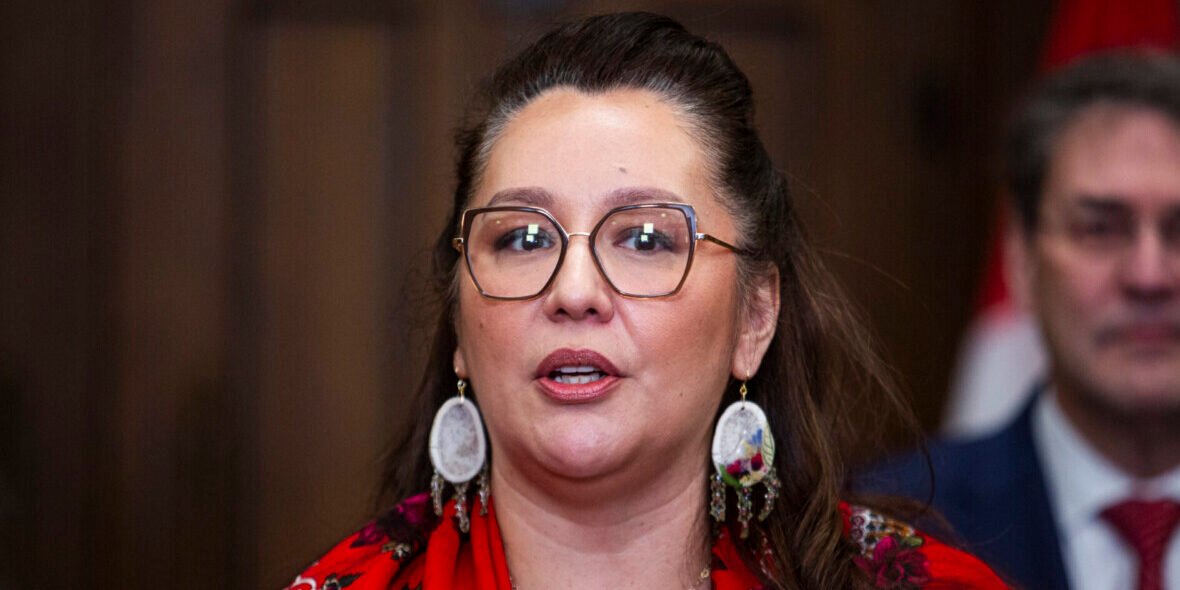
Senator and Bill S-2 sponsor Michèle Audette says the government is using a “tactic to delay” its own bill addressing discrimination in the Indian Act, pointing to a House committee stalling study, and Ottawa launching new consultations after the Red Chamber amended the legislation to end provisions that prevent some First Nations women from passing along their Indian status to their children.
“I thought it was a top priority,” the Progressive Senate Group member told The Hill Times, explaining the government bill was initially introduced and pushed through the Upper Chamber in effort to meet a court-mandated deadline of April 30.
“We did our duty, our homework, and responsibility. So, I was still hoping that it would go fast, but quickly I realized that they will make sure that—and I have no proof, but it’s [my opinion]—that they will delay,” said Audette (De Salaberry, Que.).

Last August, a British Columbia Supreme Court ordered Ottawa to change the Indian Act by April 30, 2026. The court found that the provisions in the act that denied status to people whose parents or grandparents gave up their status because of enfranchisement infringed on Charter rights.
Historically, Canada has stripped status from First Nations people, sometimes through forced enfranchisement.
Get Today’s Headlines Newsletter
Wake up to the day’s top political and policy headlines. Weekday Mornings.
By entering your email address you consent to receive email from The Hill Times containing news, analysis, updates and offers. You may unsubscribe at any time. See our privacy policy
But during the Senate’s study of the bill, which the government estimates could add eligibility for up to 6,200 people, Senators amended the S-2 to remove what is commonly referred to as the “second-generation cutoff.” That cutoff refers to provisions in the act which remove status eligibility under the Indian Act after two generations if one parent is not a status Indian. The bill passed the Upper Chamber unanimously.
Audette told The Hill Times she believes the government is now stalling the passage of S-2 directly because of the amendment added to remove the cutoff. She said that back in December she “quickly realized” S-2 wasn’t going to be the first piece of legislation on the government’s agenda.
The bill is now with the House, but Indigenous Services Minister Mandy Gull-Masty (Abitibi—Baie-James—Nunavik—Eeyou, Que.) has indicated she’ll be taking a slow approach to addressing the second-generation cutoff, telling the Assembly of First Nations (AFN) in December that the government won’t make the change without broad consultation with leaders.
In November, the minister told the Senate committee studying the bill that pushing it through without consultation amounted to racism.
“ I know that there is a strong desire to have a solution, but I will first and foremost uphold my responsibility as a minister and address duty to consult because, unfortunately—I may not be kind in my remark—but trying to predetermine a solution for somebody for a group if you do not live with the reality of that issue is racism itself,” said Gull-Masty, who in a September meeting before the same committee said 300,000 people could be “touched by” the second-generation cutoff.
In a statement to The Hill Times, the minister’s office said it’s not whether the government will address the cutoff, but how.
The statement reads that the feds launched a collaborative process “to hear directly from First Nations rights holders and organizations” in November 2023, and early this year, formed an advisory committee to “determine the legal feasibility of the proposed solutions.” That committee will conclude its work at the end of this month, after which the feds will begin “formal consultations” on the second-generation cutoff, said Gull-Masty’s office.
Recently, the House Indigenous and Northern Affairs Committee elected to conduct other studies before Bill S-2—an unusual move, as committees typically prioritize government legislation—despite the April 30 deadline fast approaching.
Audette called the move a “tactic to delay,” saying it prompted her to contact those working on the legislation in the House to ask what was happening.
“If they were very sincere, they would have put it on the first thing on the agenda because it’s 40 years of exchange, debate, negotiation,” she said.
Graeme Truelove, the committee’s clerk, said by email that the committee would be studying Bill S-228, a Senate public bill, ahead of Bill S-2, and that hearings for Bill S-2 have not yet been scheduled.
The Hill Times reached out to the committee chair, Liberal MP Terry Sheenhan (Sault Ste. Marie—Algoma, Ont.), as well as the committee’s vice chairs, Conservative MP Jamie Schmale (Haliburton—Kawartha Lakes, Ont.) and Bloc Québécois MP Marilène Gill (Côte-Nord—Kawawachikamach—Nitassinan, Que.), to ask why the committee elected to study S-228 ahead of S-2, but did not receive a response by deadline.
Gull-Masty’s office said the committee’s decision to study S-228 ahead of S-2 is in “alignment with parliamentary procedure” as bills are “generally studied in the order they are received” and S-228 was referred to the committee a day before S-2. The statement also reads that Gull-Masty is not involved in the committee’s process.
‘My line is done,’ says activist McIvor
Sharon McIvor, an Indigenous activist who was one of the plaintiffs in a case before the B.C. Supreme Court on gender discrimination in the Indian Act in 1985, said the second-generation cutoff is something First Nations have been trying to eliminate for 50 years.
“My line is done,” explained McIvor, who is a member of the Indian Act Sex Discrimination Working Group. “I have four great-grandchildren that are not eligible” for registration under the act.

McIvor said that if First Nations are “going to stay as a nation recognized by the government” then the second-generation cutoff needs to be addressed.
“We are born with the right to belong to our community,” McIvor said. “I mean, that’s universal, and we were born with that right.”
Audette said she heard from those working in the House that there are some chiefs who don’t support the legislation, which is why consultation is needed.
But, Audette pointed to Bills C-5, C-4, C-15, and C-12, where she said there wasn’t proper consultation, but the government passed the legislation, regardless.
Bill C-5, the One Canadian Economy Act, which enables the government’s Major Project Office and the fast-tracking of nation-building projects, was hurried through the House and Senate in record time, despite concerns from Indigenous and environment groups that it could give Parliament the power to enforce projects on them against their wishes.
Zoë Craig-Sparrow, vice-president of Justice for Girls and member of the Indian Act Sex Discrimination Working Group, told The Hill Times that there is general consensus among First Nations on the issue. She noted that there are over 500 First Nations within Canada that support the Senate’s amendments to S-2.
The AFN, an advocacy body for some 600 First Nations chiefs, also passed a resolution in support of the Senate amendments back in December.

But, “to be clear, consensus is never required on litigation and … legislation,” Craig-Sparrow said.
‘You cannot consult on genocide’: Craig-Sparrow
Audette also said she doesn’t accept the feds’ claim that some chiefs don’t support the legislation. She said chiefs want to be responsible for their nation, and have rights and responsibilities, not an act that is “totally making sure that we will disappear.”
In February, Gull-Masty told reporters that First Nations’ responses to the bill have been “varied,” with some in support, and others not “because they want to do the important work of identifying their membership list, their membership codes.”
Craig-Sparrow emphasized that addressing the second-generation cutoff is about “individual rights.” Status governs First Nations’ relationship with the federal government, she noted, and is distinct from band membership and citizenship.
Status under the Indian Act is what confirms rights, treaty entitlements, and benefits from the federal government. Those wishing to register as status Indians under the act must submit an application with the federal government.
But under the current act, Craig-Sparrow, who is a Musqueam Indian Band member, cannot pass on her status to her children.
“You cannot consult on genocide. You cannot consult on assimilation, and you cannot consult on discrimination. That is so clear in Canadian law and in international law,” Craig-Sparrow said.
“We cannot consult … on whether or not I can pass on my Indianness to my child, on whether or not the government gets to consider them as First Nation. You can’t consult on that. It’s crazy.”
The Union of BC Indian Chiefs, which represents over 100 First Nations in B.C., said in February they wouldn’t be participating in the feds’ consultations on second-generation cutoff, reported iPolitics, calling the justification for the consultation “extremely unclear.”
McIvor and Craig-Sparrow recently attended the 145th session of the United Nations Human Rights Committee, which welcomed the Senate’s amendments, but questioned whether the House was planning to adopt them.
Craig-Sparrow speculated that the Liberals are “hoping to run out the clock” before sending the bill back to Senate, or are waiting for the results of by-elections, which could guarantee Prime Minister Mark Carney (Nepean, Ont.) a majority, to “strip out” the amendment. Carney has picked up a few more caucus members from floor-crossings, the most recent being former NDP MP Lori Idlout (Nunavut), who has said she supports ending the second-generation cut-off after joining the Liberal caucus.

Audette said that there has been some “pretending” that the Senate has been obstructing or filibustering the bill, but that “wasn’t the case.”
“We’re totally responsible, and we’re aware about a court deadline,” she emphasized.
Discrimination under the Indian Act is an issue that is personal for Audette, who is from the Innu community of Uashat mak Mani-Utenam in Quebec. Her mother lost status when Audette was a child when she married a non-First Nation Quebecer, forcing her out of her community—something that was amended with Bill C-31 in 1985.
She drew parallels to Bill C-3, which extended Canadian citizenship beyond the first generation to those born abroad to a Canadian parent, and passed into law last November.
“It’s unacceptable,” she said. “Why [do] we say yes in the same Chamber, same government, but we make sure we put delay, filibuster, … we confuse people” with Bill S-2?
Assembly of Manitoba Chiefs (AMC) Grand Chief Kyra Wilson, who spoke about the second-generation cutoff during the Senate’s study, said that the 63 First Nations the AMC represents in the province support the legislation as amended.
Though she said the act shouldn’t define First Nations, it is the current system, so Bill S-2 would be a “step in the right direction.”

“The Indian Act should never define who we are as First Nations,” she said. “It should be our nations, our communities, our families, that decide who our citizens are to all of our nations. But right now, we are still currently dealing with the Indian Act.”
Wilson, who said she hasn’t heard anything from the feds about what the consultation process will look like, said there might be concerns from the government about what the amendments will mean for their responsibilities to the additional people who could be granted status. But she said First Nations have been discussing citizenship for generations and “don’t need any more consultation.”
“We already know the solution, and whether the federal government likes it or not, these changes are going to happen, whether it’s today or tomorrow.”
ewand@hilltimes.com
The Hill Times