dailynewsnblog
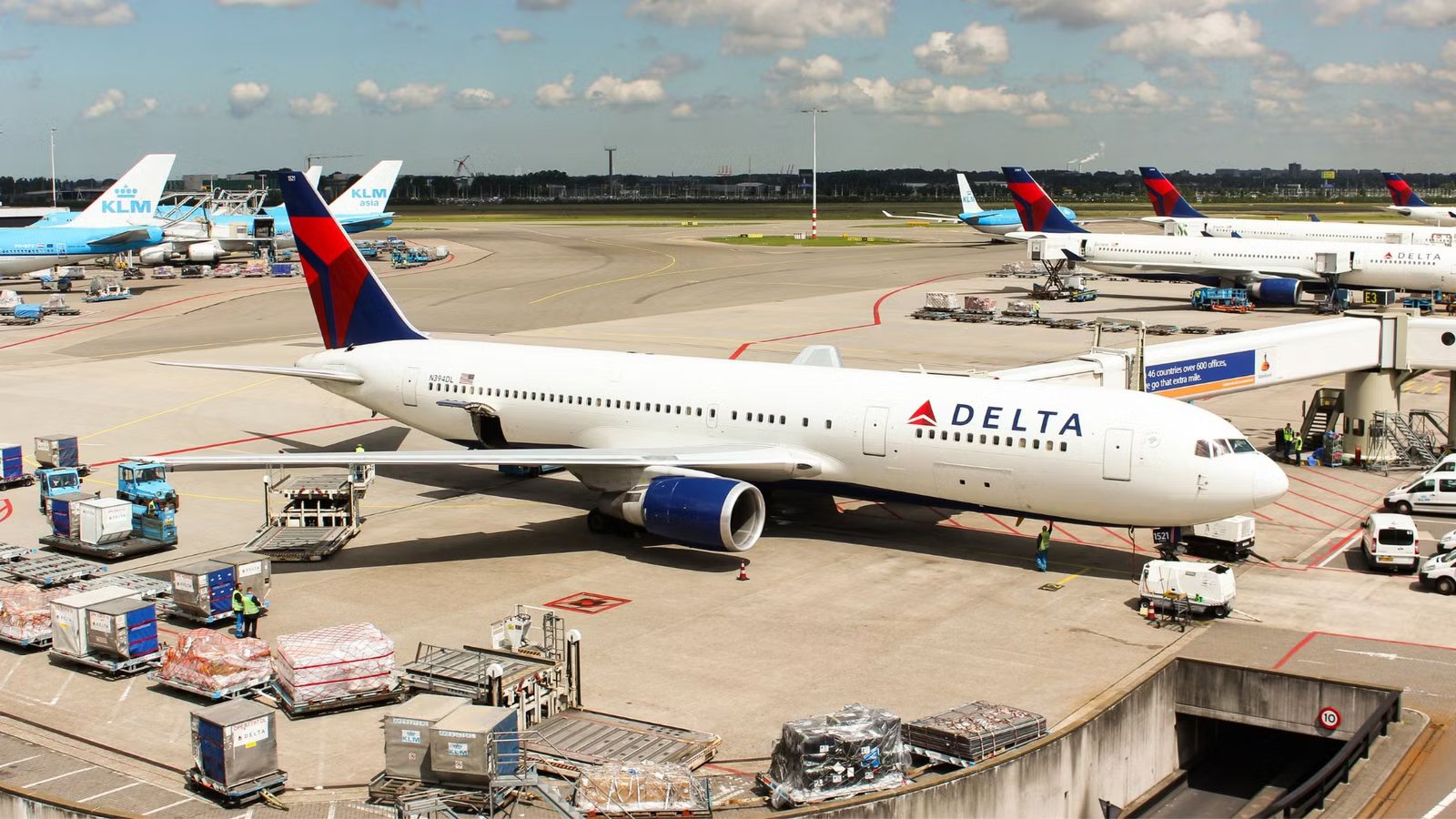
 Delta Air Lines’ Premium Select cabin is designed to bridge the gap between standard economy and business class, offering 38 inches of seat pitch, up to 19 inches of seat width, deeper recline, and adjustable footrests on widebody aircraft such as the Airbus A350-900, Airbus A330-900neo, Boeing 767-400ER and on some narrowbody Boeing 757. Introduced as Delta’s premium economy product on long-haul routes, the cabin also includes Sky Priority airport services, upgraded dining served on real tableware, and larger seatback entertainment screens, making it a significant upgrade over the airline’s Main Cabin experience.
Drawing on Delta’s official product description and passenger reviews from frequent-flyer communities, Premium Select has become one of the airline’s most important mid-tier offerings for travelers flying between the United States and long-haul markets in Europe, Asia, and South America. For US-based travelers, especially those connecting through hubs like Atlanta, Detroit, New York-JFK, or Los Angeles, it provides a way to gain meaningful comfort improvements without paying the much higher fares associated with the Delta One lie-flat business-class suite.
We will examine some key aspects of the Delta Premium Select experience: the cabin’s seat design and comfort, onboard dining and amenities, aircraft availability across Delta’s widebody fleet, comparisons with standard economy and Delta One, and how the product compares with premium economy cabins offered by  American Airlines and
  United Airlines.
What Is Delta Premium Select?

Quick answer: A cabin designed to deliver more space, upgraded dining, and priority services compared with standard economy
Delta Premium Select is the airline’s premium economy cabin, positioned between the Main Cabin/Comfort+ economy seats and Delta One business class. The product offers wider seats, deeper recline, enhanced meals, and Sky Priority services designed to make long-haul travel more comfortable. According to Delta, the cabin aims to sit “at the intersection of luxury and practicality,” providing travelers with meaningful upgrades without the price tag of business class.
The biggest difference compared with standard economy begins with the seat itself. Premium Select seats are significantly larger, offering up to 38 inches (96 cm) of pitch and around 18.5–19 inches (46–47 cm) in width, compared with 31–33 inches (79–83 cm) of pitch and narrower seats in the Main Cabin. This extra room allows passengers to stretch out during long flights to Europe, Asia, or South America.
Beyond extra space, the seats also include adjustable footrests, leg rests, deeper recline, and larger entertainment screens, all designed to improve comfort during overnight journeys. The cabin also typically features memory-foam cushioning and adjustable headrests to help reduce fatigue on long flights. For travelers who find economy seating uncomfortable but do not need the full luxury of business class, Premium Select is designed to offer a practical middle ground.
What Factors Influence The Delta Premium Select Experience?

The overall experience of flying Delta Premium Select is shaped by a combination of seat design, aircraft configuration, and additional airport and onboard services. While marketed as a premium economy cabin, the product sits closer to the comfort level of domestic first class than standard economy seating, largely because of the extra space and upgraded amenities offered on long-haul flights.
The most obvious difference from standard economy is the seat itself. Delta Premium Select seats typically offer around 38 inches (96 cm) of seat pitch, about 19 inches (48 cm) of seat width, and up to seven inches (18 cm) of recline, depending on the aircraft type. By comparison, seats in the airline’s Main Cabin usually have around 31–33 inches (79–83 cm) of pitch and about 17.4 inches (44 cm) of width, meaning Premium Select passengers receive noticeably more personal space during the flight. The seats also feature adjustable headrests, deployable leg rests, and flip-down footrests, allowing passengers to stretch their legs during long flights.
That additional space becomes particularly valuable on long-haul routes. According to Delta, the cabin is available on several widebody aircraft used primarily for international flights, including the Airbus A350-900, Airbus A330-900neo, and Boeing 767-400ER. As can be seen from our seat map section, these aircraft typically feature Premium Select cabins arranged in configurations such as 2-4-2 or 2-2-2 seating, which reduces the number of passengers per row compared with the denser 3-3-3 or 2-4-2 layouts found in economy cabins.
Entertainment and onboard technology also play a role in shaping the experience. Passengers receive access to Delta Studio entertainment on seatback screens measuring up to 13.3 inches (33.5 cm), along with noise-canceling headphones and individual power outlets. These features allow passengers to watch movies, work on laptops, or charge devices throughout long flights.
Delta Premium Select vs Other Delta Cabins
|
Cabin |
Seat Pitch |
Seat Width |
Recline |
Key Features |
|
Main Cabin |
31–33 inches (79–83 cm) |
~17.4 inches (44 cm) |
Limited |
Standard economy |
|
Comfort+ |
~34 inches (86 cm) |
~18 inches (46 cm) |
Slightly improved |
Extra legroom |
|
Premium Select |
~38 inches (96 cm) |
18.5–19 inches (47–48 cm) |
Up to 7 inches (18 cm) |
Footrest, priority services |
|
Delta One |
Lie-flat |
Suite-style |
Fully flat |
Business-class luxury |
Source: The Points Party
Beyond the seat itself, Premium Select tickets include several airport benefits through Delta’s Sky Priority service, which offers faster check-in, earlier boarding, and priority baggage handling at many airports. This helps streamline the travel experience before passengers even step onto the aircraft.
Real-world passenger feedback also highlights how these factors combine during the flight. One traveler sharing their experience on Reddit described Premium Select as offering “plenty of legroom,” with seats that recline significantly more than economy seats, noting that the combination of recline and the footrest made it possible to sleep comfortably on a long-haul flight.
While individual experiences vary, the combination of seat size, improved amenities, and priority services explains why Premium Select has become one of the airline’s most popular mid-tier products.

Here’s How Much More Spacious Premium Economy Is Compared To Economy Class
Premium Economy delivers 5–8 more inches of legroom, wider seats, and deeper recline—offering a calmer, more comfortable upgrade from standard Economy
What Do Delta And Travelers Say?

Delta describes Premium Select as a cabin designed to offer an upgraded travel experience without the price tag of business class. According to Delta Professional, the cabin features three primary improvements over standard economy: additional space, upgraded dining, and enhanced onboard amenities.
One of the most noticeable upgrades comes in the onboard dining service. Premium Select passengers receive complimentary beer, wine, and spirits along with multi-course meals served on dedicated serviceware rather than the disposable trays commonly used in economy. Meal options are broad but vary by route and season.
Another difference appears in the onboard amenities provided during the flight. Premium Select passengers typically receive an amenity kit containing items such as socks, an eye mask, earplugs, lip balm, and a toothbrush, along with a memory-foam pillow and plush blanket designed to improve rest during overnight journeys.
Delta also emphasizes seat comfort in its cabin marketing. The airline notes that Premium Select seats include memory-foam cushioning and adjustable leg rests, allowing passengers to recline further and maintain a more relaxed posture during long flights.
Frequent flyers often compare the product to domestic first class in terms of seating comfort, even though the service and privacy levels remain below those offered in business class. In another Reddit discussion, a traveler who had flown the cabin multiple times described it as similar to domestic first class, with additional features such as an adjustable footrest and a larger entertainment screen.
These perspectives highlight how Premium Select is positioned in the market: it offers noticeable improvements over economy, but it remains a distinctly different experience from a fully premium business-class cabin.
How Does Delta Premium Select Compare With Other Options?

Premium economy cabins have become increasingly common among major international airlines, particularly on long-haul routes. In the United States, Delta Air Lines, American Airlines, and United Airlines all offer similar products designed to provide more comfort than economy while remaining less expensive than business class.
Delta Premium Select broadly aligns with these competing products in terms of seat size and overall comfort. With a seat pitch of around 38 inches (96 cm) and a seat width of roughly 18.5–19 inches (47–48 cm), the cabin provides noticeably more personal space than standard economy seating. For comparison, Delta’s Main Cabin typically offers only 31–33 inches (79–83 cm) of pitch, while Comfort+ provides around 34 inches( 86 cm) , demonstrating how Premium Select occupies a clear middle tier in the airline’s cabin hierarchy.
Compared with business class, however, the differences remain substantial. Delta One, the airline’s long-haul business product, features fully lie-flat beds, a significantly greater seat pitch, and additional privacy features. Seat pitch in Delta One suites can reach over 75 inches when fully extended, creating a completely flat sleeping surface that Premium Select cannot match.
The result is a cabin that appeals to travelers who want more space but may not want business-class fares. In many cases, Premium Select tickets cost roughly twice as much as economy tickets, but remain significantly cheaper than Delta One seats on the same flight.
For travelers who primarily value legroom and personal space, this middle ground can make the upgrade worthwhile. However, for passengers prioritizing sleep and privacy, the gap between Premium Select and business class remains significant.

American Vs. Delta Vs. United: Which Carrier Has The Best Premium Economy?
These three airlines offer the most prominent premium economy offerings in the domestic aviation market.
The Class Is Not Without Its Drawbacks

Despite the improvements offered by Delta Premium Select, the product is not without limitations. The most frequently mentioned drawback is that the seats do not convert into fully flat beds, which can make sleeping on overnight flights more challenging than in business-class cabins.
While the seats do recline much more than standard economy seats, they remain upright rather than lie flat. For passengers who find it hard to sleep while sitting, this difference can be a key factor when deciding whether to upgrade. The maximum recline of about seven inches (18 cm) boosts comfort but does not match the sleeping experience offered in Delta One suites.
Aircraft variation can also affect the experience. On some planes, especially older models or certain narrowbody aircraft temporarily branded as Premium Select, features such as larger entertainment screens or adjustable footrests may not be available.
Passenger feedback online reflects these mixed experiences. In one Reddit discussion, a traveler flying on an Airbus A330 reported that the seat recline felt only marginally better than economy and that sleeping remained difficult without a lie-flat bed.
Another traveler noted that while the seats were wider and more comfortable initially, longer flights could still cause discomfort compared with premium cabins that offer fully flat seating. These experiences highlight that Premium Select represents an improvement over economy rather than a replacement for business class.
Overall Takeaway

Delta Premium Select has become one of the airline’s most important cabin products as demand grows for mid-tier comfort on long-haul flights. With 38 inches (96 cm) of seat pitch, wider seats, adjustable footrests, upgraded meals, and priority airport services, the cabin provides a noticeably better travel experience than standard economy seating.
For many travelers, particularly those flying long-haul routes from the United States to destinations in Europe, Asia, or South America, the added comfort can significantly enhance the journey. The extra space and upgraded service help reduce fatigue during flights that can last eight hours or longer.
However, Premium Select remains distinct from Delta’s business-class product. Without lie-flat seats or the privacy features found in Delta One suites, it still requires passengers to sleep in a reclining seat rather than a bed. For travelers prioritizing comfort at a lower price than business class, though, it represents a practical compromise between cost and comfort.