dailynewsnblog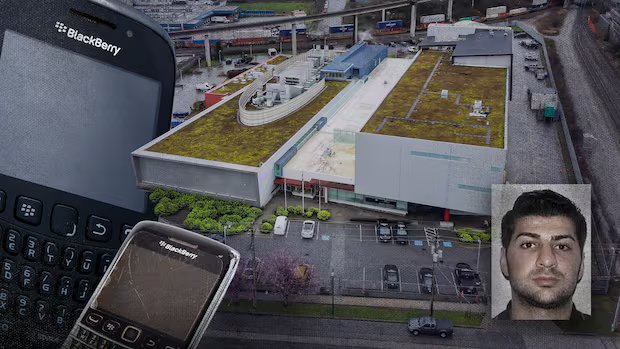
CBC News has learned Vancouver police are investigating whether someone with access to the force’s property office colluded with organized criminals to tamper with key evidence in a high-profile murder case.
Dubbed “Project Loyalty,” the investigation was launched in 2022 after the alarming courtroom discovery that two Blackberry devices seized in connection with a 2012 execution-style murder in a crowded downtown Vancouver restaurant had been swapped for so-called “imposter phones.”
Police have reviewed three months-worth of motion-activated video recordings from the property office, obtained phone records for a handful of VPD staff, obtained eight search warrants and conducted polygraphed interviews with civilian property custodians.
Although Project Loyalty chief investigator Sgt. Chatinder Thiara says no sworn or civilian member of the VPD has been implicated, he claimed in a B.C. Supreme Court affidavit sworn in January 2025 that whoever carried out the “scheme” likely had “assistance from within the VPD property office.”
“In my opinion, the most viable theory is that the replacement of the seized phones with the imposter phones occurred in the VPD property office,” Thiara says in a sworn affidavit.
“It is my belief as the primary investigator that one or more persons worked in concert, across jurisdictions, to commit the offence(s) under investigation. Project Loyalty has identified no targets or suspects, although we cannot rule out the involvement of any of the accused or their associates.”
‘It’s going to happen’
Project Loyalty’s existence surfaced last year during pre-trial hearings for Dean Wiwchar, the hitman who ultimately pleaded guilty to conspiring to kill gangster Sandip Duhre.
The proceedings had been covered by a publication ban which ended with Wiwchar’s sentencing to 20 years in prison last December.

CBC News applied to court to obtain copies of Thiara’s two affidavits as well as access to five days of arguments centred around an application filed by Wiwchar, seeking information about the investigation, which he believed at the time could help his defence.
In a 2025 ruling allowing Wiwchar limited access to Project Loyalty search warrant material, Justice Kathleen Ker said that if correct, Thiara’s theory of the case would have “exceedingly serious ramifications for the integrity of the VPD property office.”
The “unprecedented” situation led to courtroom submissions in which a contract killer lectured police on what he claimed was corruption.
“You need to stay the proceedings, not just because of the law, but to set an example to set the right precedent so that just doesn’t happen again,” Wiwchar told Ker at one point.
“Because if the cop’s still in the building — it’s going to happen.”
In a statement to CBC News Tuesday, a VPD spokesperson said the investigation remains open.
“An extensive review has been conducted, and items of high importance such as money, drugs and firearms were all accounted for. At this point in time regarding the investigation into the property office that you are referring to, NO evidence was found implicating any VPD employees in swapping evidence,” the statement reads.
“The theory that the evidence was switched at the VPD property office was an investigative theory in the absence of any other evidence to the contrary.”
A deadly gang war
The circumstances that gave rise to Project Loyalty emerged from two decades of violent gang warfare touching every corner of British Columbia.
According to sentencing documents, Wiwchar shot Duhre 10 times in the head in January 2012 as he sat at a table during the dinner rush at Vancouver’s busy downtown Wall Centre restaurant.

The killing was apparent payback for the Kelowna slaying a year earlier of Jonathon Bacon, one of the heads of The Wolfpack, a rival gang to a group run by Duhre and partner Sukhveer Dhak.
According to court documents, Wiwchar was paid to carry out the hit by Bacon’s Wolfpack co-leaders Larry Amero and Rabih Alkhalil, who were sharing a Montreal penthouse when police caught up with them seven months after Duhre’s death.
Both men were later charged in the killing. Amero was convicted of conspiracy to commit murder and Alkhalil was convicted of conspiracy and first-degree murder.
In August 2012, officers seized a number of phones from their luxury apartment, including the two devices that became the focus of Project Loyalty: a Blackberry Bold 9000 found in Amero’s bedroom and a Blackberry Curve discovered in Alkhalil’s white Mercedes sedan.
According to the court record, the two devices — known as police exhibits 19LW and 58LW — were never forensically examined, despite being sent back and forth across the country at various times in sealed packages that were never opened.
They were kept at the VPD property office at all other times.
A note alleging corruption
The phone swap came to light following a chain of events beginning in August 2021 when Alkhalil advised his lawyer he believed 19LW and 58LW contained “exculpatory messages.”
The detective who originally seized the Blackberries wound up on the stand on March 10, 2022, armed with the phones, which she was asked to tender during cross-examination.

But the 15-digit identifying numbers unique to all phones were different from the ones on the Blackberries that were supposed to have been in the property office.
“It was discovered that these were not the ones seized at the Montreal residence,” the court documents say.
Further examination revealed that both impostor phones had been wiped on June 9, 2021. And a note, written in French and titled “Reunion,” was found on an app on one of the replacements.
“I was instructed to place the device filled with fabricated emails in the dwelling,” said the note, parts of which were read aloud in court by Crown counsel Sandra Dworkin.
“But instead, I erased the contents of this one and write these notes knowing that they would be discovered or used one day.”
‘Something is very amiss’
The note found on the impostor phone purports to be the confession of an insider alleging corruption by members of the Niagara and Montreal police forces.
Dworkin said the note tells the “impossible” story of a “covert team” tasked with planting fabricated data on encrypted Blackberries and then “reencrypting them under the appropriate password protections all within a short period of time.”

“The Crown submits that it is a story,” Dworkin told Ker during the pre-trial proceedings. “There’s no basis for it being true.”
But Wiwchar disagreed, calling one of the police officers named in the note “a shady character.”
“I say it makes total sense,” he told the judge.
Further complicating matters, Wiwchar raised the prior disappearance from the VPD property office of a third, separate Blackberry, seized from Amero’s room in the Montreal residence at the same time as the other two devices.
Known as police exhibit 18LW, the other phone’s disappearance was discovered in 2018, sparking an extensive and elaborate search lasting over 120 hours, including 42 hours of overtime.
Documents associated with 18LW also vanished at the same time, only to turn up years later, prompting an email from the property office’s civilian manager, which Wiwchar cited in court to the effect that “something is very amiss.”
“It is my submission that they should have realized then that there was a corrupt police officer in their department, tampering with the evidence,” Wiwchar told Ker.
But in his second affidavit, Thiara claimed that “Exhibit 18LW remains outside Project Loyalty.”
“Project Loyalty did not investigate missing exhibit 18LW,” he wrote.
“No information has come to light that suggests any connection between the circumstances of exhibit 18LW going missing and the circumstances of the phone replacement.”
Investigative theory: insider knowledge
In his first affidavit, Thiara described the layout of the VPD’s property office, which occupies half of a multi-level East Vancouver building shared with the department’s training facility.
Thiara said sworn members can only access one area of the facility to drop off new exhibits “or to retrieve exhibits for investigation, return, court, etc.”

When the property office is not staffed, sworn members access a small area with a temporary storage locker and are blocked from the secure side of the facility by a cage.
“Only designated civilians (property custodians) have full access to the facility,” Thiara wrote.
“They shelve and retrieve property and exhibits. A small number of sworn members are assigned to the property office. They do not perform property custodian duties; nor are they investigators.”
Employees on the secure side of the property office are issued an electronic access card, and while Thiara said vetted contractors would also be given temporary access cards, “to the best of my knowledge, outside contractors did not access the facility at times it was not staffed.”
“Our initial investigative theory was that the plan to replace the seized phones with the imposter phones required access to the secure area of the property office and knowledge of how to locate and swap exhibits,” Thiara wrote.
“We did not believe that a person with that access and knowledge planned and executed on their own…. We did, however, believe that only a property custodian or sworn member attached to the property office would have the requisite access and knowledge.”
‘All answered my questions’
Thiara said the investigation focused on the three-month period from June 9, 2021, when the phones were wiped, until Aug. 25, 2021 — “the date the accused Mr. Alkhalil discussed the seized phones with his counsel.”
According to the affidavit, investigators matched video to access card data and examined property records on police databases to determine if individuals had legitimate reason to be in the aisle where the phones were stored during that time.

Believing “the operating mind behind the plan would have had to communicate with the persons with the requisite knowledge and access,” investigators also applied — and were rejected — for wide-ranging access to cell phone data for a “group of individuals.”
“We also interviewed the civilian property custodians seen on video in the relevant area during the relevant period,” Thiara wrote.
“All answered my questions frankly, and none had any issue with agreeing to take a polygraph. I was left without any reasonable suspicion, let alone reasonable grounds, about any of them.”
While the swap most likely occurred in the VPD property office, Thiara said: “I cannot say that it can only have occurred in the Property Office. Nor can I prove that it did not occur there.”
Link to an escape from custody?
The pre-trial court proceedings and Thiara’s affidavits all point to suspicions surrounding Alkhalil’s possible role in the phone swap.
Dworkin noted that Alkhalil’s claim of exculpatory evidence led to the in-court discovery that the two phones had been switched.

And the discovery of the impostor devices — and their contents, if taken at face value — appeared designed to benefit Alkhalil, not the Crown.
The note found on the impostor phone repeated mistakes contained in discovery documentation given to the defence which misidentified the unique details of the seized phones, leading police to believe the note was written by someone with access to the discovery.
And after Alkhalil lost an application to stay the proceedings based on lost evidence, he managed to orchestrate an escape from custody with the help of suspects who allegedly posed as contractors to break him out of North Fraser Pretrial Centre.
“I became aware of the escape shortly before Project Loyalty commenced. It seemed likely to me that there could be a connection between the escape and the phone replacement,” Thiara wrote in his affidavit.
“It therefore seemed likely that one or more of the accused themselves were involved in the planning and execution of the escape and the phone replacement, and would likely have communicated with persons not in custody about the planning and execution of both.”
‘The court should be angry here’
Alkhalil was caught last fall in Qatar, where he is currently being held in custody. Charges have also been laid against three individuals accused of conspiring to help him escape.
In his absence, Alkhalil was convicted in Duhre’s killing — his second first-degree murder charge following a conviction in the 2012 Toronto killing of John Raposo, which was also carried out by Wiwchar.
Thiara warned that giving Wiwchar investigative information about Project Loyalty could prove dangerous as the information could “make its way to the accused in the escape prosecution, unindicted co-conspirators, or to Mr. Alkhalil.”
Wiwchar claimed he had no involvement related to the VPD property office, saying he trusted the police “more than I trust my co-accused.”
He called on Ker to “kick open some doors here to get to the bottom of what happened.”
“The court should be angry here,” the killer told the judge.
“You should be upset at the degree of which someone in the VPD either engaged in serious misconduct or neglected to catch those who engaged in serious misconduct in a serious indictment.”