dailynewsnblog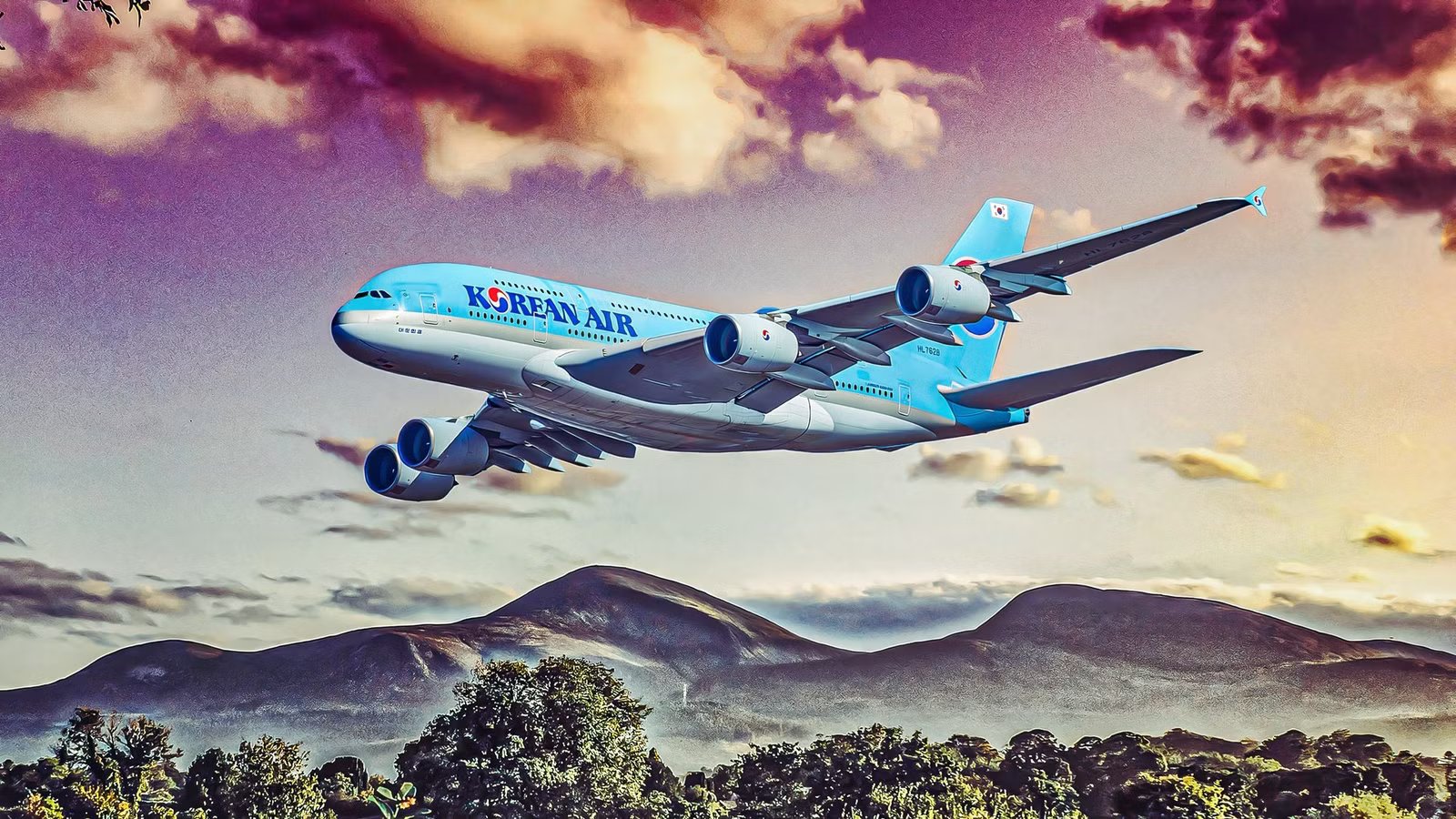
Korean Air is a relatively small Airbus A380 airline. According to ch-aviation, it has six frames, which means it is the world’s joint-second-smallest operator of the remaining ten scheduled carriers to fly the type. However, Korean Air once had ten superjumbos, with the other four aircraft scrapped.
Registered HL7611, the  SkyTeam member’s first double-decker quadjet was delivered in May 2011; it is one of the four aircraft that has been scrapped. With the first passenger-carrying flight taking place in June 2011, Korean Air was Northeast Asia’s first A380 operator, closely followed by China Southern.
Korean Air No Longer Uses The A380 On These 11 Routes

Cirium data has been used to compare where Korean Air deployed the superjumbo between 2011 and 2025 and where it plans to fly the type in 2026, with the 11 results shown below. All of its A380s have just 407 seats, which means they have the fewest seats of the equipment’s other operators. Over a quarter of seats are first or business, which is a huge proportion.
The double-decker only operated one roundtrip service between South Korea and Prague. This occurred nearly exactly 12 years ago in 2014. The type temporarily replaced the A330-200/A330-300 on the long route. The notable substitution was due to a major EU technology conference, which necessitated a much larger business class cabin.
It was the second scheduled A380 service to the Czech Republic, following a Lufthansa one-off operation in 2011. However, it was the third A380 flight there, as Emirates had a medical diversion in 2013.
|
Korean Air’s A380 Departures From Seoul Incheon |
From Seoul Incheon To… |
When Was The A380 Flown?* |
|---|---|---|
|
2,198 |
Paris CDG |
2011-2020 (and seemingly two services in 2023 too) |
|
1,160 |
Hong Kong |
2011-2018, 2022-2025 |
|
1,048 |
Bangkok Suvarnabhumi |
2011, 2015-2020, 2022-2025 |
|
766 |
Atlanta |
2013-2017 |
|
708 |
Sydney |
2015-2020 |
|
567 |
Taipei Taoyuan |
2017-2020, 2023-2026 (the final flight, for now, was in February 2026). Asiana will cease flying the A380 on this route in May 2026 |
|
531 |
London Heathrow |
2016-2019 |
|
510 |
Frankfurt |
2012-2013, 2025 |
|
78 |
Guangzhou |
2020-2022 |
|
Eight |
Beijing Capital |
September 11-18, 2011 |
|
One |
Prague |
March 14, 2014, only |
|
* Some years had barely any flights |
Korean Air’s A380s To Atlanta

Seoul to  Atlanta is the definition of a SkyTeam route. This is why this long city pair, whose block time is up to 16 hours, is served up to four times a day in 2026 by Delta Air Lines (which has two daily departures) and Korean Air (up to two daily flights).
Of course, Korean Air’s A380s are long gone; the final service was nine years ago. And except for flights on March 30 and 31, 2026, the Boeing 747-8i has gone too. Korean Air now uses the 777-300ER, which is the carrier’s primary equipment for long-haul flights. That’s unsurprising: it has far more of them than other widebodies, and it benefits from significant freight capacity.
Let’s flash back to 2017. Korean Air’s final superjumbo service to Atlanta, which is the world’s busiest airport by passengers and Delta’s busiest hub, was in early March. In the final few months, the type operated three times weekly, down from the daily frequency that was last available in early 2016. Between April and November 2017, Atlanta had no A380 flights. Air France appeared once in December 2017, followed by a daily operation between March and October 2019.

Airbus A380 Flights Axed On 2.5-Hour Route: End Of The Superjumbo Shuttle?
Given this route’s minimal block time, it was the world’s second-shortest A380 service…
When Korean Air Flew The A380 To London Heathrow

Ever since the SkyTeam operator’s first commercial service on the superjumbo in 2011, four European airports have seen the type: Frankfurt, London Heathrow, Paris CDG, and Prague. The equipment’s last regular operation to Europe was in 2020, which was when the world temporarily changed due to the COVID-19 pandemic. It had up to two daily A380 flights to Europe.
The UK’s busiest airport was Korean Air’s second most-served European destination. The type was deployed between 2016 and 2019, but only during the summer, with the route’s highest passenger traffic and fares. Frequencies varied widely, from three times weekly to daily.
In the four years that it operated, Korean Air was one of nine A380 users at Heathrow. It coexisted with British Airways, Emirates, Etihad, Malaysia Airlines, Qantas, Qatar Airways, Singapore Airlines, and Thai Airways. As you’ll know, Malaysia Airlines and Thai Airways no longer fly this type.