dailynewsnblog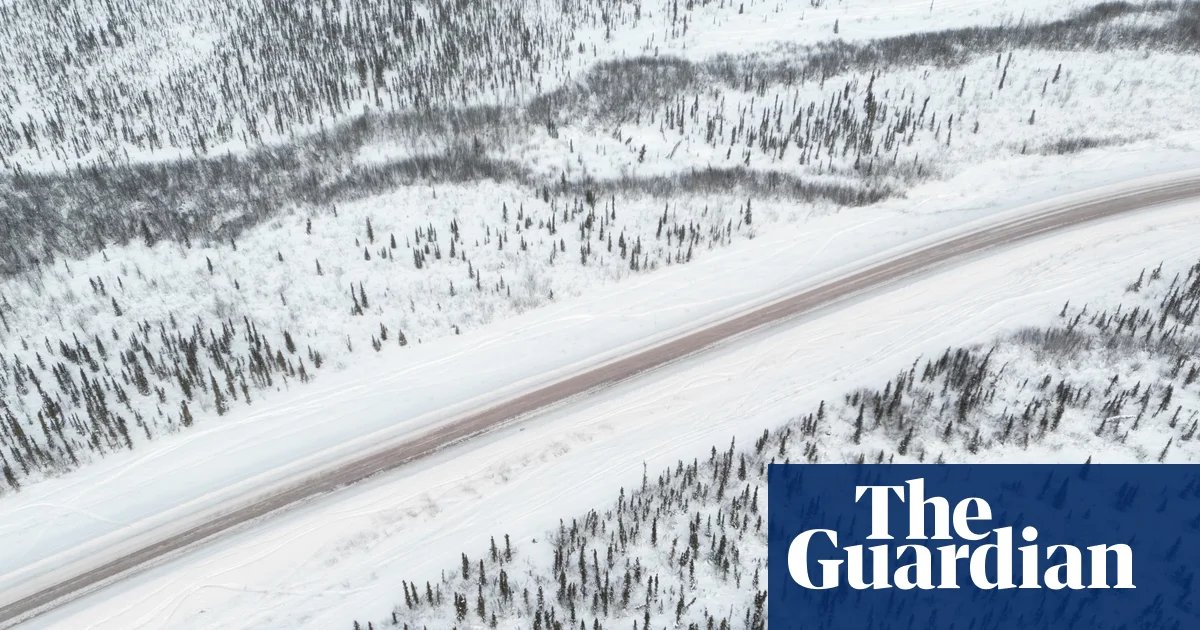
Picture an Arctic territory, marginalized by its own country, almost entirely lacking roads, ports and power sources, but rich in mining potential and suddenly feeling vulnerable to outside threats.
It’s not Greenland; it’s the Canadian Arctic.
After decades of underinvestment, Ottawa is now turning its attention to the country’s north amid an outbreak of nationalism and new spending, in reaction to provocations by the Trump administration.
In June, the government of newly elected prime minister, Mark Carney, passed a “nation-building” bill meant to cushion the effects of Donald Trump’s tariffs by drumming up jobs and investment with fast-tracked construction projects. “We can give ourselves far more than any foreign government can take away,” he said.
The plan includes the most literal kind of nation-building: roads, rails and other transport corridors.
“The hope is that [the Arctic territories] will be brought into Canada … just like in the 1800s, when the federal government decided to build a railway from eastern Canada all the way to British Columbia that opened up trade and commerce,” said Natan Obed, who speaks on behalf of Canadian Inuit as head of the organization Inuit Tapiriit Kanatami.
As always in the Canadian Arctic, however, the hard part is knowing how to build strategically. The region is about six times the size of Texas, yet is home to only about 150,000 people. The trick is to pick projects that serve many purposes at once, though northern leaders are often skeptical that southerners will plan properly around their needs.
On Thursday, the government revealed that it was pushing ahead with two road projects.
One is the Grays Bay route – also called the Arctic economic and security corridor – which would connect Yellowknife and points south to the Arctic Ocean, winding near several mines to a proposed deepwater port.
This is a relatively unpopulated area where the immediate benefits will not be felt by regular people.
“The real incentive of building the [Grays Bay] road and the port is additional GDP” from mining, said Kells Boland, a consultant who advises the government and companies operating in the north.
The other route, however, will reflect the needs of the local population. It is an extension of the Mackenzie Valley highway that would serve local towns that are currently supplied in summer by barge and in winter by an “ice road” along the frozen river – both of which have become unreliable due to the climate crisis: water levels get too low, and ice thaws too easily.
“Communities are just struggling to stay alive,” said Caroline Wawzonek, a Northwest Territories minister.
The money-making potential of the Mackenzie Valley may not be as immediate as the Grays Bay area’s, she said, but big gas and tungsten reserves lie there untouched.
For years, the project’s supporters have focused on lobbying for a 300-kilometre stretch of this route, which would extend the existing all-season road to the town of Norman Wells, Northwest Territories. But Carney said this week that the ultimate plan was more ambitious: to build 800 kilometres of roadway all the way to the major hub in the area, the town of Inuvik, where it would connect with another existing northern route.
The exact funding plans remain unclear, but Carney said last week that construction on the Mackenzie Valley highway could start as early as this summer.
Experts say that any long-term Arctic plans need to avoid thinking only in terms of north-south roads but also to connect the east and west flanks of Canada’s Arctic with new or upgraded ports.
“This is an issue that we’ve been trying to work on for decades,” said Obed.
There are fisheries all along the Arctic coastline, for example, “but virtually none of the catch goes to Inuit communities,” he said.
He added: “It’s cheaper to fish for shrimp in the Arctic Ocean and send it to China than it is to send it to a community that’s even two or 300km away.”
Those local markets are tiny. But more ports could also help Canada lay groundwork for more future shipping in the Northwest Passage, and bolster its claim to the storied waterway, which the US has challenged.
Currently, there are no deepwater ports between Iqaluit, roughly north of Montreal, to a station in south-western Alaska, farther west than Hawaii. (A port in the town of Tuktoyaktuk, at the end of the only existing road to the northern coast, is too shallow to allow most ships to dock.)
A Grays Bay deepwater port would break up that stretch. A planned deepwater port in far-eastern Qikiqtarjuaq, across from Greenland, would also be a “gateway” to the Northwest Passage, its proponents say, and this has also received some federal support.
Ottawa also already said it will put $175m into upgrading the railroad and port in Churchill, on Hudson Bay, which is well south of the Arctic seacoast but is key for supplying towns and also handles some exports.
Some have maintained that breaking ground right now should not be a priority: Canada should instead maintain existing transport corridors, or spend the money on more pressing problems.
“There are actual Arctic security needs, there are actual community needs, today,” said Heather Exner-Pirot of the thinktank the Macdonald-Laurier Institute, so it’s not worth putting “billions of dollars into something that may be useful in 20 years”.
That either-or Arctic dilemma – to spend on crises or invest in long-term progress – is perennial for the Canadian government. It has usually balked at the cost of major projects for such a small, spread-out population. And when projects have gone ahead, poor site choices or lack of maintenance have often turned them into burdensome white elephants.
But Obed said transport infrastructure, planned right, should help with the short and long term.
“Nation-building isn’t cheap at any point in time,” he added.
This may be a rare moment when some proposals are not calculated just in terms of costs per capita or per kilometre travelled, said Matti Siemiatycki, an infrastructure expert at the University of Toronto. That can be good – and risky too, he said.
“The United States kind of shook up the snow globe and … made us refocus on these issues of sovereignty, security and of economic self-sufficiency,” he said. “I think people are seeing this as a moment where Canada starts reinvesting in itself.”
The hard part, he said, was to make sure any new build “serves the purposes of what we’re trying to achieve”.