dailynewsnblog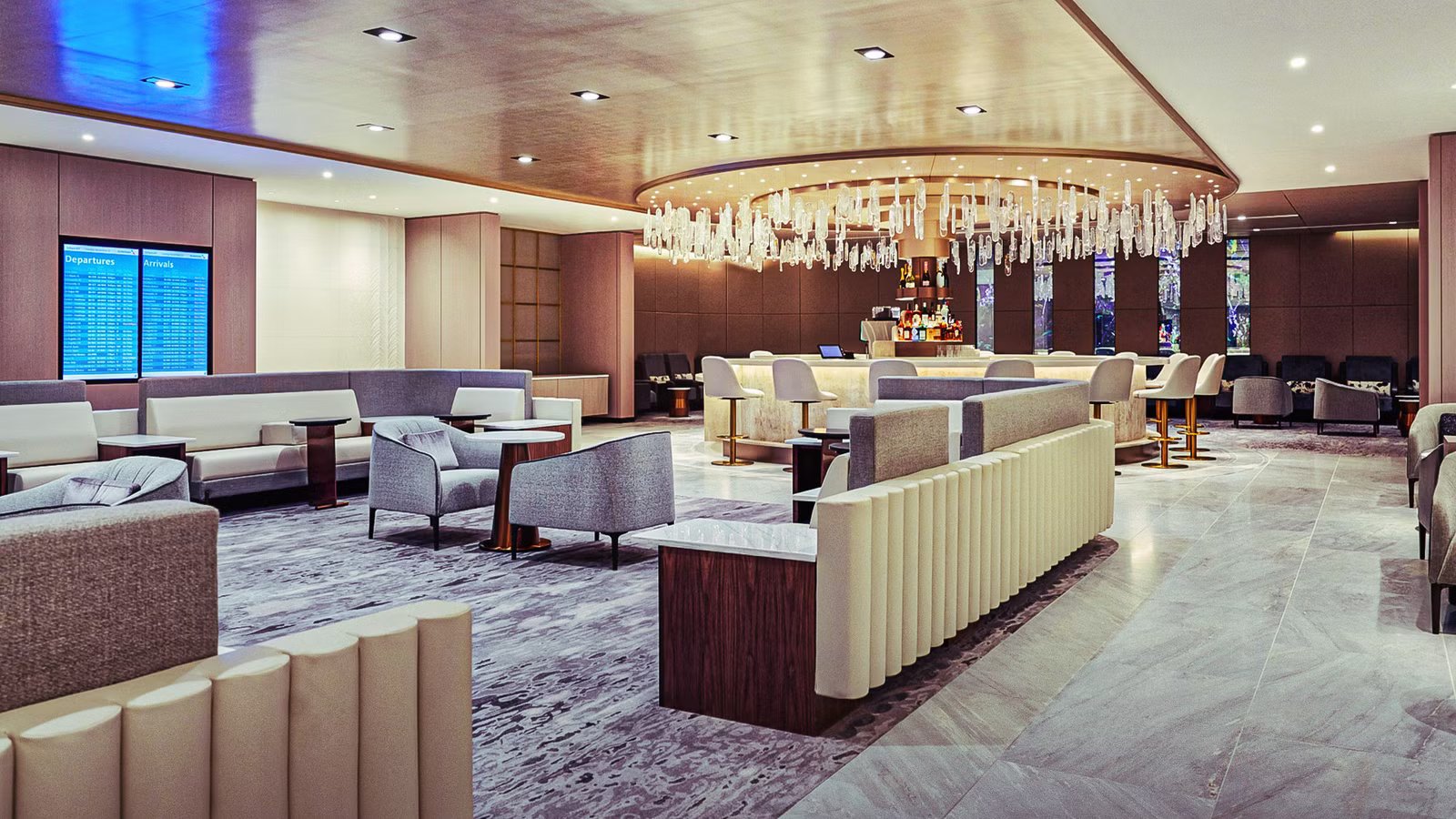
Lounges are abundant across the US, and it can often be difficult to find one that truly checks all the boxes. As domestic carriers scramble to match the levels being achieved in Asia and the opulence of the Middle East, the American ground experience has undergone a radical, multi-billion-dollar transformation that prioritizes exclusivity over capacity. These nationwide changes represent a pivotal moment where the ground product has finally become as sophisticated as many have hoped and can be considered one of the world’s best.
From private TSA checkpoints that bypass the terminal entirely to vintage champagne bars serving bottles that retail for over $300, the baseline for luxury has been reset. This article will explore the top contenders for the crown, examining the technical specifications, culinary ambitions, and the mechanical efficiency of the best sanctuaries in New York, Los Angeles, and Miami, as well as how these match up to lounges across the world.
Two Ideas Of Luxury

The most luxurious first class experience in the US is currently a contested title between New York’s John F. Kennedy International Airport and the private terminal concept known as PS. The Chelsea Lounge in JFK Terminal 8 is widely considered the peak of traditional airline-operated luxury, but the PS facilities in  Los Angeles and later this year
  Miami offer a level of seclusion that no standard terminal can match. For the traveler seeking a classic lounge atmosphere with elite amenities, JFK is the winner, but for those who value total isolation from the public, PS is the definitive answer.
This duality exists because luxury has been separated into two distinct categories. One being the high-end airline sanctuary and the bespoke private terminal. At JFK, the Chelsea Lounge, a joint venture between  American Airlines and
  British Airways, serves as a gate-adjacent haven where exclusivity is maintained through strict access rules that favor only true first class passengers and invitation-only elites. Conversely, the PS model at LAX and MIA operates as a standalone building where travelers never enter the main terminal, instead enjoying private TSA screening and being driven directly to their aircraft in a BMW.
US lounges were often criticized for being little more than waiting rooms with free pretzels compared to the legendary facilities in  Tokyo Haneda or
  Singapore Changi. However, today’s trends show that domestic hubs have finally closed this gap by investing in technical infrastructure that supports fine dining and wellness suites. Data from recent industry reviews indicates that these new spaces are now outperforming many international rivals in culinary execution, proving that the US ground product has evolved from a utility to a destination in its own right.
Ease Of Movement

The ranking of a premier lounge is now far more influenced by the mechanical efficiency of the passenger’s transit than by how much selection a menu has. True luxury for many is defined by the elimination of traditional airport stressors, shifting the focus from waiting to a seamless logistical flow. This involves a transition where the terminal environment is replaced by a controlled, residential atmosphere, often beginning at the curb with a dedicated porter and ending with a private escort to the aircraft door.
High-end spaces like PS utilize private TSA screening and BMW 7 Series vehicles to bypass the crowds of the main terminal entirely. Meanwhile, integrated wellness technology has become a standard requirement in many lounges, with the Delta One Lounge at JFK featuring a specialized Luminary lighting system designed to regulate circadian rhythms and a 140-seat full-service brasserie. These elements are supported by a strict hierarchy of access that ensures the space never exceeds a comfortable density, maintaining a high ratio of staff to passengers for personalized service.
|
Metric |
The Chelsea Lounge (JFK) |
PS (LAX/MIA) |
Delta One Lounge (JFK) |
|
Total Square Footage |
~10,000 |
Private Terminal |
39,707 |
|
Transit Vehicle |
N/A |
BMW seven Series |
Porsche (VIP Select) |
|
Security Protocol |
Premium TSA Lane |
Private Suite TSA |
Dedicated Entrance |
|
Wellness Tech |
Rain Showers |
Spa & Daybeds |
Luminary Lighting |
The Chelsea Lounge offers a circular champagne bar that serves Krug and a menu designed around seasonal American ingredients, acting as a culinary destination rather than a temporary holding area. This approach forces a comparison between the open model of traditional lounges and the restricted model seen more often across the world, where the most luxurious facilities are those that few people are actually allowed to enter. Often, the case is that the most effective lounge is the one that offers the most robust barrier between the passenger and the chaos of the public concourse.

These US Airports Have Lounges You Can’t Find Anywhere Else
Premium lounges have been popping up all over the US, offering a higher level of exclusive luxury and comfort.
A New Desire

For those who spend more time in terminals than in their own living rooms, the novelty of a free cocktail wore off years ago. Members of invitation-only tiers, such as American’s ConciergeKey and Delta 360, report that the most valuable luxury is actually predictability. In interviews and forum discussions, these flyers emphasize that the ability to secure a quiet, private workspace with high-speed, low-latency WiFi and a guaranteed seat in a full-service restaurant is worth more than any aesthetic flourish. They view the lounge not as a perk, but as a functional extension of their office or home.
Passengers tend to focus on the vintage of the champagne, whereas crew members and high-tier elites often note the efficiency of the back-of-house services. This includes the speed of the garment steaming services in the shower suites and the reliability of the VIP tarmac transfers during weather delays. When a flight is delayed, luxury becomes the airline’s ability to keep the passenger in a private environment, away from the gate-side chaos, until the moment the boarding door is ready to close.
The feedback across the board suggests a minimalist trend among the elite. Travelers are moving away from the over-the-top, gold-plated luxury of the past and toward a more understated, high-tech comfort. They value the invisible service, the host who knows their name and flight details without being asked, or the kitchen that remembers a dietary restriction from a previous visit. The best lounge isn’t the one that gives you the most; it’s the one that requires the least amount of effort from you to get what you need.
Catch Up Needed?

While the US has made significant strides, the global benchmark for first class lounges remains anchored in the Middle East and Europe. To understand where the US sits in the hierarchy, then Al Safwa First Lounge in  Doha or
  Air France’s La Première in
  Paris provides an excellent reality check. These facilities are often considered unlike anything else, featuring museum-quality artifacts, private nap rooms that rival five-star hotel suites, and a level of culinary precision that includes Michelin-starred menus. In contrast, even the best US lounges are often viewed as highly efficient hubs rather than destination-worthy on their own.
The primary difference lies in the curated journey. For example, Air France’s La Première offers a total-care model where a passenger is met at their car, escorted through a private security suite, and then driven to the plane in a luxury vehicle, all as a standard part of the ticket. While the PS model in the US replicates this, it remains a third-party service rather than a seamless airline integration. Critics often point out that while US lounges have mastered the high-end brasserie feel, they still struggle to match the sheer architectural scale and hushed, almost reverent atmosphere of the First Class Terminal in  Frankfurt or The Pier in
  Hong Kong.
Despite these gaps, the US is winning in technological integration. American lounges have surpassed many of their European counterparts in smart infrastructure, such as app-based shower reservations, real-time luggage tracking integrated into lounge tablets, and superior high-speed connectivity. For the modern business traveler, a US lounge may actually be more useful than the palatial but technically slower lounges in other parts of the world. By contrasting the palace model of the Middle East with the utility-plus model of the US, it becomes clear that luxury is increasingly a matter of geographic preference.

Emirates Vs. Qatar Airways Vs. Singapore Airlines: Which Carrier Wins First Class?
The best first class experience depends on what a passenger values most, whether it’s physical space, theatricality, or service and dining.
Too Exclusive?

As airlines have invested millions into these spaces, they have simultaneously implemented some of the most restrictive access policies in aviation history. For instance, the Chelsea Lounge at JFK strictly excludes many top-tier status holders unless they are flying on specific transcontinental or long-haul first class tickets. This has created a tiered system within the elite population, where a passenger with high status may still find themselves turned away from the most exclusive doors, leading to a sense of status inflation where the perks once promised are now gated behind further paywalls.
Overcrowding also remains a persistent threat to the luxury experience. While new facilities like the Delta One Lounge are designed with massive footprints to accommodate demand, the sheer volume of premium travelers in hubs like New York and Los Angeles can still lead to waitlists during peak departure banks. Unfortunately, private does not always mean empty, as even in the most expensive lounges, the atmosphere can shift from serene to chaotic during the late-afternoon rush, making the timing of a visit just as important as the ticket itself.
The peak luxury experience is largely concentrated in major coastal hubs, which leaves out those based anywhere else in the US. A traveler flying first class out of a mid-sized city or a secondary hub will rarely find a facility that matches the technical standards of JFK or LAX. This disparity means that the US first class ground product is overall still inconsistent despite the progression in the last few years, requiring passengers to route through specific airports if they want to ensure their layover matches the quality of their flight.
A Lot Of Progress Made

The answer to which airport is the most luxurious depends entirely on what is considered modern luxury. For those who want the prestige of a traditional airline environment paired with world-class champagne and fine dining, New York’s JFK comes out on top. However, for the traveler whose ultimate luxury is the total avoidance of other humans, the private terminal model pioneered by PS at LAX and MIA has set a new global benchmark that traditional terminals simply cannot replicate.
As more carriers debut dedicated lounges in secondary hubs like Boston and Seattle, choices will become even greater, and lounge progression will continue to rise. The industry is moving toward a future where the airport is no longer a hurdle to be cleared, but a curated extension of the flight itself. We are seeing the rise of biometric seamless transit, where your face is your boarding pass, and your luggage is whisked away at the curb, only to reappear in your hotel room at the destination. Luxury is becoming less about what you see in the lounge and more about what you don’t have to do to get to your seat.
Ultimately, the fact that we can even have a serious debate about world-class luxury in US airports is a testament to how far the domestic industry has flown in a very short time. Lounges are becoming something that the US industry can be proud of, even in the face of highly refined products offered elsewhere. Only time will tell if these US products can become the global leader.