dailynewsnblog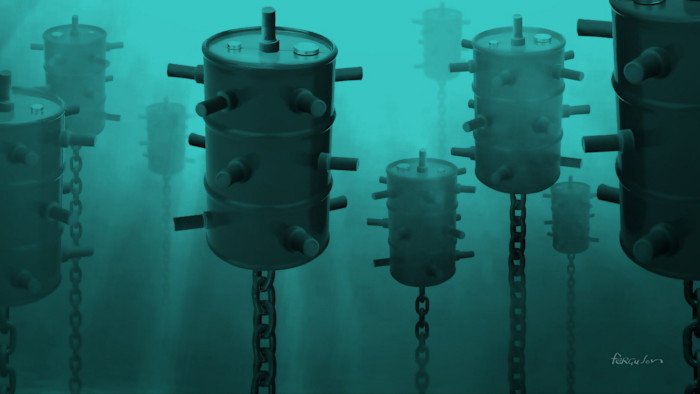
Unlock the Editor’s Digest for free
Roula Khalaf, Editor of the FT, selects her favourite stories in this weekly newsletter.
“The only thing prohibiting transit in the straits right now is Iran shooting at shipping. It is open for transit, should Iran not do that.” This staggering remark from “secretary of war” Pete Hegseth explains why none of the US allies being asked to join in the fight to reopen the Strait of Hormuz are prepared to do so: they were not consulted; this is not a Nato operation; and, above all, the people in charge are plainly careless. Of course, Iran is attacking the shipping in the strait. That is the most obvious way for its leadership to fend off the US and Israeli assault. The question is rather what are the attackers able to do about it. After all, as Ray Dalio, founder of Bridgewater, notes, “in the case of this Iran war, . . . there is near-universal agreement, that it all comes down to who controls the Strait of Hormuz”. At the moment Iran does. So long as this is true, it is winning.

Quite simply, as the International Energy Agency has noted: “The war in the Middle East is creating the largest supply disruption in the history of the global oil market.” Yet it also estimates that global oil supply will actually rise “by 1.1mn barrels a day in 2026 on average, with non-Opec+ producers accounting for the entire increase.” That is because the IEA expects trade flows through the strait to resume gradually from the end of March and then quickly recover over April. But it is not hard to imagine a far grimmer future.

In his excellent Substack, The Overshoot, Matthew Klein, formerly at the FT, argues that oil prices are surprisingly low. This is true in both nominal and long-run real terms. Just like the IEA, markets assume that things will soon return to normal. Yet it is not at all obvious why this will be the case. In particular, as Klein stresses, “the current threat to supply is unprecedented”. Moreover, he adds, previous “changes in prices required to reduce demand and/or increase supply were far larger than what we have seen so far, and the adjustment periods also took longer, even though the changes in volumes were also far smaller than what is currently happening”.

Crucially, exports of crude oil from Iran, Iraq, Kuwait, Saudi Arabia, Qatar and the United Arab Emirates were about 20 per cent of global supply and more than 40 per cent of global crude oil exports. Much of this has now vanished. If traffic through the strait were to stay blocked because ships choose to avoid Iran’s missiles, drones and mines, the loss of global supply would be unprecedented.
Since the early 1970s, notes Klein, we have had three periods when oil prices more than doubled from “normal” levels and then stayed high: the Arab oil embargo of 1973; the Iranian revolution of the late 1970s; and the soaring demand of 2003-08, especially from China. For demand and supply to balance, there would once again have to be far higher prices, because demand for oil is inelastic, especially in the short run. To achieve needed reductions in demand, oil prices might have to rise far above $200 a barrel, which would suppress demand for oil both directly and also indirectly, via the macroeconomic impacts of higher inflation, interest rates and unemployment.

Moreover, it is not just about oil. It is also about gas, fertilisers and petrochemicals, more broadly. These are crucial inputs. Higher prices and outright scarcity would have damaging effects, notably on food production. Many of these would be particularly damaging in Asia, for which the Gulf is the dominant supplier of oil, gas and related products.
In brief, if the strait is not reopened soon, the world risks both economic and political disruption. Only one major power, Russia, will be unambiguously better off. Moreover, not only net oil and gas importers will be damaged. Countries may need some of these products because they suit particular purposes. Moreover, almost all countries will be hurt by the impact on inflation, demand and income distribution.

So what is to be done? In the short run it is up to the US to fix the problem it created. It must find a way to end this entirely predictable (and predicted) threat from Iran. It cannot be up to others to save it from its failure to think things through, particularly after its multiple hostile actions and words, notably over tariffs. It should have remembered the words of Colin Powell, a wiser military leader, who famously warned George W Bush that “If you break it, you own it.” That was said of the war in Iraq. It is now true of global oil supply. The US owns that problem.
Yes, the US will threaten not to come to the rescue of its Nato allies in a crisis. But the sad truth is that very few of its allies expect it to do so in any case. Its behaviour towards them has been so erratic and offensive, under Trump, that trust has in large part evaporated. Worse, the US has even seemed hostile to the liberal democratic values that Europeans and others long believed they shared with the hegemonic power.

Is there then a way through this mess to a measure of meaningful stability in this crucial region of the world? I do not know. If it is a military one, it is up to those who attacked Iran to find it. If it is a diplomatic one, then outside countries might be able to help, though India or China are likely to have far more influence over Iran than any western power.
In the long run, the world needs to diminish its reliance on oil and gas. But that will not be tomorrow. In the short run, the world has to hope that the US comes to its senses. I used to think that Trump’s sole good point was that he did not want to fight wars. Now it turns out he loves them, but cannot bother to think through how he is going to win them — a problem many of his predecessors shared. Maybe he will learn something useful from this war. But first of all he must find a way to end it.
martin.wolf@ft.com
Follow Martin Wolf with myFT and on Twitter