dailynewsnblog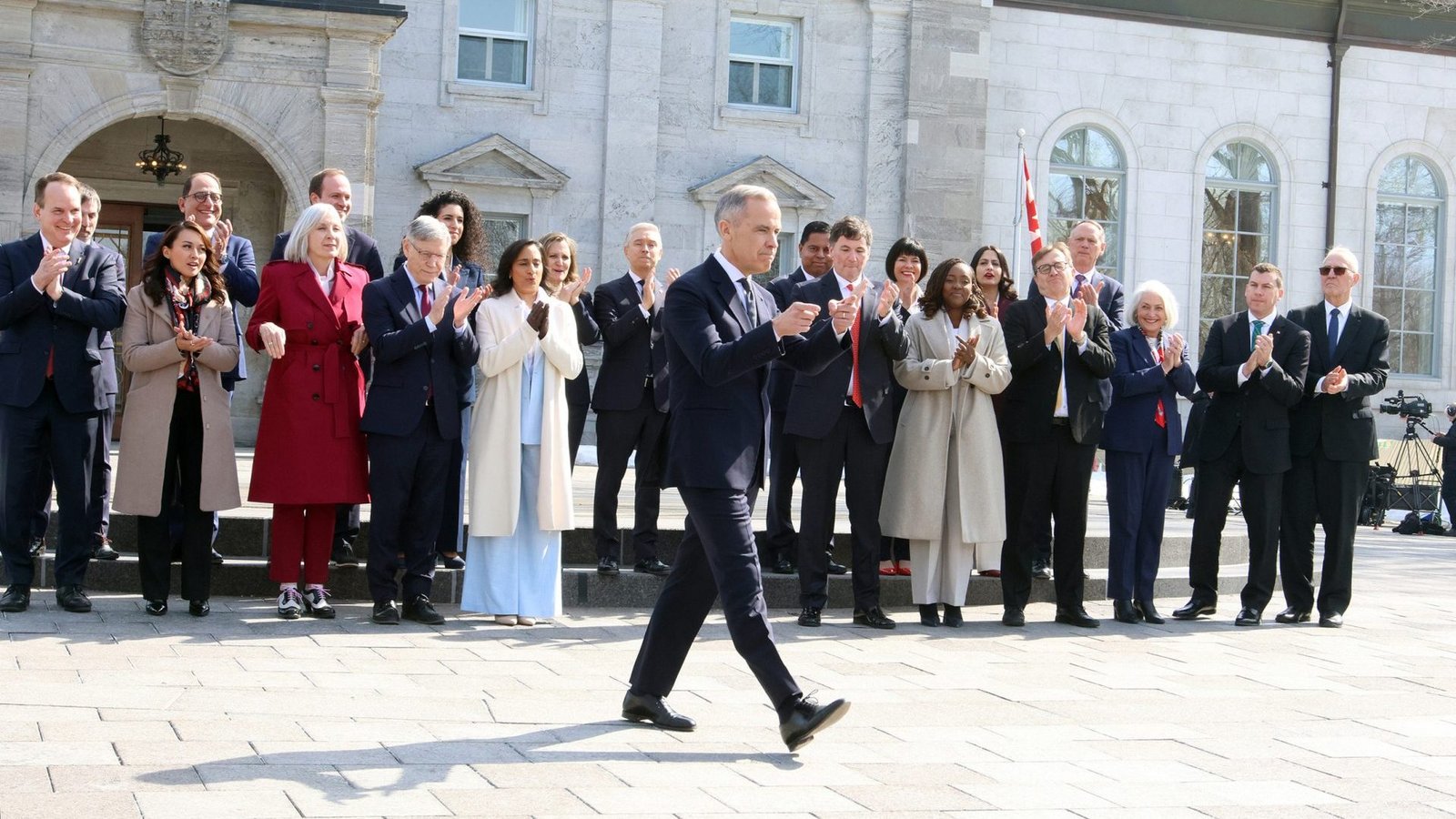
Over the past year, Canada’s 45th prime minister has fundamentally upended federal and international politics, partisan coalitions, the Liberal Party, and even the mood and atmosphere on Parliament Hill, particularly amongst the parliamentarians and staffers who remember the doom and gloom of 2024 amongst the Liberal caucus.

For many Liberals, the story of Prime Minister Mark Carney’s (Nepean, Ont.) first year in office doesn’t begin with his swearing in on March 14, 2025, or even his overwhelming victory at the Liberal leadership race five days prior, but rather with then-prime minister Justin Trudeau’s long fall of 2024.

“It was hell,” said a senior ministerial staffer, who spoke with The Hill Times on a not-for-attribution basis to comment freely.
Several staffers who spoke with The Hill Times echoed similar sentiments, recalling their colleagues and bosses growing increasingly dejected, isolated, and anti-social as the Liberal Party’s political fortunes grew worse, seemingly every day.
“There was no harmony; nobody wanted to talk to each other,” one staffer said. “It was really lonely.”
A year and a half later, “the vibes have shifted 180 degrees” as the atmosphere, camaraderie, polling, and even policy have fundamentally changed.
When asked what the biggest change has been under Carney’s time in office, staffers and parliamentarians alike shared the same satirical, sartorial answer.

“Everyone wears black shoes now,” joked one senior Prime Minister’s Office staffer.
However, while that sentiment was generally shared in jest, for many, it was emblematic of the overall “polished” professionalism that Carney has brought to his leadership and expectations.
Get Today’s Headlines Newsletter
Wake up to the day’s top political and policy headlines. Weekday Mornings.
By entering your email address you consent to receive email from The Hill Times containing news, analysis, updates and offers. You may unsubscribe at any time. See our privacy policy
“Ministers are making the effort to be on time for things, and [Question Period prep] starts at 1:30 p.m.,” one staffer told The Hill Times. “If you’re not on time, it shows.”
“There’s this get-up-and-go feeling every single day because that tone starts from the top,” said a Liberal MP, describing Carney’s “banker’s work ethos” as a “refreshing return to fiscal responsibility” compared to Trudeau’s government.

“There’s a fundamental difference between the last administration and ours, from tone to messaging and policy,” the MP told The Hill Times.
Several other Liberals had similar diagnoses of the difference between the Carney and Trudeau governments.
“We’re not distracted by the shiny objects,” said one staffer for Canada-United States Trade Minister Dominic LeBlanc (Beauséjour, N.B.). “This is a government that has a set of goals it wants to achieve, and it’s going to stop basically at nothing to achieve those goals.”
“Trudeau’s government had a lot of bright ideas, some worked, but many did not, and a lot of that was just because they put their hands in too many cookie jars,” the staffer added, noting that LeBlanc’s office had become the “junk drawer” for many issues the Trudeau government didn’t want to deal with but couldn’t get rid of.
Still, there are warnings against overconfidence, despite polls showing a double-digit lead and a party on the precipice of a majority government.
“We can’t do what we want to do if Canadians are facing extreme cost-of-living pressures,” said one staffer. “We are where we are in the polls, but that’s not going to last; no government is here forever.”
Carney’s first year marked by cross-partisan appeal, say pollsters
While some Liberals expressed unease with Carney’s rapid shift away from Trudeau-era policies—particularly on environmental priorities and Indigenous reconciliation in favour of nation-building projects—pollsters say that rupture has been central to his government’s success.
“It’s pretty rare for a government that’s been in power for 10 or 11 years to see its poll numbers go up and have four floor-crossers want to join them,” said Dan Arnold, chief strategy officer for Pollara Strategic Insights, adding that Carney’s ability to convince voters his mandate represents a genuine reset is historically unusual for a party entering its fourth term.

“I think Carney has been able to shed all the baggage that came with nine years of Liberals in power,” Arnold said, adding that much of that shift is as stylistic as it is political.
“Carney looks and sounds different than Trudeau; he dresses differently, he talks differently, and voters were looking for change,” Arnold said. “He looks like change.”
Pollara’s March 10 survey suggests that perception has taken hold among a majority of Canadians, Arnold said, noting that 61 per cent of respondents said Carney’s government has brought change, and 40 per cent said it feels like a first term rather than the Liberals’ fourth.
However, as Carney heads into his sophomore year with “the usual chaos and uncertainty that surrounds [U.S. President Donald] Trump,” Arnold cautioned against complacency on the day-to-day domestic issues.
“Across the board, people like Carney’s approach more, but when we ask whether things have gotten better or worse in the last year, on more issues than not, people feel things have gotten worse,” Arnold said, pointing to the 55 per cent who said that Canada-U.S. trade relations and the cost of living have gotten worse since Carney became prime minister.
“Carney’s not wearing that right now, but the new-government shine eventually wears off. Once he starts to wear some of the problems facing people in their day-to-day lives, that’s when the challenges will start to set in.”
Abacus Data CEO David Coletto told The Hill Times that while Carney had initially benefitted from the public’s lack of prior perceptions, “the more they’ve learned about him and gotten to know him, the more they’ve liked him.”
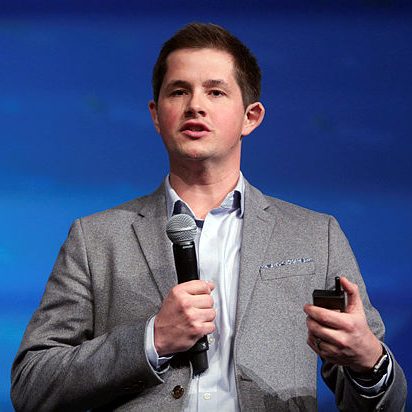
Coletto added that the public—including former Liberal voters and many who didn’t vote for the party—is “feeling pretty good about him being in that job, and the efforts that he’s made to try to deal with a world that they feel has gone haywire.”
“This feels more like the public reaction a year into a new government than the continuation of one that had been in power for almost 10 years,” Coletto said, comparing it to the “first-year shine” enjoyed by then-prime ministers Stephen Harper and Trudeau.
“Carney has done a very good job differentiating himself from the previous administration,” Coletto said. “And for someone who self-identified as a non-politician, he’s proven to be as good at politics as he was a central banker.”
However, Carney’s “Achilles’ heel” remains his “ability and willingness to explain himself,” Coletto said.
“Carney is asking for Canadians’ patience while doing big things, but he needs to continue to explain his thinking. Uncertainty and instability are the new normal, and while supporters are deferring to him, that only takes you so far. Reassurance is in high demand right now.”

For Nik Nanos, chief data scientist for Nanos Research, the defining feature of Carney’s first year in office has been his success in extending his appeal beyond the Liberal Party.
“What’s clear is that Carney is attracting support from people that haven’t voted Liberal in more than a decade,” Nanos said. “If we’re talking about a honeymoon, this wasn’t a Liberal honeymoon, it was Carney’s.”
Pointing to his firm’s most recent polling, Carney’s preferred-prime-minister rating of 56 per cent is 12 points higher than the Liberals’ national polling at 44 per cent. Meanwhile, Conservative Leader Pierre Poilievre’s (Battle River–Crowfoot, Alta.) personal numbers tail his party’s by 10 points.
“That means there are people voting for opposition parties who think Carney is the best person to lead Canada,” Nanos said, “and one third of Conservatives who don’t think their leader is.”
Part of Carney’s advantage comes from a relentless “campaign-style” communications strategy, echoing a page from “Trump’s playbook,” in order to dominate the news cycle and crowd out his opposition rivals, Nanos said.
“Carney is perpetually in motion,” Nanos said, pointing to the more than 26 foreign trips the prime minister has undertaken in his first year in office, and the slew of agreements and announcements that have accompanied each day of his travel itinerary.
At the same time, Nanos said the prime minister’s political fortunes remain closely tied to Trump and the geopolitical landscape, and that his first real test of his second year is already rapidly approaching.
“Carney’s political destiny is tied to Trump in the short term, and he’s currently in a bit of the sweet spot because the heavy free trade negotiations haven’t started yet,” Nanos said. “When those trade discussions start in earnest, that will be the real test.”
“For all the goodwill that Carney has enjoyed the last year, he still has to deliver.” Nanos continued. “The big question is how long Canadians will be patient.”
sbenson@hilltimes.com
The Hill Times