dailynewsnblog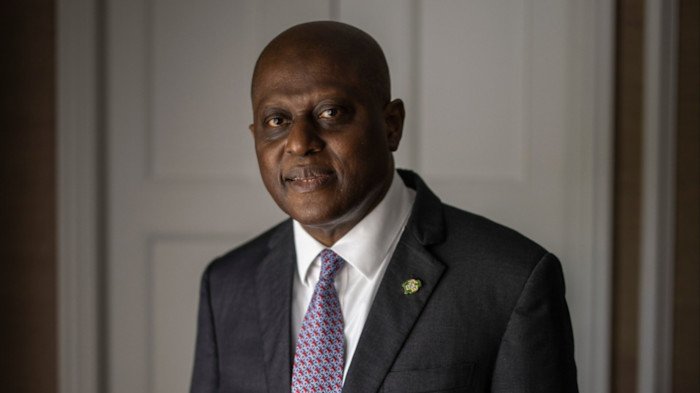
Olayemi Cardoso, a former Citigroup executive, became central bank governor in the first months of Bola Tinubu’s administration. He took over an institution criticised for operating an opaque and corrupt exchange rate policy and for printing money to fund government deficits. Cardoso arrived promising to restore orthodoxy.
These are edited highlights of his written responses to FT questions.
How is the war in Iran likely to impact Nigeria’s economy and future rate-setting decisions?
Events such as the conflict in the Middle East remind us that economies are never insulated from global developments. The transmission to an economy like ours typically occurs through two channels: energy prices and global financial conditions.
Higher oil prices can support export earnings and strengthen the balance of payments, but they can also feed into domestic inflation through fuel, transport and imported goods. At the same time, heightened geopolitical uncertainty tends to weaken risk appetite globally, which can slow capital flows to emerging markets.
The precise impact will depend on how events evolve. What gives us confidence, however, is that Nigeria is operating on much stronger macroeconomic foundations. Over the last two years we have rebuilt policy buffers, strengthened external reserves, restored functionality to the foreign exchange market and returned monetary policy to a more orthodox footing.
Can we still confidently say that inflation and interest rates will continue their downward trajectory?
Inflation management is rarely a perfectly straight line. It is influenced by both domestic policy choices and developments in the global economy.
Investing in Nigeria

From Nigeria’s economic shock plan, age-gap politics, investment and security to unblocking the oil pipeline and a game-changing refinery
What is important is the direction of policy and the credibility of the framework within which it operates. Over the past two years we have pursued a consistent and disciplined monetary stance aimed at restoring price stability. That approach has already begun to yield results, with inflation declining significantly from the peak levels experienced during the adjustment period.
Our objective remains unchanged: to bring inflation down to single digits in a sustainable manner.
External developments — including geopolitical tensions or commodity price volatility — can influence the pace of disinflation in the short term. But they do not alter the central bank’s commitment to price stability.
Has ending deficit financing restored fiscal orthodoxy or would you like to see this go further?
One of the most important steps taken over the past two years has been restoring clear boundaries between fiscal and monetary policy. Persistent reliance on central bank financing of fiscal deficits creates structural liquidity in the system and ultimately fuels inflation.
Re-establishing the statutory limits on “ways-and-means financing” [allowing the central bank to finance deficits] was therefore essential in returning monetary policy to a more orthodox framework. That shift has strengthened policy credibility and helped reduce one of the structural sources of excess liquidity in the economy.
Macroeconomic stability is always strongest when fiscal and monetary policy operate in alignment. Continued progress in strengthening revenue mobilisation, improving expenditure discipline and maintaining a predictable debt management strategy would further reinforce the stability that is now being restored.
Has the government done a good enough job explaining to Nigerians how sound monetary and fiscal policy can improve their lives?
One of the enduring challenges in central banking is that monetary policy operates with a lag. Decisions taken today may take time before their effects are fully reflected in the everyday experience of households and businesses.
For most citizens, the most immediate indicator of economic policy is the cost of living. When inflation rises, the impact is felt quickly. When inflation declines, the benefits emerge more gradually.
People need to understand how decisions around inflation, interest rates and financial stability ultimately influence purchasing power and economic opportunity. We have therefore placed greater emphasis on engagement and transparency, expanding communication around policy decisions and strengthening dialogue with stakeholders and the broader public.
Ultimately, however, credibility is built through outcomes. As inflation declines and stability becomes more entrenched, households and businesses begin to experience directly the benefits of disciplined and predictable monetary policy.
In addition to unifying the exchange rate and ending deficit financing, what have been the most important central bank reforms?
Exchange rate unification has been widely discussed, but it is really the outcome of a broader effort to restore credibility and functionality to Nigeria’s monetary and financial system.
A key priority has been rebuilding trust in the foreign exchange market. By moving towards transparent, market-driven price discovery and clearing longstanding distortions, the market now operates with significantly greater liquidity and far less reliance on direct central bank intervention.
We have also placed strong emphasis on strengthening governance and supervisory standards across the financial system. This includes addressing legacy balance-sheet risks, reinforcing regulatory oversight and improving institutional discipline within the central bank itself.
Another major initiative has been the recapitalisation of the banking sector. Stronger banks are better able to withstand shocks and provide the scale of financing required for economic expansion. Taken together, these reforms are about rebuilding the institutional foundations that allow monetary policy to function credibly and effectively.
Why was it necessary to recapitalise the banking system?
The recapitalisation programme was conceived not simply as a regulatory adjustment but as a strategic reform designed to prepare the banking sector for the next phase of economic development.
Stronger capital buffers enhance resilience by giving banks greater capacity to absorb unexpected shocks. They also strengthen confidence among depositors, investors and international partners.
Equally important, stronger balance sheets allow banks to support larger and longer-term investments across the economy. Sectors such as infrastructure, manufacturing, energy and technology increasingly require financing structures that well-capitalised institutions can provide.
Recapitalisation is not only about protecting the banking system. It is about strengthening the financial foundations that support sustainable economic growth.