dailynewsnblog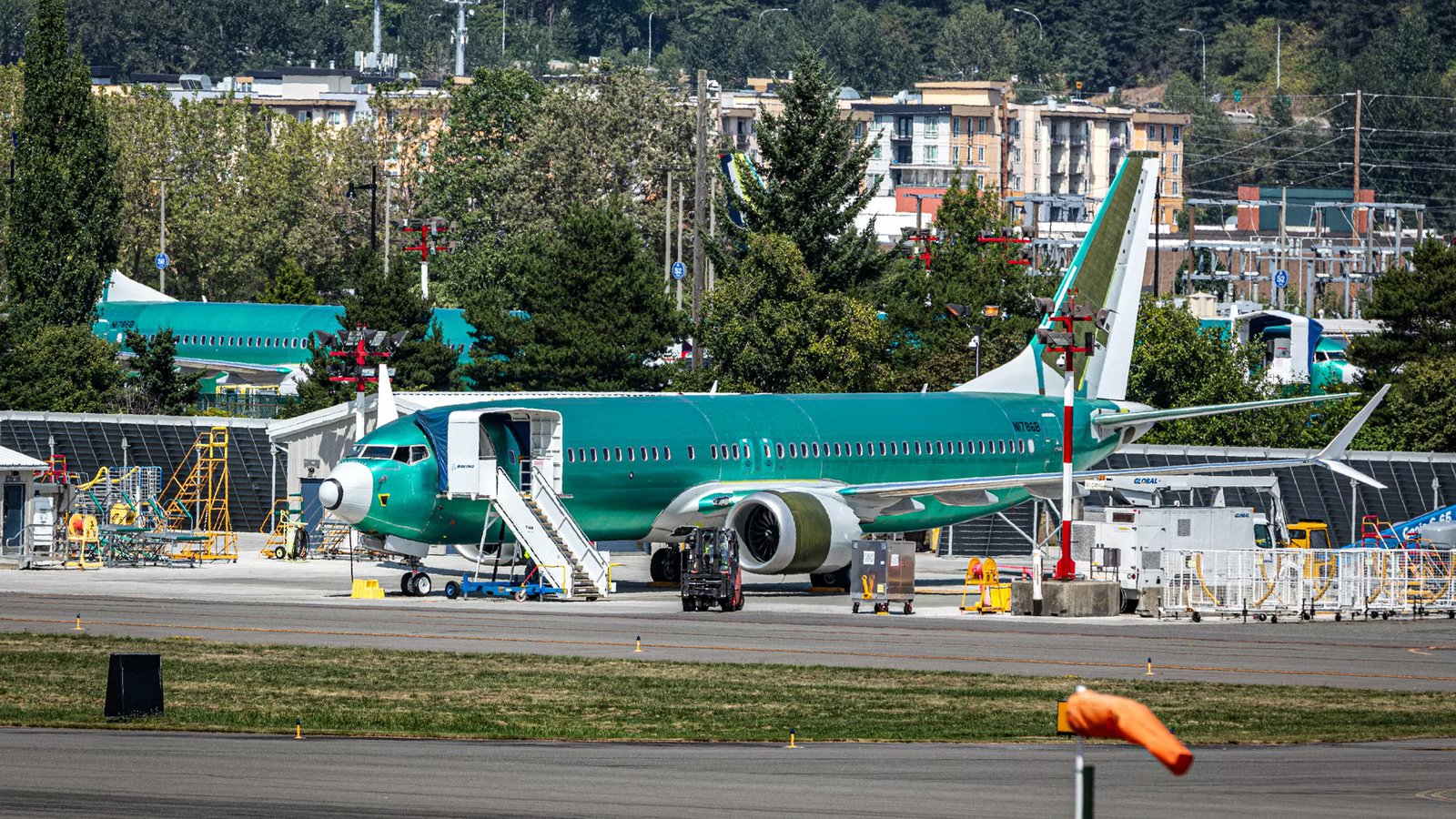
US-based aerospace manufacturer  Boeing is under renewed pressure from investors after a federal judge certified a shareholder class action suit tied to alleged misstatements about the 737 MAX’s safety. The case allows investors who owned Boeing stock between November 7, 2018, and October 18, 2019, to sue as a group.
The argument behind this move is that the company concealed safety deficiencies, rushed development, and misled regulators in an attempt to protect its market share against its principal European rival, Airbus. For Boeing, the ruling matters because it revives one of the most damaging investor narratives surrounding the MAX era, primarily that the safety crisis was not just an engineering failure, but rather a disclosure and governance failure with direct financial consequences for shareholders of all kinds.
An Impending Class-Action Lawsuit

The immediate development in this story is a class-action lawsuit. Judge Franklin Valderrama ruled that Boeing shareholders have shown a common way to measure damages, and, as a result, he has thus allowed the case to proceed collectively rather than through scattered claims by individuals. The certified class covers all shareholders during the period from November 7, 2018, to October 18, 2019, shorter than the plaintiffs had initially wanted. This is not the first lawsuit Boeing has faced in recent years.
Attorneys had attempted to argue that the class should be extended to December 16, 2019, when Boeing suspended MAX production. The judge instead ended the class period when the market learned of 2016 messages from former chief technical pilot Mark Forkner expressing concern that the jet’s automated systems were running rampant. Boeing also faces a separate shareholder class action related to the January 2024  Alaska Airlines MAX 9 blowout.
Shareholders Have A Right To Be Unhappy

Boeing shareholders are undeniably displeased because the MAX saga crystallized nearly every fear that equity investors in the commercial aerospace sector have at any given time. The aircraft, a flagship program, struggled with safety breakdowns, regulatory scrutiny, reputational damage, delivery disruptions, legal liabilities, and weak governance.
In the lawsuit, investors argue that Boeing ignored internal warnings and misled the Federal Aviation Administration (FAA) and the market about the MAX’s safety profile. That matters because shareholders were not merely exposed to an accident cycle but also to the massive and weighty allegation that management failed to tell the market the truth about a core risk of its business.
This extensive frustration is compounded by the fact that Boeing still has not restored its common dividend, which has been suspended since March 2020. Even though Boeing’s 2025 results showed improved deliveries, positive free cash flow, and a record backlog, investors are still dealing with the long-tail of crisis-era decisions and recurring production-quality headlines that keep concerns alive. Boeing is probably a bit too large to face a shareholder activism or hostile takeover situation (as is the case with a company like Southwest Airlines), and that thus leaves lawsuits as one of the best and most effective ways for shareholders to gain any kind of recourse in this situation.

Seeking Justice: Families Of Boeing 737 MAX Crash Victims Speak Out In Latest Hearing
This is the latest in a long line of hearings regarding the deadly accidents
Who Are Boeing’s Largest Shareholders?

Boeing’s largest shareholders are overwhelmingly institutional investors. This is important because the class-action lawsuit is not just a handful of individual retirees holding Boeing shares for decades. The largest individual shareholders, according to the latest SEC filings, include the following, all of whom are likely to be involved in this lawsuit:
Corporation: | Boeing Stake: |
|---|---|
The Vanguard Group | 8.99% |
Fidelity Management & Research | 5.79% |
BlackRock Institutional Trust | 5.02% |
State Street Investment Management | 4.72% |
Something important to note is that the majority of the company’s largest stakeholders are index investors, highlighting that their Boeing stock sits in passive portfolios that hold the company because it is a benchmark index constituent. Alongside them are some active investment managers, including companies like Fidelity, Loomis Sayles, and T. Rowe Price.
Some non-traditional investment managers make the list as well, but it is pretty clear that Boeing stock now (and during the time of the 737 MAX crisis) was mostly controlled by major managers. Boeing thus has struggled to satisfy both long-term passive owners, more focused on governance, and active managers looking for operational recovery and credible execution.