dailynewsnblog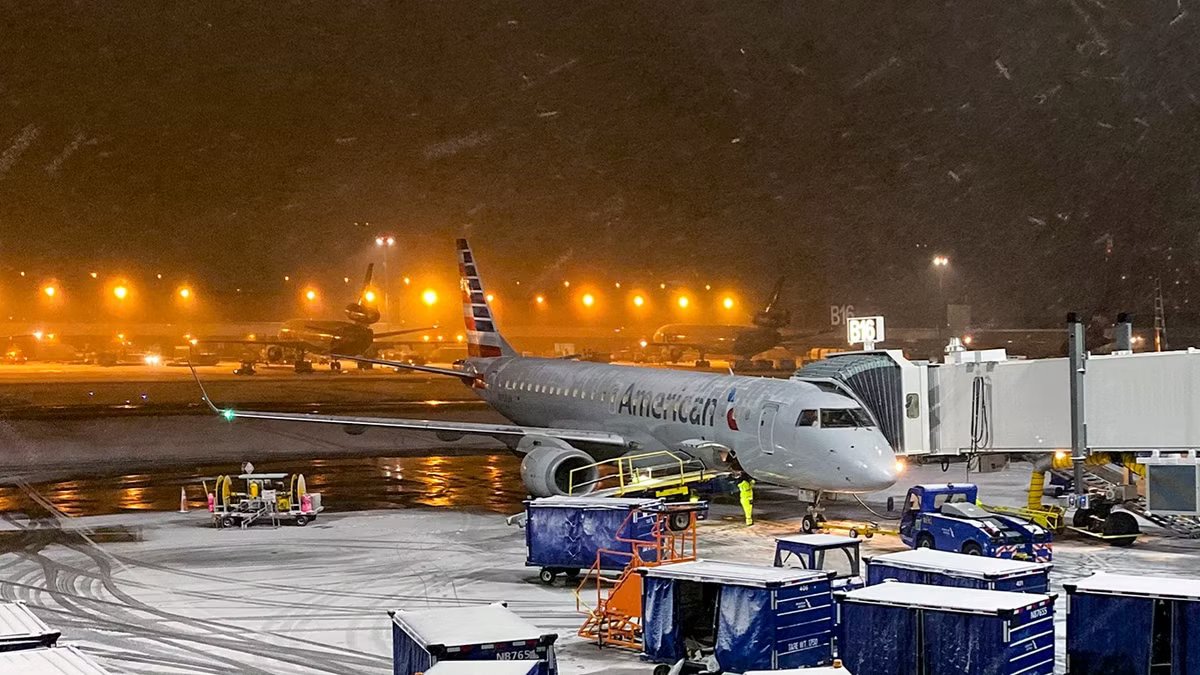
In recent days, multiple bands of adverse weather have caused extensive disruption to commercial aviation operations in the central and eastern parts of the United States. While today’s figures make for more promising reading, the sheer scale of the American airline industry means that there have still been hundreds of delays and cancellations at the country’s major carriers this Tuesday, amounting to thousands of shelved flights in total.
While extreme weather conditions are far from unusual in the early months of the year in this part of the world, the snow and ice in one part of the country have been compounded by thunderstorms in another, bringing further disruption and limiting rebooking options. Let’s take a look at the current disruption picture.
Multiple East Coast Airports Are Sitting At The Top Of The Disruption Charts

According to present tracking data made available by Flight Aware, the US airport that is facing the greatest degree of disruption today is Hartsfield-Jackson Atlanta International Airport (ATL). At the time of writing, the site listed the Georgian hub as having 68 cancellations (6%) and 143 delays (12%) to its outbound flights today, and 130 cancellations (11%) and 114 delays (10%) to its inbound flights. These numbers may yet rise today.
Elsewhere, hubs along the East Coast are among the hardest-hit today, with John F Kennedy International (JFK) and LaGuardia Airport (LGA) in New York City both ranking highly, alongside the likes of Washington National (DCA), Boston (BOS), and Newark (EWR). Delta Air Lines, the main user of Atlanta Airport, also pre-emptively cancelled hundreds of Midwest flights (predominantly in Minneapolis) over the weekend, and it is advising that:
“Delta Air Lines will provide customers with as much notice as possible about changes to flight schedules. When a cancellation occurs, Delta automatically rebooks customers to the next best itinerary.”
Which Airlines Have Been Hit The Hardest?

With Atlanta being the hardest-hit airport today as it stands, it is unsurprising to see that, when it comes to the most disrupted airlines in the United States of America at the time of writing,  Delta Air Lines sits at the top of the pile. As detailed in the table below, it has around four times as many cancellations as each of its ‘big three’ US legacy rivals this Tuesday, although, at least when it comes to the number of delays, there is less disparity.
Disruption At The ‘Big Three’ US Airlines Today (Per Flight Aware) | ||
|---|---|---|
Airline | Cancelations | Delays |
American Airlines | 76 (2%) | 348 (10%) |
Delta Air Lines | 292 (8%) | 376 (11%) |
United Airlines | 71 (2%) | 124 (4%) |
Elsewhere in the US, low-cost airlines have also been hit hard, with data from Flight Aware showing at the time of writing that Spirit Airlines had registered 88 cancellations and 89 departures (17%) apiece. Meanwhile, although Southwest Airlines is in a similar situation, cancellations-wise, with 81 flights having been shelved thus far, its raw number of delayed flights is much higher, at 472. That being said, it only accounts for 11% of its total.
Regional carriers also play a key role in keeping the US moving, and these airlines, too, are facing extensive disruption today. At the time of writing, PSA Airlines had the most cancellations, with 72 (10%), followed by Skywest with 62 (2%), Republic with 28 (2%), Endeavor with 24 (2%), and Envoy with 13 (1%).

Is It True That Snow Can Actually Increase Aircraft Engine Thrust?
What happens when aircraft operate in snowy conditions?
Elsewhere In The US, Thunderstorms Have Also Caused Recent Disruption

As previously mentioned, thunderstorms have compounded the existing disruption caused by the adverse weather in the northern and eastern parts of the United States, leading to airports in the southeastern part of the country also facing severe impacts, as detailed in the map above. This shows Flightradar24’s ‘disruption index,’ whereby yellow airports have “minor problems with some delays or few cancellations” and a score of 2.0-3.4.
Meanwhile, those indicated in red have a disruption index of between 3.5 and the maximum possible 5.0, highlighting “major problems with long delays and several cancelled flights.” At the time of writing, three US hubs had red indicators: Fort Myers (RSW) in Florida, Milwaukee (MKE) in Wisconsin, and Pittsburgh (PIT) in Pennsylvania. For the former of these facilities, thunderstorms will have been the main issue, not ice and snow.