Fed expected to hold rates steady, offer updated outlook amid Iran war


The Federal Reserve is widely expected to keep interest rates unchanged at the end of its two-day policy meeting this week, but markets will be closely watching for signs of how the war in Iran could affect the Fed’s inflation and economic growth outlook.

The recent spike in oil prices, driven by the Middle East conflict, has complicated the Fed’s picture, as inflation remains above the central bank’s 2% target and the labor market slows.

Traders now expect the Fed won’t cut rates until October or December, and the central bank is widely expected to hold rates steady in the 3.5%-3.75% range on Wednesday.

Along with its second policy decision of the year, the Fed will also publish its first Summary of Economic Projections (SEP) for 2026, which will include forecasts from Fed officials on economic growth, inflation, and interest rates for the coming years.

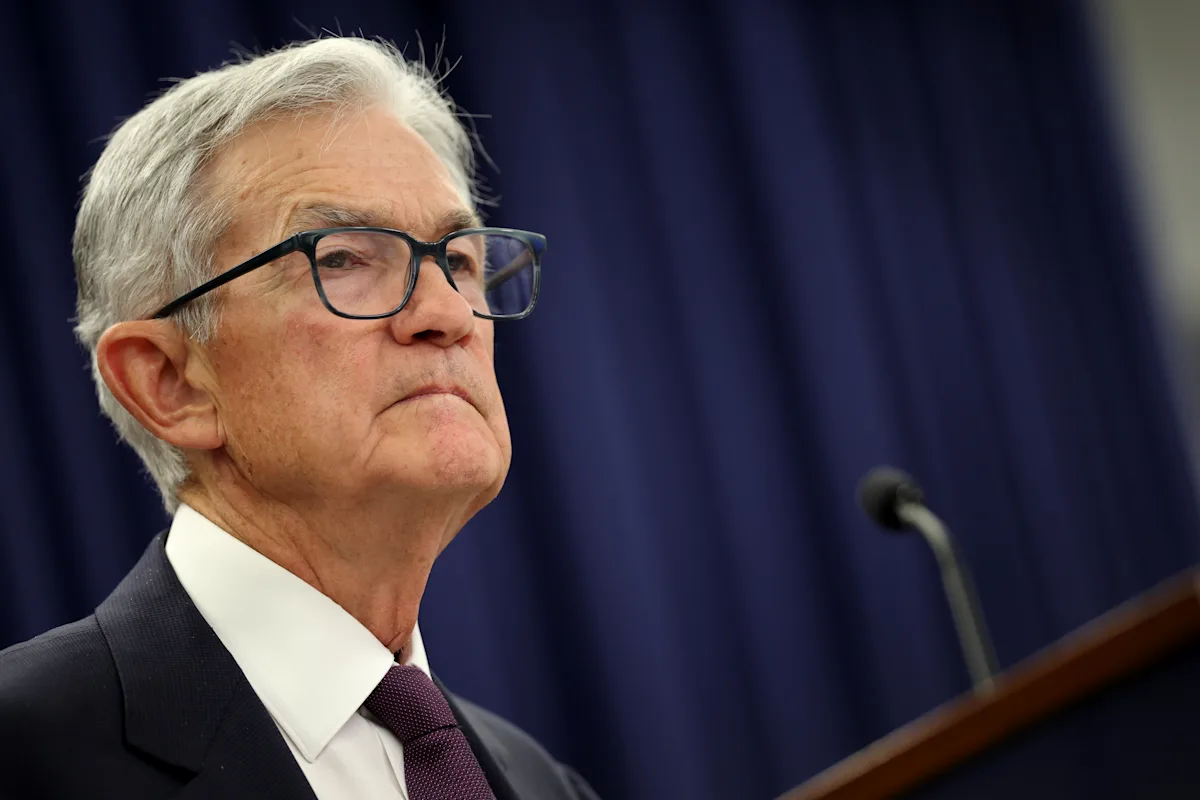
Fed Chair Jerome Powell is expected to underscore that the Fed will remain on hold while it monitors the oil shock during his press conference at 2:30 p.m. ET on Wednesday, one of the last press conferences of his term.

Here are the latest updates and analysis on the Fed’s policy decision.

LIVE 1 update

  • Oil price spike likely to keep rates on hold but deepen divisions among Fed officials this week

    The context for the Federal Reserve’s two-day March policy meeting has changed significantly in the past two weeks, as the war in Iran shows little sign of moderating and oil prices remain around $100 per barrel.

    Although the central bank is expected to stay the course and keep interest rates unchanged in a range of 3.5% to 3.75%, uncertainty around the duration of the conflict has raised questions about the path of policy for the rest of the year.

    As my colleague Jennifer Schonberger notes, the oil shock from the Iran war could deepen divisions within the central bank on the inflation outlook.

    She writes that a few weeks ago, the big debate inside the Fed was how far rates are from neutral — a level on the Fed’s benchmark policy rate designed to neither boost nor slow economic growth. Now the picture is changing and will be defined largely by how long the war in Iran lasts and how long high oil prices linger.

    Officials will release the quarterly “dot plot” — a graph that charts how many interest rate cuts each Fed member sees for this year and next. But economists say they are giving less weight to the projections, given the uncertainty around the duration and impact of the war.

    Read more about what to expect at this March’s Fed meeting here.


Source link

  • Related Posts

    Christopher A. Sims, 83, Dies; Won Nobel for Modeling Economic Policy

    He and Thomas J. Sargent shared the prize in 2011 for devising statistical tools to help guide economic policymakers. Source link

    Why Jensen Huang’s $1T forecast failed to impress

    Spear Invest founder and CIO Ivana Delevska and D.A. Davidson head of technology research Gil Luria speak with Market Catalysts Host Julie Hyman about why Nvidia (NVDA) CEO Jensen Huang’s…

    Leave a Reply

    Your email address will not be published. Required fields are marked *

    You Missed

    How Invisalign Became the World’s Biggest User of 3D Printers

    How Invisalign Became the World’s Biggest User of 3D Printers

    Christopher A. Sims, 83, Dies; Won Nobel for Modeling Economic Policy

    Why Jensen Huang’s $1T forecast failed to impress

    Why Jensen Huang’s $1T forecast failed to impress

    The 1972 movie Sleuth paved the way for future murder mysteries

    Micky van de Ven: Tottenham defender says ‘biggest nonsense’ to claim players do not care about club’s struggles

    Micky van de Ven: Tottenham defender says ‘biggest nonsense’ to claim players do not care about club’s struggles

    ‘Boom’ heard in Ohio, Pennsylvania may have been from meteor, National Weather Service says

    ‘Boom’ heard in Ohio, Pennsylvania may have been from meteor, National Weather Service says