dailynewsnblog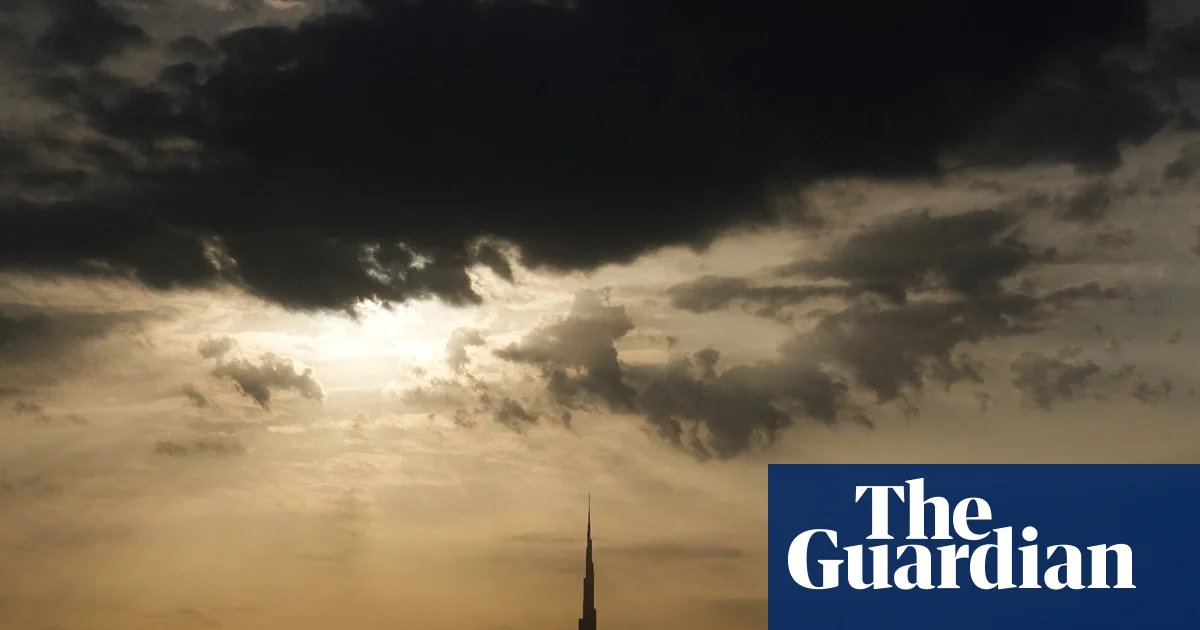
Morning everyone, I’m Patrick Greenfield – you may recognise the name from my environment reporting over the years (or perhaps you read my piece about the possible rebirth of a long-extinct 12ft bird). I’ll be joining you on First Edition for the next few months, where I will inevitably be turning my attention to some rather more worrisome news than the Jurassic Park-adjacent ambitions of a US startup.
On that note: no Gulf state wanted war with Iran. But, as fighting in the Middle East enters its third week, the region finds itself on the frontline of an increasingly intractable conflict. After the US-Israeli attack on Iran in late February, drones and missiles have showered the UAE, Qatar, Kuwait, Bahrain and Saudi Arabia – bringing the region’s oil and gas industries to a near standstill, and prompting an exodus of tourists and expats.
The metropolis of Dubai, less than 100 miles from Iran, has settled into a strange rhythm amid the conflict: with fighter jets in the sky and water skis below, while luxury hotels have become surprising targets for Iranian projectiles. It all raises the question of how parts of the Gulf will be able to maintain the image of quiet luxury and peace – and to what extent that image has been a mirage. For today’s newsletter, I spoke with Hannah Ellis Peterson, the Guardian’s south Asia correspondent, who is covering the war from Dubai.
But first, the headlines.
Five big stories
UK news | Keir Starmer has said the UK will not be drawn into the wider war in the Middle East, after Donald Trump called for allies to send warships to the strait of Hormuz to help unblock global oil supplies from the region. Starmer also announced that households reliant on heating oil to warm their homes would receive £53m of government support to help with their bills.
Health | A sixth-form student at Queen Elizabeth’s grammar school in Faversham has been confirmed as the second person to have died after an outbreak of meningitis in Kent.
Environment | Realtime pollution alerts are urgently needed across Windermere, campaigners have said, as the mother of a seven-year-old boy who kayaked on the lake described how he nearly died after contracting a dangerous strain of E coli from contaminated water.
Media | The BBC has asked a US court to throw out Donald Trump’s $10bn (£7.5bn) lawsuit over the way a documentary edited one of his speeches, warning that proceeding with the case would have a “chilling effect” on its reporting on the president.
Energy | Belgium’s prime minister, Bart De Wever, has been criticised for calling for the normalisation of relations with Russia to re-establish cheap energy supplies.
In depth: ‘The UAE never expected to be on the frontline of this war’
In the days after the conflict began, there was a rush to leave the city after a wave of Iranian attacks. Dubai’s pet shelters became overwhelmed with dogs and cats left behind by expats, while those that remain have been caught up in a crackdown from authorities for sharing videos of the conflict.
A 60-year-old British man was among 20 people charged in connection with filming and posting material related to Iranian attacks, alleged to have broken the UAE’s strict cybercrime laws that prohibits sharing material that could disturb public security.
Tehran, meanwhile, continues to insist that it is not targeting the UAE.
“That is clearly ridiculous”, Hannah Ellis Peterson tells me.
“The UAE never expected to be on the frontline of this war – particularly Dubai, a place that has worked very hard to build itself up as a safe haven of tourism. Like other Gulf states, the UAE was pushing very hard for this war not to happen. I don’t think they thought they would be the ones that Iran would hit as hard as they have,” Hannah says.
The longer the conflict extends, the worse things will be
It’s not just the mirage of quiet luxury that’s been perforated by drone strikes. Over decades, Gulf states have built strong security alliances with the US, hosting a network of military bases across the Persian gulf that house roughly 40,000 American troops.
In Qatar, a state that has perhaps gone further than any other to cozy up to president Trump by handing his administration a $200m jet that could become the new Air Force One, all liquefied natural gas production remains suspended. The strait of Hormuz, a crucial bottleneck through which the Gulf’s oil, gas and fertiliser must pass to reach markets in the rest of the world, remains almost entirely impassible for fear of Iranian attack.
As Gulf states spend billions intercepting Iranian missiles and drones, there are growing questions about wisdom of the partnerships that have made them targets for Iranian attacks – and thrown their countries into crisis. With many Gulf countries reliant on the export of oil, they also find themselves bleeding cash at a very expensive time.
“They can sustain it for another week or two. But the worst case scenario is that it keeps dragging on,” says Hannah. The longer the conflict extends, the more questions will arise about relations between the gulf states and Iran once it ends.
“In the longer term, the Iranian regime remaining in place is part of the worst case scenario: weakened, angry, volatile – it would be a far more difficult country for Gulf states to deal with than before this war,” says Hannah.
Hard questions
The fighting has also raised hard questions for the region about its security partnerships with America and the clear danger that hosting a US base can bring.
Gulf states need the protection of a superpower like the US and cannot afford to publicly criticise them, says Hannah, pointing out that many will soon need more weapons from the US to defend themselves.
“There is no alternative for these countries in terms of a replacement big super power defender. They are small states with hostile enemies around them,” she says. And yet, the widening conflict is starting to show the cracks in the armour of this arrangement.
“The idea is that if they have these US bases, the US will come to the defence of Gulf states if they are attacked by Iran or anyone else. But that is increasingly coming into question. Look at Qatar. It was bombed by Israel in September, actually attacked by a hostile state. Similarly, Saudi has come under attack. America has done nothing. So, the idea that these bases operated as a form of protection for Gulf states is increasingly becoming undermined,” she says.
A safe haven, disrupted
In the midst all of this, Hannah warns that media coverage has depicted a one dimensional image of the type of people affected across the UAE.
The initial flurry of coverage focusing on influencers leaving Dubai has given a distorted image of those who call the city home, says Hannah. Hundreds of thousands of migrant workers from India and Nepal cannot leave, regardless of what happens with the fighting, as they cannot afford tickets home or often have coercive work contracts. Dubai has also become home for refugees from Syria and Afghanistan that were not welcome in the West.
“Lots of rich people come to have a nice life and not pay any taxes and make lots of videos about it, but they are not the only people that live in Dubai,” she says. “The city is also seen as a safe haven for those driven from other places in the Middle East – this conflict is not going to send them away.”
What else we’ve been reading
For a few blissful minutes, Diane Taylor’s piece about the Dorset community that rallied around asylum seekers living on the Bibby Stockholm barge, restored my faith in humanity. Lucinda Everett, newsletters team
Rich Pelley writes expertly about how developments in the world of gaming have sparked new fears over lab-grown humans, driven by US scientists uploading a copy of the brain of a living fly into a simulation. Patrick
Ashifa Kassam writes about a brilliantly absurdist video, released by the Norwegian Consumer Council as part of a global campaign to fight back against the “enshittification”, or gradual deterioration, of digital products and services. Lucinda
Finally, as a whale-lover, I was moved by the oldest known recording of a humpback whale. It was made in 1949. Take a listen for yourself and read about how scientists are using it. Patrick
Gwilym Mumford is on typically entertaining form as he unpacks how Timothée Chalamet blew his chance at an Oscar with a campaign that led some to feel he was “more like his smirking, fame-hungry character than they first imagined”. Lucinda
Sport
Football | Brentford took a 2-0 first-half lead but Adam Armstrong and Tolu Arokodare led Wolves’ fightback to earn a 2-2 draw.
Football | Chelsea have been handed a record £10.75m fine, given a suspended ban from signing first-team players and an immediate nine-month academy transfer ban by the Premier League over breaches of financial rules during Roman Abramovich’s ownership, however they avoided a points deduction for their offences.
Formula One | Toto Wolff has dismissed criticism of the new Formula One regulations from Max Verstappen as a result of the “horror show” Red Bull car the four-time champion is having to drive. “From an entertainment perspective, I believe what we’ve seen between Ferrari and Mercedes was good racing, many overtakes,” said Wolff, whose Mercedes team have secured first and second in the first two races of the season.
The front pages
“PM vows UK will resist US pressure to join Iran war,” is the splash on the Guardian today. “Trump turns fire back on Starmer,” says the Times. “UK in talks on Royal Navy role in Gulf to end oil blockade,” says the i. “Donald’s Trumped,” quips the Metro. “Rayner charm offensive seeks to lay investor worries to rest,” has the FT.
“Race to stop meningitis spreading nationwide,” says the Telegraph. “Thousands told: Get help now for meningitis risk,” is the lead story at the Mail. “Terror on Campus,” has the Mirror. “Vapes ‘spread killer bug’” has the Sun. “We are beyond devastated,” says the Star. Finally the Express with: “Stop ‘pointing the finger at Brexit’ and fix economy.”
Today in Focus
Will the strait of Hormuz torpedo Trump’s war?
The strait of Hormuz, a narrow stretch of water at the mouth of the Gulf, is the world’s petrol pump, a geographical bottleneck through which 20% of the world’s oil normally flows. With war in Iran, events in the narrow waterway are causing chaos around the globe. Jillian Ambrose explains why.
Cartoon of the day | Ben Jennings
The Upside
A bit of good news to remind you that the world’s not all bad
In 2011, Mel Bradman was “living in a state of high anxiety” thanks to stresses at work and in her personal life.
“My regular coping tools […] weren’t helping,” she says. Then her therapist suggested she ban herself from worrying from 6.30pm every evening until the following morning.
Initially, Mel only managed to avoid her worries until 8pm but eventually she extended ‘No Worry Time’ until the next morning, and something clicked. “I was feeling lighter, no longer bobbing up and down in a sea of anxiety,” she says. 18 months later she felt ready to leave therapy.
“Last year, I saw a sign in a bar that read ‘No worry zone,” says Mel. “I loved it. It was a reminder that […] you don’t have to be held hostage by anxiety.”
Sign up here for a weekly roundup of The Upside, sent to you every Sunday
Bored at work?
And finally, the Guardian’s puzzles are here to keep you entertained throughout the day. Until tomorrow.