dailynewsnblog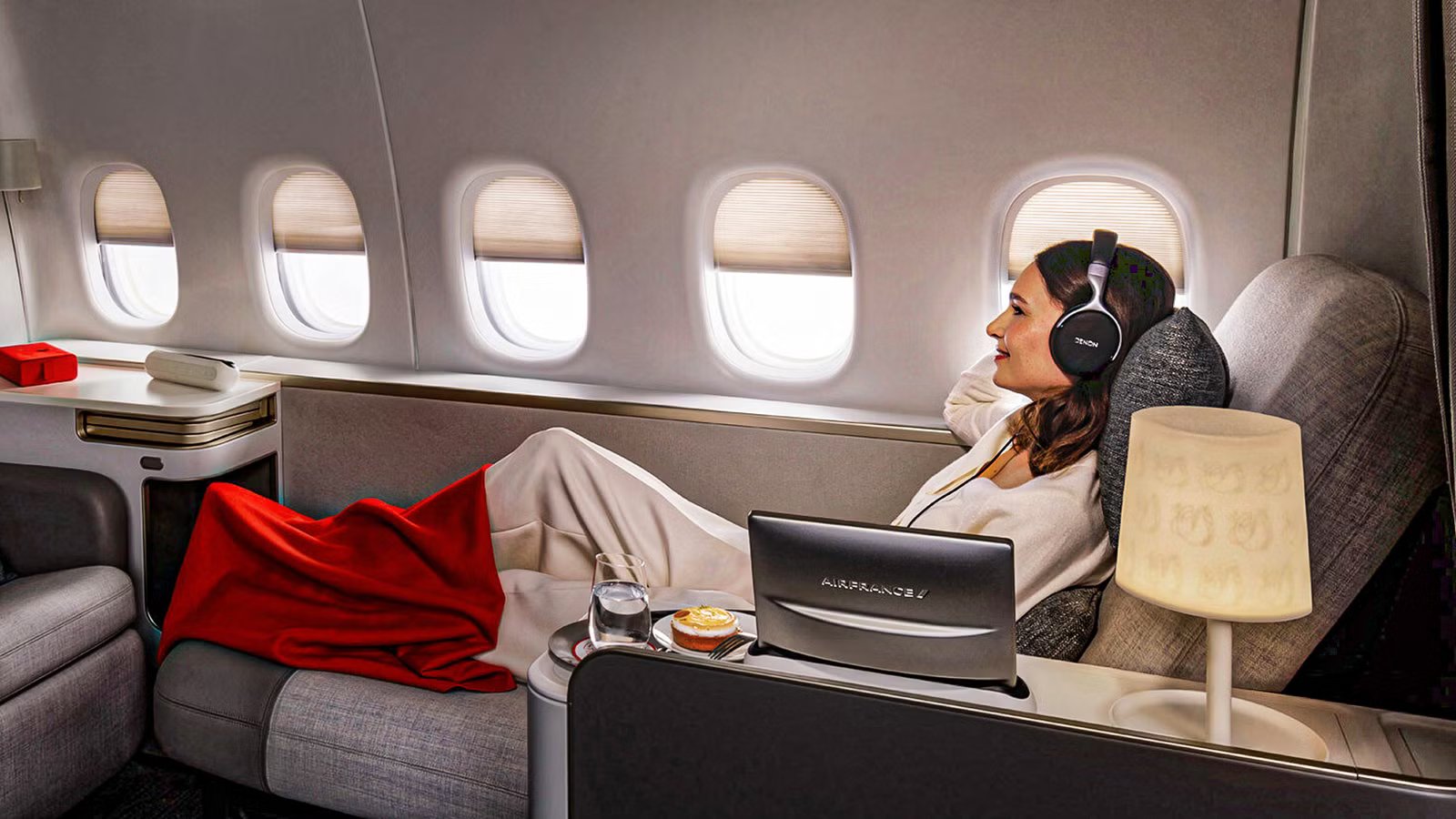
As of 2026, the world’s best first-class cabins are no longer defined only by champagne, caviar, and polished service. Rather, the new benchmark is technology, as suites feel more like private hotel rooms, with floor-to-ceiling doors, personalized climate and lighting controls, wireless device integration, giant 4K entertainment screens, app-linked content, and cabin layouts designed to maximize privacy, sleep, and overall flexibility. Airlines such as Emirates, Japan Airlines,  Singapore Airlines, and Air France are turning first class into a rolling showcase for aviation innovation, as they use design and digital features to justify higher fares and differentiate themselves in an increasingly premium-focused long-haul market.
That is ultimately what makes today’s top-end cabins so fascinating. They are not just luxurious in nature, but they are engineered experiences. Emirates’ fully enclosed suites emphasize personalization and overall privacy, all while Japan Airlines’ new Airbus A350-1000 first class pushes technology forward with a large 4K display, built-in headrest speakers, improved Bluetooth connectivity, wireless charging, and WiFi. Singapore Airlines continues to stand out with Suites that combine a separate seat and bed, alongside the option of a double suite for couples. Air France aims to redefine elegance with its new La Première suite, which will be rolled out across its network throughout 2026. We analyze which airlines now offer the most high-tech first-class suites in the sky, and why the battle for ultra-premium passengers has become as much about smart design as old-school glamour.
What Role Do First Class Cabins Play In The Market Today?

A modern first-class cabin plays a role that is far bigger than the number of seats it may contain. In terms of pure volume, premium travel accounts for a relatively small slice of the market. International organizations have indicated that premium-class passengers, which encompass both first-class and business-class travelers, account for more than 100 million passengers annually, or approximately 6% of all international travelers. But those passengers undoubtedly matter disproportionately because they generate outsized revenue, strengthen airline loyalty, and help carriers protect yields even when the broader market may actually begin to weaken.
In 2025, it became clear that premium seat growth had outpaced main-cabin sales growth, indicating that airline executives needed to start viewing premium cabins as a key component in generating profit growth. In that environment, first class will function as the absolute top of an overall brand pyramid, something not even many carriers think they need today. This makes first class a halo product that signals prestige, helps an airline stand out on flagship long-haul routes, and gives wealthy travelers a reason to choose commercial aviation over a business jet or a rival carrier.
 Air France started arguing in 2025 that its La Premiere product was already profitable, all while using it to target affluent leisure travelers and premium customers whose principal alternative was private aviation. Thus, even when first class is tiny, operationally complex, and limited to just a few routes, it still matters as a marketing tool, a pricing anchor, and a statement of overall competitive ambition.
How Has This Changed Over The Past Two Decades?

Over the past two decades, first class has progressively shifted from being the obvious pinnacle of long-haul travel to becoming a rarer, more strategic niche overall product. In the 2000s, first class was still a relatively conventional market of status on many intercontinental routes, all while business class, though premium, was less private and less technologically advanced than most products you might buy a ticket for today.
As business class improved with lie-flat beds, direct aisle access, enhanced privacy doors, and improved dining and overall ground service, the gap between business and first class began to narrow sharply.  American Airlines made that logic explicit when it decided to remove long-haul international first-class service and replace it with more closed-door business suites, arguing that customers were not purchasing first-class seats in sufficient numbers and that business class had improved dramatically.
That change is very emblematic of the broader market trend as a whole. Today, airlines are increasingly targeting a wider premium segment rather than just a small first-class elite. Analysts have indicated that premium strategies have become central to airline profitability, with Delta and United both highlighting strong growth in premium revenue. As a result, first class in 2026 is less of a standard premium cabin and a more carefully curated flagship experience reserved for a handful of carriers, selected routes, and brand-defining aircraft.

American Airlines’ Newest Admirals Club To Feature Its First-Ever Outdoor Terrace
A closer look at the groundbreaking new lounge.
A Look At Etihad’s First-Class Product

Etihad Airways’ first class product remains one of the most distinctive in commercial aviation because it is built around space rather than just seat comfort. When it comes to the Airbus A380, the core product is the First Apartment, which gives each passenger a private suite with doors, a separate bench that folds out into a fully flat bed, touchscreen controls, USB charging, turndown service, premium bedding, dine-on-demand service, and complimentary WiFi.
This design still feels relatively unusual even in today’s market landscape because it is not trying to imitate business class with a nicer chair. Rather, it is trying to create a personal room with enough space to move, work, lounge, and sleep in different modes. What makes Etihad especially interesting, however, is that even this impressive first-class suite exists in the shadow of something more extreme, and that thing is the Residence.
That is the official name of a product that sits above standard first class as a genuine three-room suite on the Airbus A380 with a separate living area, private bedroom, ensuite shower room, space for up to two guests, chauffeur service, and concierge-style support. When discussing Etihad’s first class, it is not possible to acknowledge its flagship offer effectively, splitting the category into two. The First Apartment is already elite first class, but the Residence is a quasi-private-jet concept layered on top of it. All of this makes the airline among the world’s most exposed to global trends in premium travel.
What About Air France’s La Premiere?

French flag carrier Air France offers one of the clearest examples of a first-class product that tries hard to blend old-world prestige with genuinely modern cabin design. The newest suite, now rolling out on selected Boeing 777-300ERs, is built around a flexible layout rather than a single seat. Each suite combines a large armchair with a chaise lounger that converts into a fully flat two-meter bed, giving passengers distinct spaces for dining, relaxing, and sleeping.
The side suites stretch across five windows, while the center pair can be linked by an electric sliding partition, and each suite is designed to offer an industry-leading amount of personal space, offering roughly 25% more than the previous cabin. What makes La Premiere especially relevant to our analysis of high-tech capabilities is the digital layer built into this elegant shell.
Massive 4K screens, Bluetooth audio pairing, wireless charging, USB-A, and USB-C ports, alongside power outlets, free WiFi, and a wireless tablet that controls seating positions, lighting, entertainment, and window shades, all make the cabin exceptionally advanced. The cabin feels unmistakably French, as it is polished, restrained, highly private, and built to make first class feel more ceremonial rather than just luxurious.

7 Most Affordable Premium Economy Cabins You Can Book Today
Discover 7 affordable premium economy cabins offering extra space, better dining, and strong value without business class prices.
We Can’t Forget To Mention Emirates

Emirates first class remains one of aviation’s benchmark products because it offers two distinct flagship experiences. On selected Boeing 777s, the Game Changer suite is the more overtly high-tech option, featuring a fully enclosed floor-to-ceiling suite with virtual windows in the middle seats, mood lighting, personal temperature controls, and a design inspired in part by Mercedes-Benz interiors.
It feels much less like a traditional airline seat and more like a compact private room. On the Airbus A380, Emirates first class is slightly less futuristic in layout but arguably more theatrical, primarily thanks to its private suites, shower spa, and access to the onboard bar, which is shared with business class.
That combination gives Emirates a high-tech, cutting-edge product that combines privacy and old-school charm at the same time. This makes the product both luxurious and not too old-fashioned. Emirates makes sure to keep its comforts up to date so that no modern traveler feels like they are in an outdated seat.
What Is Our Bottom Line?

At the end of the day, first-class products in the market are not always differentiated exclusively by the lavishness of their products. Seat comfort is obviously critically important, as it is a key reason why some will choose to book first class over business class or a private jet, especially when it comes to overnight flights.
These kinds of seats offer additional comfort, but what really sets them apart from business class are all the bells and whistles that come along with the seat itself. This means that seats are increasingly being judged by factors like the technological advancement of their screens and seat controls.
It is for this reason that carriers with a first-class cabin have put an immense amount of effort into ensuring that these products are as well-equipped as possible. Passengers who are spending thousands of dollars on a flight will want all lights to turn on at the touch of a button, the same way they want electronic screens to react very quickly when touched.