dailynewsnblog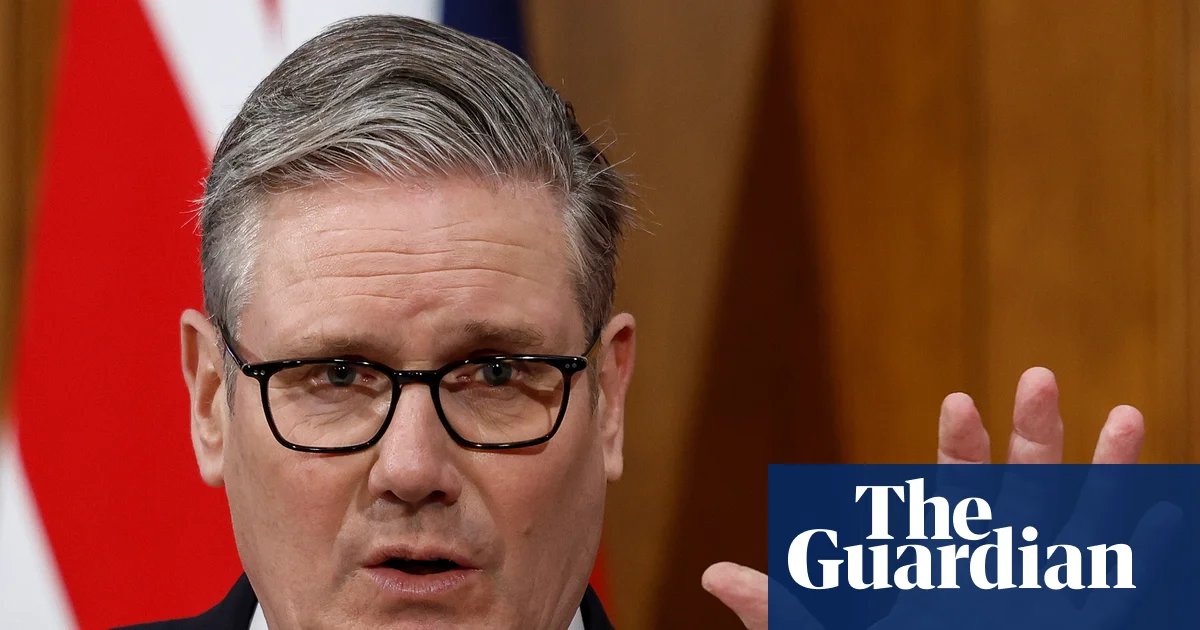
The UK will not be drawn into the wider war in the Middle East, Keir Starmer has said, as he announced that households reliant on heating oil to warm their homes would receive £53m of government support to help with their bills.
After costs surged following the outbreak of the Iran conflict, lower-income households will get targeted support, while heating oil suppliers engaged in price gouging will face legal action and future market regulation, he warned.
The prime minister said he was not ruling out government support for energy bills more broadly if costs had risen when the cap came to an end this summer – but suggested it was difficult to predict where oil prices would be and that de-escalating the conflict should be the priority.
Donald Trump has called for allies to send military ships to the strait of Hormuz to help reopen shipping lanes and unblock global oil supplies – but the response so far has been muted.
At a Downing Street press conference, Starmer told reporters he was “looking through the options”, but acknowledged the decision was “difficult, there’s no hiding that”.
The prime minister said the UK, which is considering sending ships and mine-hunting drones to the Middle East, was working with allies on a “viable plan” to reopen shipping lanes. Otherwise energy prices would remain high.
“It’s a discussion; we’re not at the point of decisions yet. It’s obviously a difficult question, that goes without saying, in relation to how you safeguard maritime traffic … But we are discussing that with the US, with Gulf partners and with Europeans,” he said.
He said that while the UK would take “necessary action” to defend itself and allies “we will not be drawn into the wider war”, as concern mounts at home over the prospect of a drawn-out conflict.
“I want to see an end to this war as quickly as possible, because the longer it goes on, the more dangerous the situation becomes, and the worse it is for the cost of living back here at home,” he said.
Ministers have been alarmed by the apparent lack of a plan from the US president for ending the conflict, but Starmer said the UK “must not lose sight” of the fact there would ultimately have to be a negotiated settlement.
The prime minister has come under pressure to do more to help people at home who are worried about the cost of energy bills when the current energy price cap finishes at the end of June, with the new level to be announced in May.
Gas and electricity bills are expected to rise sharply when the cap ends, and if the conflict in Iran is prolonged they could rise even further. Starmer said his “instinct” was to help people struggling with the cost of living.
But he added: “I’m not going to stand here and pretend to you that we all know what the situation will be in three or six months’ time, we don’t. The best way though to do this is to de-escalate and reduce the conflict, because that is the most effective way to deal with the cost of living.”
The prime minister underlined his commitment to investing in renewable energy, to give the UK more control over its own supply.
“We should go further and faster in relation to renewables. Let’s get control of our own energy, so that whatever is happening the world, we control what’s happening in this country,” he said.
“I think for many people that say: ‘By whatever means you do it, get control of energy, so I don’t have to keep worrying that my bills are going to go up and down,’ I want to get to that place as quickly as possible.”