dailynewsnblog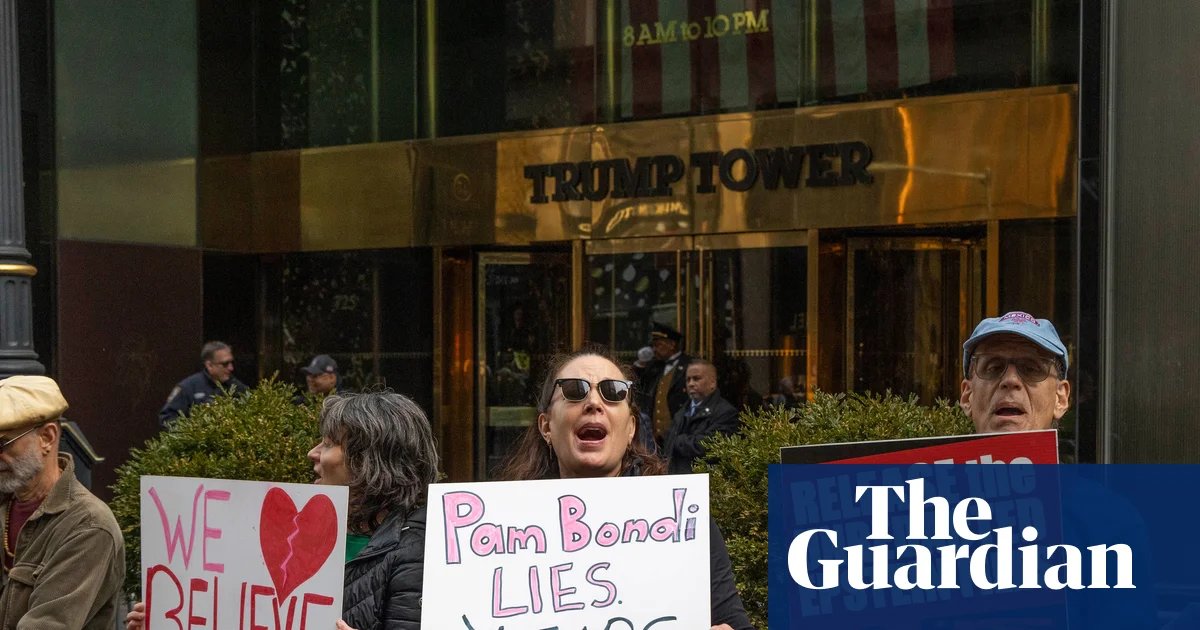
As the US woke to news that Donald Trump had bombed Iran, domestic discord was fast simmering.
There was unrelenting outrage over ICE raids. There was frustration with the rising cost of living. There was fear over rocketing healthcare prices, mounting household debt, not to mention many Americans’ nagging sense of desperation in a country, some warned, where democracy itself was under threat.
And then there was Jeffrey Epstein.
During his third presidential run, Trump promised to release investigative files involving someone Trump had once called a “terrific guy”. This pledge served as ideological catnip to the far-right flank of Trump’s base, many of whom believe that a cabal of elite figures participated in Epstein’s trafficking of teenage girls.
Trump’s administration botched the initial release, however, with his justice department disseminating documents in dribs and drabs before announcing in July that there would be no more disclosures – spurring backlash among longtime supporters. In a rare display of bipartisanship, members of Congress took matters into their own hands, conducting their own investigations and passing the Epstein Files Transparency Act in November.
Trump, despite repeatedly calling the Epstein files a “hoax”, signed the bill into law. His justice department had 30 days to disclose publicly all Epstein files, with rare exceptions.
Trump’s DoJ did not meet Congress’s deadline, disseminating one tranche at the 30-day mark and several others days and weeks later – including a 3 million document disclosure on 30 January – prompting still more ire from opponents and some diehard supporters who believe more files remain.
But now US headlines are dominated by the US-Israel attack on Iran – and the economic and diplomatic chaos it has unleashed. Yet advocates and observers say that Epstein-related outrage is still unlikely to die down.
Gretchen Carlson and Julie Roginsky, who pursued sexual harassment claims against former Fox News chief executive Roger Ailes and started the non-profit Lift Our Voices, told the Guardian that the Iran war can draw attention from the Epstein files – but not in perpetuity.
“We all know that the Trump administration is very good at flooding the news market with a lot of different stories every single day, and so it’s very difficult in the news media to keep up with all of them and give them what they all deserve, as far as time [is concerned],” Carlson said.
“The way the news media works, especially on 24/7 cable news, is that you are covering the biggest story of the moment. Right now that appears to be Iran.”
Carlson said she is still seeing Epstein stories – including news that authorities never searched his New Mexico ranch – and said conservative figures’ opposition to the war portends prolonged attention over Epstein.
“Influencers, especially on the right, criticize the Iranian war and the reasons that the United States got involved,” Carlson said. “I believe that will bring us right back to Epstein.”
Roginsky pointed to the US military’s capture of Venezuelan president Nicolás Maduro and his wife Cilia Flores earlier this year. Maduro and Flores were brought to the US to face drug and weapons charges; both pleaded not guilty.
“When the Epstein story was kicking back up again, we had the Venezuela [action] in early January, and still that did not take Epstein off of people’s minds,” Roginsky said. “Although it flooded the news cycle for a couple of days to talk about Venezuela, this is really going to continue for the foreseeable future.”
She added: “There are people in the president’s own base who demand answers. There are people in the president’s own base who are disgusted by the war in Iran, so he will have to contend with that as well. And ultimately, there are stories that are coming out on the Epstein matter that are so close to the president that they will break through.”
Carlson credits the media for continuing to investigate Epstein.
“One of the reasons this story remains a throughline is that they continue to go through all of those documents that have been released by the DoJ,” Carlson said. “If it wasn’t for these intrepid reporters sifting through millions of documents and coming up with all of these new angles that the American public has not heard of yet, I believe that the story maybe wouldn’t still be simmering.”
Ann Olivarius, an attorney who represents sexual abuse survivors and the founder of law firm McAllister Olivarius, said the war was a distraction and would remain so – but that would not end controversy over Epstein.
“The public and the media remain interested in Epstein and what Trump did with him, and what Trump is now doing to cover it up,” Olivarius said.
Trump maintains his relationship with Epstein ended before Epstein’s 2008 plea to state-level prostitution charges in Florida. Trump has denied all wrongdoing in relation to the late sex trafficker and all other matters.
“The files keep providing new material to rekindle attention, and the war will not extinguish this,” she said. “The floodlight of attention will swing back in due course.”
Olivarius noted that more information keeps emerging, which encourages still more interest – and suspicion of wrongdoing.
“Trump campaigned on releasing the files. So did his attorney general and FBI director. Yet we’ve spent the last year watching the DoJ drag its feet, holding back millions of pages and redacting names that would provide accountability,” she said. “This behavior has united left and right into thinking a cover-up is serious and ongoing. Trump is a genius with distractions, but the Trump-Epstein files are a gift that will keep on giving.”
There is also the fact that a majority of registered voters opposes Trump’s war.
“When national security is on the table, the rights of the women and girls Epstein trafficked can more easily be sacrificed for the sake of unity,” Olivarius said. “But the war started out being unpopular and is getting more so, so appeals to patriotism to squelch criticism are unlikely to resonate widely.”
Carl Tobias, the Williams chair in law at the University of Richmond School of Law, said the Iran war might briefly take away public and political attention from Epstein. So many people are demanding answers, however, that Epstein-related controversy will not go away.
“The persistence of a dedicated group of people and entities as disparate as Marjorie Taylor Greene and Gretchen Carlson, abused women survivors of Epstein’s venal behavior, and Congress members, such as Ro Khanna and Thomas Massie, who ably forged legislation that forced [the] release of the Epstein files, notwithstanding the Department of Justice’s unclear treatment of the files,” Tobias said, “shows that the anti-Epstein coalition will weather any distraction that the Iran war creates and forge ahead to impose responsibility on Epstein and his enablers for their odious conduct.”
Indeed, Massie, the Kentucky Republican who co-sponsored the Epstein Act with California Democrat Khanna, does not seem dissuaded by the war in his fight for transparency.
“PSA: bombing a country on the other side of the globe won’t make the Epstein files go away, any more than the Dow going above 50,000 will,” Massie said in a 1 March post on X, the social media platform previously known as Twitter.
Massie also called for additional investigations, referencing authorities’ decision to stop investigating Epstein’s ranch in 2019.
“Investigate Zorro Ranch, as well as the men and women at DoJ and FBI who shut this part of the Epstein investigation down,” Massie said. “Also, the Epstein Files Transparency Act requires DoJ to release memos and emails detailing their decisions of whether to investigate and/or prosecute.”
Khanna insisted that the bipartisan push for accountability would not stop.
“Trump wants Americans to ‘move on’ from the Epstein files. But the public will not move on,” Khanna said in a statement to the Guardian. “The survivors, the American people, and leaders in both parties want to see accountability for the Epstein class. This is about rebuilding public trust and justice for the survivors.”
Asked for comment on suggestions that the Iran war was meant as a distraction, a White House spokesperson said: “This is such a ridiculous take that it could only be concocted by true morons, such as Thomas Massie and ‘reporters’ at the Guardian.”