dailynewsnblog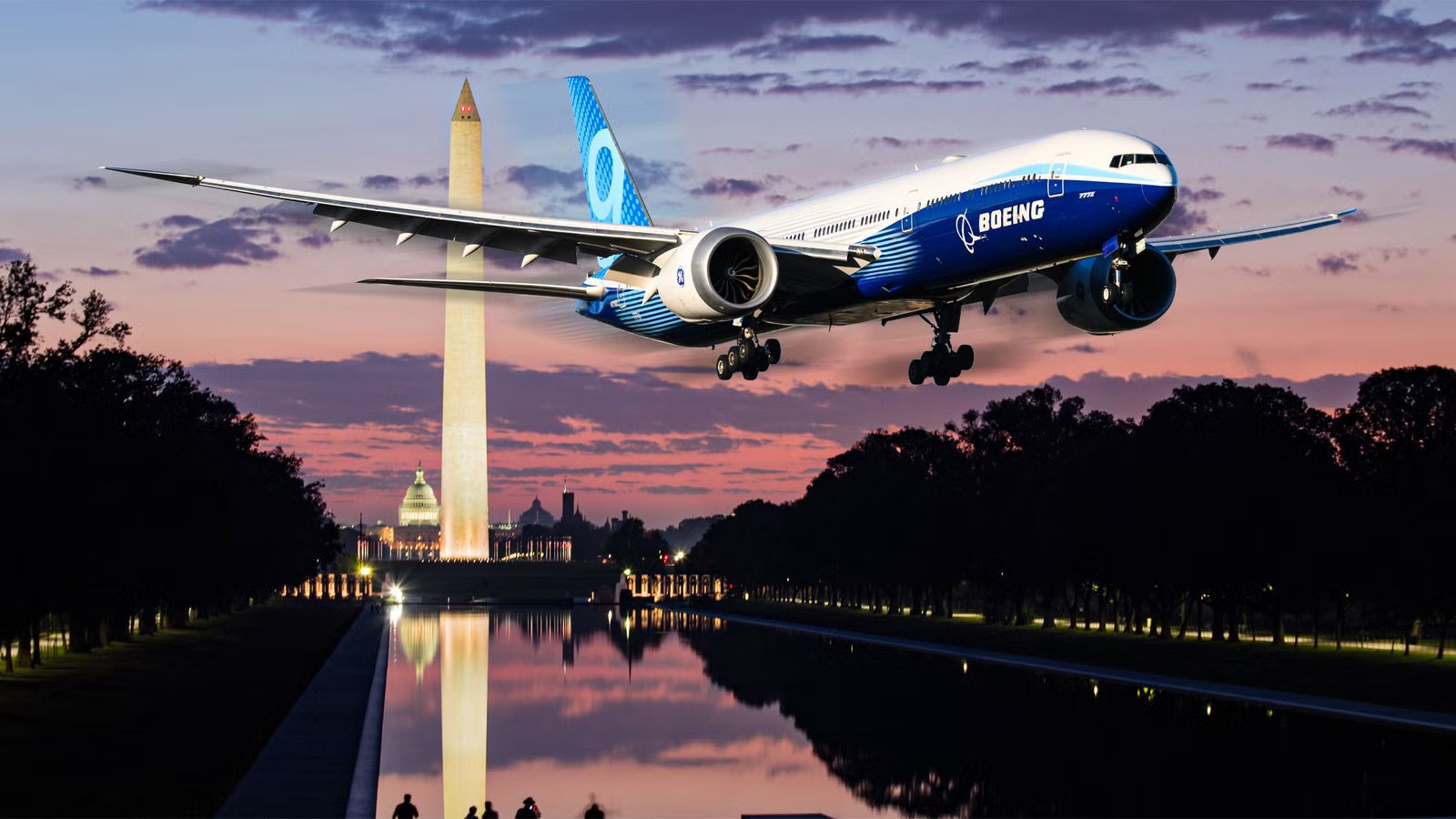
For  Boeing, the next few years will be defined by whether it can successfully bring a number of critical aircraft programs across the certification finish line. While narrowbody aircraft like the Boeing 737 MAX 7 and the Boeing 737 MAX 10 are also awaiting regulatory approval, the long-delayed 777X has become one of the most closely watched programs in commercial aviation. After more than a decade of development, the aircraft is still in testing, and every new technical issue raises questions about when it will finally enter service.
The concern extends well beyond Boeing itself, and the US aviation sector, regulators, and airline customers all have a stake in ensuring the program moves forward smoothly. But with stricter certification rules, ongoing technical fixes, and a backlog of regulatory work, industry observers increasingly worry that bottlenecks in the approval process could keep the aircraft grounded longer than expected. Let’s take a closer look…
All About The Boeing 777X

The Boeing 777X is the latest evolution of Boeing’s long-running 777 widebody family and is designed to be the largest and most efficient twin-engine aircraft ever built. The program consists primarily of two passenger variants, the 777-8 and the larger 777-9, along with a freighter version known as the 777-8F. The aircraft builds on the success of earlier 777 models while incorporating new technologies drawn from the Boeing 787.
One of the most striking design features is the aircraft’s composite wing, which is significantly longer than that of previous Boeing 777 variants. To ensure compatibility with existing airport gates, the US manufacturer added folding wingtips, allowing the wingspan to be reduced on the ground. The aircraft also uses General Electric GE9X engines, which are the largest commercial aircraft engines ever developed and were specifically designed for the program. These engines promise significant improvements in fuel efficiency and operating costs compared with older widebody aircraft.
Inside the cabin, Boeing has incorporated features inspired by the 787, including larger windows, improved humidity, and redesigned lighting. Airlines are expected to use the aircraft primarily on high-capacity long-haul routes where efficiency and range are critical.
However, the road to entry into service has been far from smooth. The aircraft first flew in January 2020, several years after the original schedule, and since then, the program has faced multiple setbacks, including technical issues, testing pauses, and regulatory scrutiny. What was once expected to enter commercial service in 2020 has been repeatedly pushed back. Today, the most likely scenario is that the aircraft will enter commercial service in 2027, around seven years later than initially planned.
So far, the 777X program has attracted several hundred orders from airlines around the world, reflecting strong long-term demand for large, efficient widebody aircraft. The US manufacturer has taken orders for more than 600 777X aircraft from more than a dozen customers, although the exact number fluctuates slightly as airlines adjust their commitments.
The largest airline customer is  Emirates, which has ordered 270 aircraft, making it by far the biggest supporter of the program. This is perhaps unsurprising, given that the carrier, based at
  Dubai International Airport (DXB), is already the world’s largest operator of the aircraft’s predecessor, the Boeing 777-300ER. Other major buyers include
  Qatar Airways, Lufthansa, Cathay Pacific, Singapore Airlines, All Nippon Airways, British Airways, and Air India. The table below shows the largest Boeing 777X orders so far:
Ranking | Airline | Boeing 777-8 | Boeing 777-9 | Boeing 777-8F | Total |
|---|---|---|---|---|---|
1 | Emirates | 35 | 235 | – | 270 |
2 | Qatar Airways | – | 90 | 34 | 124 |
3 | Cathay Pacific | – | 35 | – | 35 |
4 | Singapore Airlines | – | 31 | – | 31 |
5 | Lufthansa | – | 20 | 7 | 27 |

How Many 777Xs Has Boeing Already Started Building?
Boeing’s 777X program faces delays and challenges, but how many aircraft have they built so far?
The Long Shadow Of The Boeing 737 MAX Crisis

Part of the reason the US is concerned about certification bottlenecks lies in changes made after the Boeing 737 MAX crisis. Following two fatal accidents in 2018 and 2019, the US government and aviation regulators overhauled how aircraft certification works in the country, and in 2020, Congress passed the Aircraft Certification Reform and Accountability Act, which introduced sweeping changes to the certification process. The law required deeper safety analysis, stronger oversight of manufacturers, and additional scrutiny for aircraft derived from existing models. These changes directly affect aircraft like the 777X, which is technically a derivative of the earlier 777 family.
In practical terms, this means regulators are now taking far more time to review design changes and testing data. The Federal Aviation Administration (FAA) is also relying less on delegated authority previously granted to manufacturers. While these reforms aim to improve safety and transparency, they also lengthen the certification process and increase the complexity of obtaining approval. For Boeing, this means navigating a regulatory environment that is far stricter than when earlier aircraft programs were approved. Even relatively minor issues can now trigger additional testing requirements or regulatory reviews.
Certification Is A Multi-Stage Process

Aircraft certification is not a single milestone but a lengthy series of steps that must all be completed before an aircraft can carry passengers. One of the most important stages for the 777X is the Type Inspection Authorization (TIA), which allows FAA pilots and engineers to participate directly in the flight-test process.
Once TIA is granted, the aircraft enters the final phase of certification testing, and during this period, regulators verify that the aircraft meets all safety, performance, and reliability requirements under real-world conditions. This includes flight tests in various climates, systems evaluations, and detailed inspections of documentation and manufacturing processes.
For the Boeing 777X, this stage has proven particularly challenging, as any unresolved design or mechanical issue can delay the start of TIA or interrupt testing. Because the aircraft incorporates new engines, structural changes, and advanced systems, regulators must carefully evaluate how all these components interact. The result is a process that can stretch over years rather than months, and in the current regulatory climate, the FAA is unlikely to rush the approval of any new aircraft, especially one as complex as the 777X.

Another Setback? Boeing Identifies New Engine Durability Issue On The 777X
Will the latest issue with the Boeing 777X lead to another delay?
New Technical Issues Continue To Appear

Another major reason behind concerns about certification bottlenecks is the emergence of new technical issues during testing. Development programs often encounter unexpected challenges, but the Boeing 777X program has experienced several significant ones, and over the past few years, Boeing has had to pause flight testing at various points due to engineering problems.
In one instance, inspections discovered cracks in a structural link connecting the engine to the wing, prompting the grounding of test aircraft while engineers investigated the issue, while more recently, attention has focused on components associated with the aircraft’s engines. Reports have suggested potential concerns involving seals within the engine system, which require detailed analysis and potential design changes before certification can proceed.
Each of these issues may seem relatively small on its own, but they can have a ripple effect on the certification timeline. When engineers modify a component, regulators often require additional tests and documentation to verify the fix, and this can delay progress through the certification phases and create a backlog of work.
The Implications For The US

While certification delays may seem like a purely technical issue, they carry broader economic and strategic implications for the US. Boeing remains one of the country’s most important exporters and a key pillar of the aerospace industry, and widebody aircraft like the 777X represent high-value products that support thousands of jobs across manufacturing, engineering, and the supply chain. Delays in certification, therefore, have ripple effects throughout the broader industry.
The Boeing 777X program is also closely watched by airlines around the world that are planning their future fleets. Major carriers, including several long-time Boeing customers like All Nippon Airways and  Singapore Airlines, have ordered the aircraft to replace older widebodies and expand capacity on long-haul routes. Every delay forces airlines to reconsider fleet strategies and potentially extend the life of older aircraft.
At the same time, Boeing faces intense competition from Airbus, and the European manufacturer’s Airbus A350 family has already established itself in the long-haul market and continues to secure orders. Prolonged delays for the 777X risk giving Airbus a further advantage in the widebody segment.

Will The Boeing 737 MAX 10 Be Certified This Year?
Will 2026 be the year the 737 MAX 10 finally takes flight?
The Risk Of A Certification Backlog

Perhaps the biggest worry for regulators and industry observers is the possibility of a broader certification backlog. Boeing currently has several aircraft programs awaiting regulatory approval, including multiple variants of the 737 MAX alongside the 777X.
Each program requires significant oversight from the FAA, which has limited resources and must carefully prioritize its workload. If technical problems or documentation issues arise in multiple programs simultaneously, the certification pipeline can slow down significantly. This could create a bottleneck where aircraft are technically ready but still waiting for regulatory review, and because certification cannot be rushed, any backlog may push delivery timelines further into the future.
For the Boeing 777X, the stakes are particularly high, as the aircraft has already accumulated years of delays and billions of dollars in additional costs. If certification milestones continue to slip, the program could face further schedule changes and financial pressure. For now, Boeing continues to move forward with testing and production preparations, although the coming years will determine whether the company can navigate the complex certification process and finally bring its next-generation widebody into commercial service.