dailynewsnblog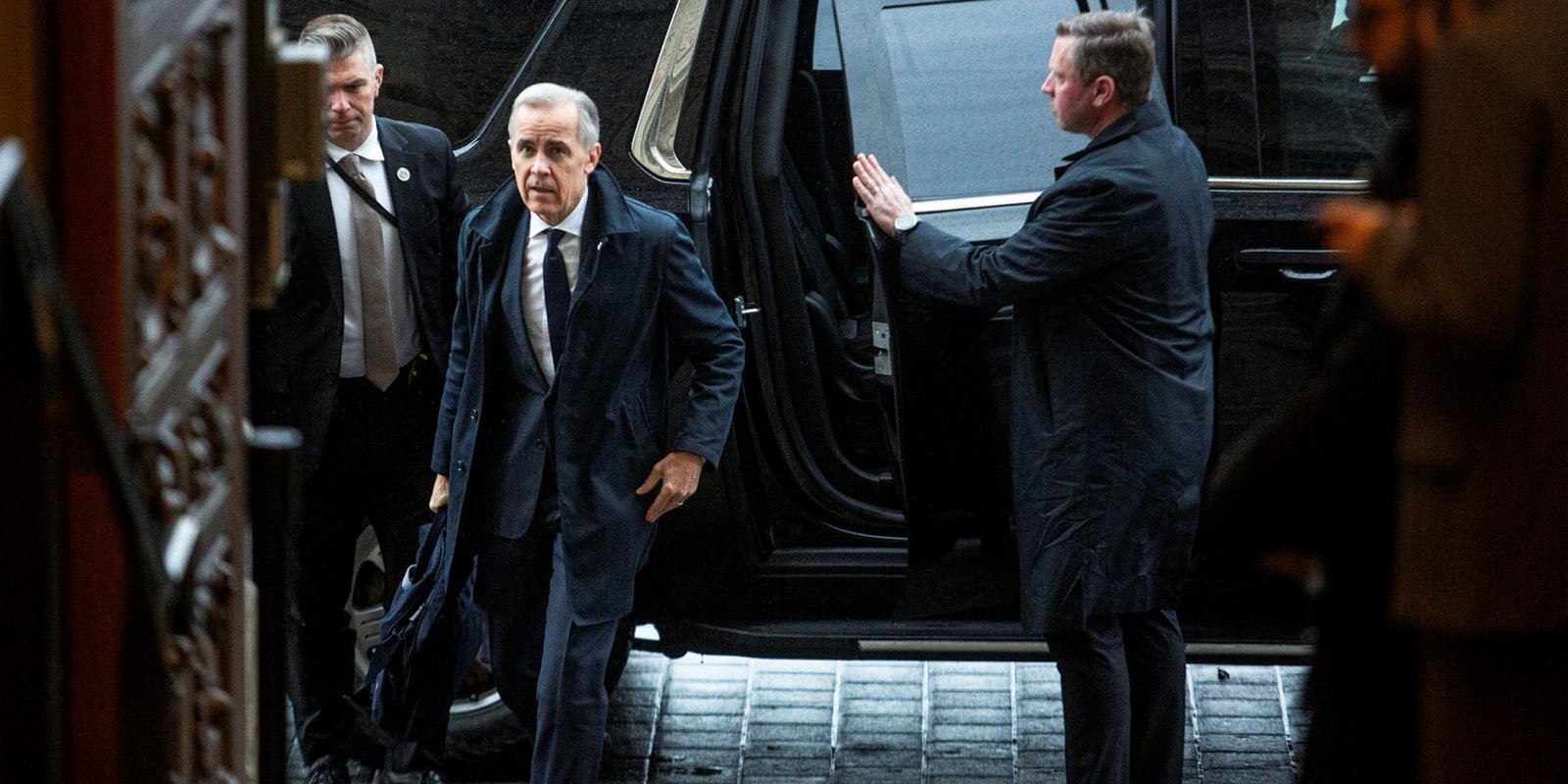
EDMONTON—At the end of the House’s lacklustre debate on the Iran war on March 9, it was two courageous MPs—NDP interim leader Don Davies and Green Party Leader Elizabeth May, sitting so far back they’re practically in the hallway—who told the truth about Canada’s miserable performance in responding to the United States-led breakdown in world law.
Davies lambasted the government’s endorsement of the war: “It is a war being prosecuted with appalling brutality and disregard for international humanitarian law.” May said Canada needs to oppose U.S. President Donald Trump’s war, and tell the U.S. to respect the United Nations’ Charter as the basis of international law.
By the time Davies and May spoke, the Chamber was nearly empty, the place apparently drained of energy from the jabbering of government MPs who tied themselves into knots trying to make the case that, of course, the war was bad, but evil Iran had to be dealt with.
Foreign Affairs Minister Anita Anand led the charge by laying down the principles Canada was following: “We did not participate in the recent military strikes carried out by the United States and Israel. We were not consulted in advance about these operations, and we have no intention of joining them.” The American strikes, she said, came “as a result of a failure of the international order.”
There was a good deal of circumlocution in her speech, blaming the amorphous “international order” for breaking down without saying that the U.S. and its ally Israel attacked Iran in direct violation of the core of the UN Charter, which says that a country cannot attack another unless it is in self-defence or authorized by the UN Security Council.
The minister left up in the air the most pertinent question the debate was all about: Canada’s position on the legitimacy of the war itself. The reason she could not say that Canada condemned the U.S. attack was because Prime Minister Mark Carney impulsively gave this country’s support to the U.S. action after the first strike on Feb. 28.

This brings us to the elephant in the room during the House debate. Carney absented himself from a debate on the most important foreign policy issue Canada has faced since then-prime minister Jean Chrétien kept Canada out of the Iraq war in 2003. It isn’t hard to figure out why Carney stayed away. It was the best way of removing himself from Trump’s line of vision when he looks around the world to see who’s with him in his war against Iran. This is the same Trump who holds Canada’s economic future in his hands with his obfuscatory tariff madness.
Almost from the moment of the first strike against Iran, Carney issued a statement of Canada’s support for the action. His quick support backfired when a revolt started in caucus. Canadian public opinion was heavily against the war. The prime minister then said he maintained his position with regret. The government continued to support the strikes even while calling for diplomacy. Conservative MP Michael Chong, his party’s foreign affairs critic, rightly summed up the government’s position as “mumbo jumbo.”
I think the prime minister stayed away because he did not want to worsen his relationship with Trump by standing in the Commons and making fudge out of his contradictory positions. He thus sacrificed an opportunity to expose the phoney reasons Trump has given for the war, and to state clearly what Canada will do to strengthen the Non-Proliferation Treaty to keep nuclear weapons out of the Middle East and protect the Iranian people.
Get Weekend Point of View Newsletter
Top Canadian political and policy opinion and analysis. Saturdays and Sundays. Weekends.
By entering your email address you consent to receive email from The Hill Times containing news, analysis, updates and offers. You may unsubscribe at any time. See our privacy policy
His absence enabled us to see more clearly who Carney has become. He is a formidable international banker and technocrat possessing a conscience on the values of a workable and fair economic and social system, who has in the past year become a politician able to bob and weave if not as well as Chrétien then better than Stephen Harper. He has captured the centre of Canadian politics, which accounts for his escalation in the polls. He is adroitly moving closer to managing a majority government, perhaps by only a hair’s breath if he wins the current three by-elections. He has gotten this far because a rising number of Canadians trust him to keep Canada out of the clutches of the avaricious Trump.

Doing so, however, carries a price. That price is this country’s economy and the jobs of hundreds of thousands of Canadians affected by Trump’s machinations if the U.S.-Canada tariff deals go off the rails. It is one thing to hold a righteous position against the Iran war, as Chrétien did against the Iraq war when the White House was not occupied by a vengeful president. It is quite another to hold off the present mendacious incumbent.
Like all politicians, Carney is doing what he has to do to survive. The poetry of his Davos speech has met the pragmatism of the public arena. Whether “values-based realism” will make him a great leader remains to be seen.
It’s too bad he wasn’t in the Commons to hear Davies and May speak truth to power. They have never accepted Carney’s new dictum that we must take the world as it is, not as we wish it to be. Not for a moment would Davies and May accept war as an instrument of foreign policy.
Carney shouldn’t, either.
Former Senator Douglas Roche’s latest book is Keep Hope Alive: Essays for a War-free World (Amazon).
The Hill Times