dailynewsnblog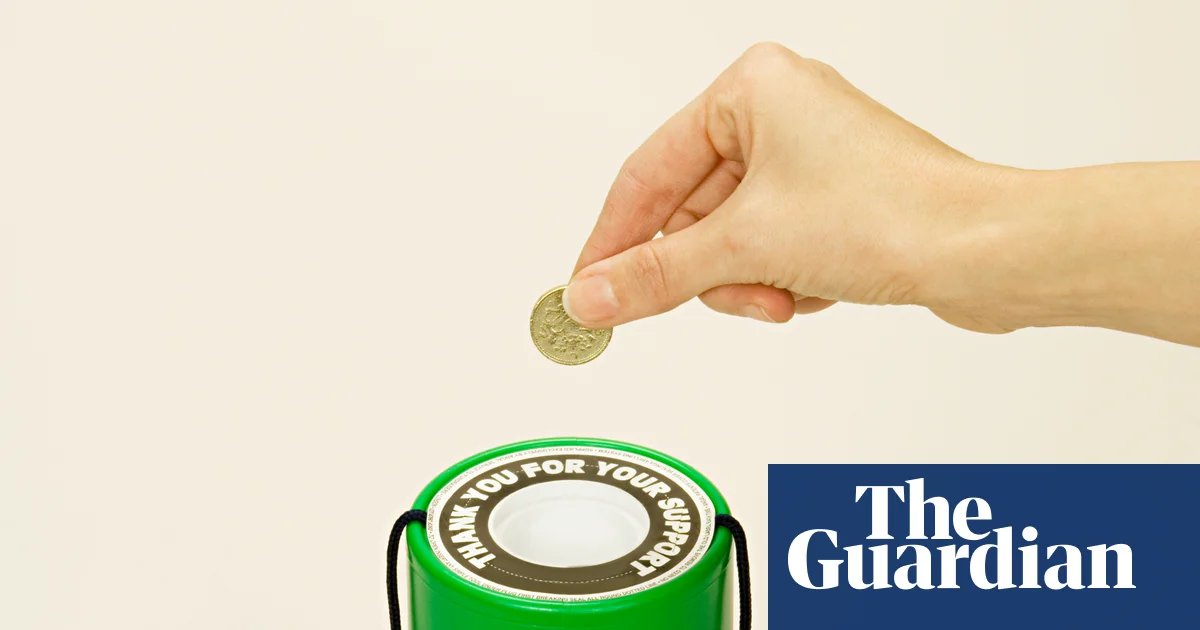
Britain is rapidly losing the charity habit, with public donations to good causes plummeting by more than £1.4bn last year and millions of people saying they can no longer afford – or do not want – to give, according to an analysis.
The Charities Aid Foundation (Caf) said in its annual report that, while the British remained generous at heart, society was witnessing a big transformation in attitudes towards charitable giving. Just half of people gave to charity in 2025, down from 61% a decade earlier.
Charity giving was no longer a “deeply embedded cultural norm” amid rising living cost pressures, and a more sceptical society, said the Caf managing director, Mark Greer: “Charities can no longer depend solely on habitual generosity or goodwill from the public,” he said.
The consequences have been felt across the voluntary sector in recent months, with even some of the UKs biggest charities – including Macmillan Cancer Support, Samaritans and Oxfam – making big cuts to staff and budgets.
The latest annual figures marked a striking downward shift after years in which the number of donors declined but overall donation levels stayed stable, propped up by what Caf calls “a group of dedicated donors” who gave bigger donations. Last year, however, donor numbers flatlined, and donations fell.
The collapse in overall donations from £15.4bn to £14bn in 2025 was driven by a fall in the average size of charitable gifts from £72 to £65. Nearly half of people (49%) who did not give to charity in 2025 said it was because they could not afford to, up from 44% in 2024.
Cost of living pressures have exacerbated a longer-term contraction in the size of the UK’s donor base over the past decade, a trend that accelerated during the Covid pandemic. Caf estimates 6 million fewer people gave to charity last year compared with 2016, potentially shrinking total voluntary sector income by about £12bn.
“The decline in charitable donors over the past decade is stark. Giving is no longer a habit in this country,” said Caf’s client relations director, Philippa Cornish.
Lack of affordability was cited as the main reason for not donating across income demographics, even those earning more than £125,000 a year. But there were also signs that non-donors did not see charity giving as something they would do: 49% of higher-rate taxpayers said they were “not interested in charities”.
Overseas aid charities have collectively been hit badly by these trends. While 20% of donors gave to this cause in 2016, the figure had fallen to 11% last year, triggering a £250m a year drop in donations in absolute cash terms. Caf said this mirrored wider donor attitude shifts towards giving to causes “closer to home”.
By contrast, UK food banks – which barely existed 15 years ago – have accounted for a larger share of public donations in recent years. In 2025, food banks received £610m, surpassing the amount given to arts, culture and science (£575m), education (£508m) and homelessness (£442m).
However, food banks report they are also struggling to attract regular donations. Caf’s report cites Swansea Foodbank, which said supporters were “putting their own families first during the cost of living crisis, which is perfectly understandable”.
Peter Grant, an expert in philanthropy at Bayes Business School, said the decline in giving also reflected a more polarised society. “Culture war” attacks mounted by rightwing politicians and media on voluntary organisations such as RNLI and the National Trust had undermined the wider legitimacy of charities among some donors.
The fall in public donations had been accompanied by years of cuts to government grant funding of charities, said Grant. While many charities would survive the crisis, it would directly affect the amount of help they could provide. “It means reduced services and more hardship for charities’ beneficiaries,” he said.
Caf’s annual report on the state of the nation’s giving has been carried out in its current form since 2016. It is based on a nationally representative survey of just under 13,000 UK adults.
Kate Lee, the chief executive of the National Council for Voluntary Organisations, said: “The drop in giving is a worrying sign for the sector. At a time when demand for charitable support is rising, a decline on this scale could present serious challenges for many organisations if the trend continues.”