dailynewsnblog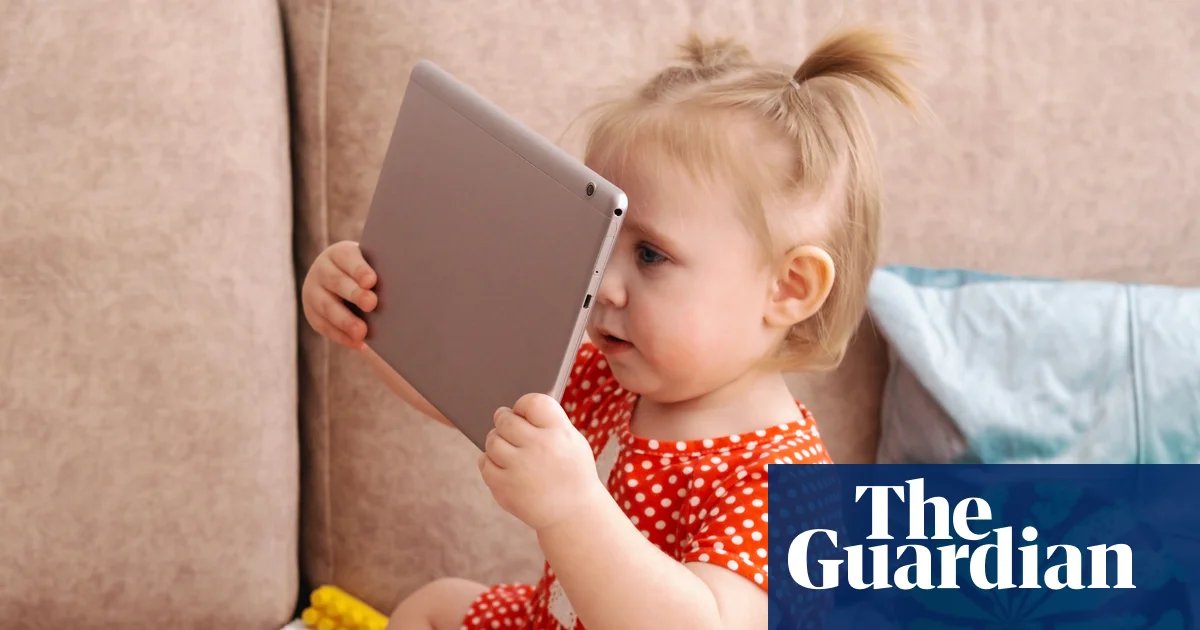
Three-quarters of nine-month-old babies in England are allowed daily screen time, while a small “heavy use” group watch more than three hours a day, according to a study.
Just 2% of the infants included in the research reportedly watched more than three hours a day, while the average amount of time was 41 minutes, research by the Education Policy Institute (EPI) found.
Parents across different income levels made similar choices for their nine-month-olds, researchers found, and they concluded that screen time and a healthy, active childhood “are not necessarily mutually exclusive”.
Instead of “demonising” screens and trying to cut exposure, they said, policymakers should support parents to use digital devices to enhance child development and parent-baby bonding.
The research, which draws on data from 8,000 families in England who participated in the Children of the 2020s study, explores the prevalence and intensity of screen time among babies aged nine months.
It found 72% of the babies in the sample reportedly experienced at least some screen time at nine months, while just over a quarter (28%) experienced none.
The more siblings a baby has, the less likely they are to be reported to watch screens. Four out of five (80%) babies with no siblings had some screen time, compared with three out of five (57%) of those with four or more siblings.
Infants in single-parent households watched for an average of 47 minutes a day, compared with 39 minutes for those with two parents in the home. Differences by parental education and income were not significant.
Researchers also looked at the relationship between screen use and other activities and found that infants in the heavy-use group were significantly less likely to experience regular enrichment activities, such as being read or sung to, or trips outside.
The Department for Education (DfE) is about to publish guidance for parents on screen time for children under five, amid concerns that excessive screen time may damage toddlers’ ability to speak.
Dr Tammy Campbell, the director for early years, inequalities and wellbeing at the EPI, said: “This research is one piece of an expanding jigsaw of up-to-date evidence, and adds new information for a very recent, nationally representative cohort of infants.
“It suggests that when it comes to babies and screens, parents across income levels are making similar choices for their children. It also indicates that screen time and a healthy, active childhood are not necessarily mutually exclusive.
“Therefore, a large part of the conversation needs to shift from ‘how much’ to ‘what,’ and ‘why’. It’s about how and when a screen is being used for shared, interactive play, or for passive viewing. And it’s about why use is high among the very small group of babies experiencing more than three hours a day.
“Instead of simply focusing on demonising any use, and cutting minutes, policymaking and guidance should help families use digital tools to enhance development, bonding and enjoyment of babyhood.”
The children’s commissioner for England, Rachel de Souza, co-chair of the panel drawing up government guidance, said: “Parents today are raising children in a world where screens are part of everyday life – for many, especially in the earliest months of a child’s life, it can be difficult to know what the right balance looks like.
“That’s why I am pleased to be co-chairing a group creating the first piece of government guidance on screen time for children under five, because the context in which screens are used at home among families is crucial.
“As children’s commissioner, I understand screens feel like both a help and worry for parents – which is why the upcoming early years guidance will offer clear, trustworthy advice, giving parents confidence when managing how their children see screens.”
A Department for Education spokesperson said: “Parents have told us they want clear, practical and non-judgmental advice on screen use for under-fives as they raise children in a digital world.
“That’s why we are working urgently to publish the first ever government guidance for parents on screen use for young children, backed by an independent expert-led evidence review and shaped by the experiences of parents themselves so the advice reflects real family life.”